
News Highlights - August 4 2026
Kudos
Six Internal Medicine Specialties Ranked Among Top 50 in the Nation
Six specialties within the Department of Internal Medicine were ranked among the nation’s top 50 in the 2025-26 U.S. News & World Report Best Hospitals rankings, helping UT Southwestern Medical Center earn recognition in 11 specialties overall, the most of any hospital in Texas.
Among Internal Medicine specialties, Cardiology, Heart & Vascular Surgery ranked No. 13 nationally, tied for No. 13 in Geriatrics, Pulmonology & Lung Surgery ranked No. 13, Gastroenterology & GI Surgeryranked No. 20, Diabetes & Endocrinology ranked No. 21, and Cancer ranked No. 22.
The rankings also marked a milestone for UT Southwestern, which was named the No. 1 hospital in Dallas-Fort Worth for the 10th consecutive year. Among more than 4,400 hospitals evaluated by U.S. News, UT Southwestern ranked No. 2 in Texas and received “High Performing” ratings in 18 procedures and conditions, including heart attack, heart failure, diabetes, kidney failure, stroke, pneumonia, and lung cancer surgery.
In announcing the rankings, Daniel K. Podolsky, M.D., President of UT Southwestern, credited the achievement to the institution’s commitment to excellence in patient care, research, and education. ■
Twelve Faculty Members Participate in STARS Program
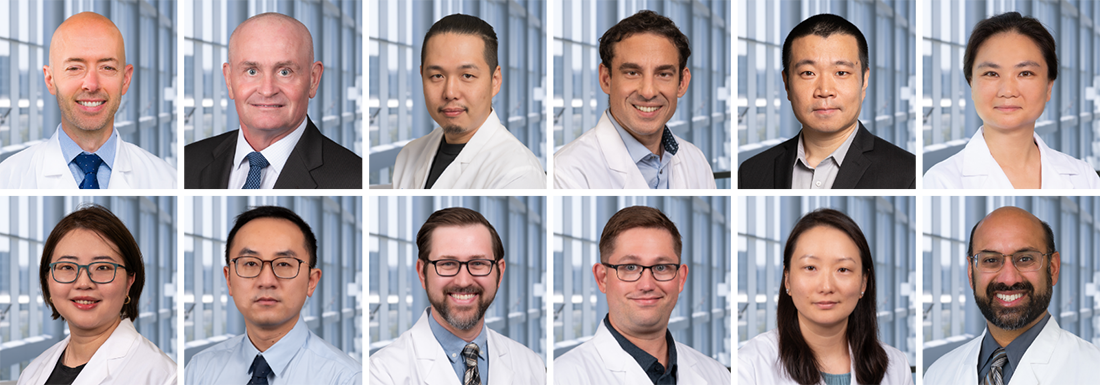
Twelve faculty members mentored North Texas high school students this summer through UT Southwestern’s Summer Research Opportunities (STARS) program. The eight-week program pairs students with faculty investigators for hands-on research experiences in biomedical laboratories and culminates with participants presenting their findings in a poster session. On July 24, students showcased the results of their summer projects during the annual STARS poster session. The program is part of the Science Teacher Access to Resources at Southwestern (STARS) initiative, which promotes science education and encourages students to explore careers in research and medicine.
Internal Medicine faculty mentors (pictured clockwise from upper left) and student participants included:
- James Brugarolas, M.D., Ph.D., a Professor in the Division of Hematology and Oncology and Director of the Kidney Cancer Program, mentored Lizbeth Garcia of Jack E. Singley Academy on “Isolation and Characterization of Wild-Type and mTOR-st Mouse Embryonic Fibroblasts.”
- Joel Elmquist, D.V.M., Ph.D., Professor, Vice Chair of Research, and Director of the Center for Hypothalamic Research, mentored Guru Sahana Aroul of St. Mark’s School of Texas on “Etv5, a Novel Regulator of POMC Expression?”
- Teppei Fujikawa, Ph.D., Associate Professor in the Center for Hypothalamic Research, mentored Lucas Le of Garland High School on “Overexpression of SF-1 in the VMH Enhances Endurance Capacity.”
- Theodoros Kelesidis, M.D., Ph.D., a Professor in the Division of Infectious Diseases and Geographic Medicine, mentored Blakley Scruggs of Lakehill Preparatory School on “Determining the Role of the NRF2 Pathway in the Development of Host Antiviral Strategy Targeting RSV.”
- Chen Liu, Ph.D., an Associate Professor in the Center for Hypothalamic Research, mentored Peter Hasik of Jesuit College Preparatory School of Dallas on “Serotonin 5-Htr6 Receptor Antagonist Reduces Food Intake and Protects Against Diet-Induced Obesity.”
- Lenette Lu, M.D., Ph.D., an Assistant Professor in the Division of Infectious Diseases and Geographic Medicine, mentored Norah Nasim of Allen High School on “Functional and Structural Heterogeneity in Anti-Mycobacterium Tuberculosis Antibodies.”
- Anand Rohatgi, M.D., Professor in the Division of Cardiology, Director of the Preventive Cardiology Program, and a member of the Moss Heart Center, mentored Jaiden Flores Zaragoza of North Mesquite High School on “Associations Between Lipoprotein Measures, HDL-Related Proteomic Markers, and Body Composition in a Multi-Ethnic, Population-Based Cohort.”
- Yan Sweat, Ph.D., an Assistant Professor in the Division of Cardiology and a member of the Moss Heart Center, mentored Charlotte Faems of Greenhill School on “Fibroblast Growth Factor 12 Promotes Atrial Rhythm Homeostasis.”
- Mason Sweat, Ph.D., an Assistant Professor in the Division of Cardiology and a member of the Moss Heart Center, mentored Hudson Wall of Jesuit College Preparatory School of Dallas on “FGF13 Promotes Atrial Rhythm Homeostasis.”
- Alexander Tatara, M.D., Ph.D., an Assistant Professor in the Division of Infectious Diseases and Geographic Medicine, mentored Shiv Patel of Dubiski Career High School on “Investigating Novel Architecture in Honey Bone Cement to Improve Antimicrobial Properties.”
- Chengyi Tu, Ph.D., an Assistant Professor in the Division of Cardiology and a member of the Moss Heart Center, mentored Sophia Estrada of Plano ISD Academy on “Metabolic Maturation Reveals Disease Phenotypes in Friedreich's Ataxia-Derived hiPSC-Cardiomyocytes.”
- Jialiang Wang, Ph.D., Assistant Professor in the Division of Hematology and Oncology, mentored Coleman Roper of Richardson High School on “Discovering the Tumor-Suppressive Role of SP7 in Osteosarcoma Through Negative Regulation of YAP1.”
The projects reflected a range of research interests, including cardiovascular biology, metabolism, infectious diseases, cancer biology, neuroscience, and biomedical engineering, providing students with firsthand experience in scientific discovery and mentorship from UT Southwestern faculty. ■
Dr. Brugarolas holds the Sherry Wigley Crow Cancer Research Endowed Chair in Honor of Robert Lewis Kirby, M.D. Dr. Elmquist holds the Carl H. Westcott Distinguished Chair in Medical Research, the J.D. and Maggie E. Wilson Distinguished Chair in Biomedical Research, and the Maclin Family Distinguished Professorship in Medical Science, in Honor of Dr. Roy A. Brinkley.
Staff Members Take on New Roles
We congratulate the following staff members who recently took on new positions within the Department:
- Kenya Geshow – Research Assistant I, Nephrology
- Giamarqo Giamarqo – Data Scientist I, Digestive & Liver Diseases
- Christopher Smith – Program Coordinator, Hematology & Oncology
- Edith Ventura – Research Assistant II, Cardiology
- Ashley Williams – Division Operations Administrator, General Internal Medicine
Research Report

Rheumatology Study Suggests Less Frequent Methotrexate Monitoring May Be Safe for Stable Patients
A study published in Arthritis Care & Research found that patients taking methotrexate for rheumatic diseases did not experience higher rates of laboratory abnormalities when routine blood tests were performed every six months instead of every three months. The research was led by investigators at UT Southwestern, with Puneet Bajaj, M.D., M.P.H., Associate Professor, and Bonnie Bermas, M.D., Professor, in the Division of Rheumatic Diseases serving as co-senior authors.
Methotrexate is a commonly prescribed medication for rheumatoid arthritis and other autoimmune diseases, and patients typically undergo regular blood testing to monitor for potential liver or blood-related side effects. To examine whether current monitoring practices could be safely adjusted, the researchers analyzed more than 14,000 laboratory encounters from 2,439 patients receiving methotrexate between 2017 and 2025. They found no meaningful differences in liver function, blood counts, or indicators of liver fibrosis between patients monitored approximately every three months and those monitored approximately every six months.
The findings suggest that extending routine laboratory monitoring intervals for stable patients may reduce costs, travel demands, time away from work, and other burdens associated with frequent testing without compromising patient safety. The authors note that additional research is needed, but the results support reconsideration of current monitoring recommendations for long-term methotrexate users.
“We hope this information will change practice patterns and be less onerous for patients while not sacrificing safety,” said David Karp, M.D., Ph.D., Professor and Chief of the Division of Rheumatic Diseases. ■
Dr. Bermas holds the Dr. Morris Ziff Distinguished Professorship in Rheumatology. Dr. Karp holds the Fredye Factor Chair in Rheumatoid Arthritis Research and the Harold C. Simmons Chair in Arthritis Research.
In Case You Missed It
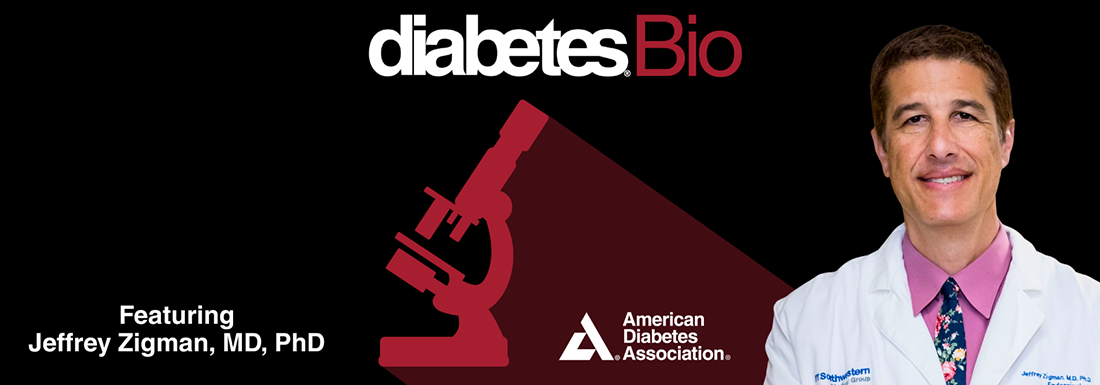
Zigman Shares Personal Journey with Type 1 Diabetes
Hypothalamic Research, recently joined the DiabetesBio podcast to discuss how living with type 1 diabetes has shaped his career as a physician-scientist. Co-hosted by Kevin Williams, Ph.D., an Associate Professor in the Center for Hypothalamic Research, the episode explores Dr. Zigman’s diagnosis during college, his path into medicine and research, and his eventual arrival at UT Southwestern to study metabolism and obesity while caring for patients with diabetes.
The conversation offers a personal perspective on the experiences that have influenced Dr. Zigman’s work and highlights the connection between scientific discovery and the people affected by diabetes every day. ■
Dr. Zigman holds the Kent and Jodi Foster Distinguished Chair in Endocrinology, in Honor of Daniel Foster, M.D.; the Mr. and Mrs. Bruce G. Brookshire Professorship in Medicine; and The Diana and Richard C. Strauss Professorship in Biomedical Research.