
News Highlights - July 21, 2026
Kudos
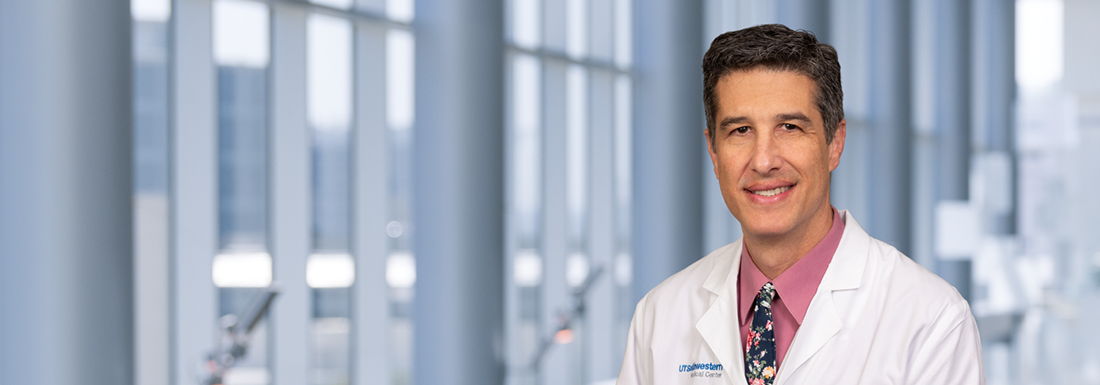
Zigman Receives Obesity Society’s Mentorship Award
Jeffrey Zigman, M.D., Ph.D., a Professor in the Division of Endocrinology and a member of the Center for Hypothalamic Research, has received The Obesity Society's 2026 Thomas A. Wadden Award for Distinguished Mentorship. The award recognizes established members of the society who have made significant contributions to the development of early-career researchers and clinicians in obesity science and medicine.
Named for Thomas A. Wadden, Ph.D., of the Perelman School of Medicine at the University of Pennsylvania, the award honors mentorship that has helped launch and sustain successful careers in obesity research and clinical care.
“I am deeply honored to receive this recognition from The Obesity Society,” Dr. Zigman said. “Throughout my career, I have been incredibly fortunate to learn from generous and inspiring mentors who shaped both my scientific career and my approach to mentoring others. I have always hoped to pass those lessons forward. I view this recognition as a celebration of the talented people I have had the privilege to mentor and learn from along the way.”
Since joining the UT Southwestern faculty in 2006, Dr. Zigman has mentored high school and undergraduate students, graduate trainees, medical students, residents, postdoctoral fellows, endocrinology fellows, and junior faculty. Colleagues and former trainees describe him as a thoughtful mentor who fosters scientific rigor, independence, collaboration, and professional growth while encouraging trainees to develop into future leaders.
The accomplishments of his trainees reflect the impact of that mentorship. Three of his former postdoctoral fellows, Kripa Shankar, Ph.D., Omprakash Singh, Ph.D., and Sepideh Sheybani-Deloui, Ph.D., have been selected as Ethan Sims Young Investigator Award finalists a combined five times in recent years, with two ultimately receiving the award. His former trainees have gone on to careers in endocrinology, metabolism, neuroscience, and obesity research.
In addition to his mentorship, Dr. Zigman is an internationally recognized physician-scientist whose research focuses on ghrelin, often called the “hunger hormone,” and related pathways involved in obesity, diabetes, eating disorders, cancer cachexia, and other metabolic diseases. His laboratory has helped define how ghrelin and the related hormone LEAP2 interact with the brain and peripheral organs to regulate appetite, body weight, glucose metabolism, exercise responses, and stress-related behaviors.
A native of Pennsylvania, Dr. Zigman earned a bachelor’s degree in biological sciences from Cornell University and completed both his medical and doctoral degrees in biochemistry and molecular biology at the University of Chicago, where he also received internal medicine residency training. He then obtained fellowship training in endocrinology, diabetes, and metabolism at Beth Israel Deaconess Medical Center before joining the UT Southwestern faculty in 2006.
“One of the greatest privileges of my career has been watching talented scientists and physicians develop into independent investigators, leaders, and mentors,” Dr. Zigman said. “Their curiosity, creativity, and perseverance continue to inspire me, and I look forward to supporting future generations as they advance our understanding of obesity and metabolic disease.” ■

Odedosu to Chair CDIM Program Planning Committee
Kehinde Odedosu, M.D., an Associate Professor in the Division of General Internal Medicine, Assistant Dean for Student Empowerment and Engagement, and Internal Medicine Co-Clerkship Director, has been appointed Chair of the Program Planning Committee for the Clerkship Directors in Internal Medicine (CDIM), a national organization within the Alliance for Academic Internal Medicine (AAIM).
Founded in 1989, CDIM represents educators and administrators responsible for undergraduate internal medicine education across the country, including clerkship directors, sub-internship directors, medical educators, and clerkship administrators. The organization advances excellence in medical education through faculty development, educational innovation, scholarship, and national collaboration.
As Chair of the Program Planning Committee, Dr. Odedosu will lead the development of educational programming for CDIM’s national meetings. In this role, she will work with colleagues nationwide to identify emerging topics in medical education, recruit expert speakers, and design learning experiences that support internal medicine educators and trainees.
“This appointment reflects Dr. Odedosu’s longstanding commitment to medical education and his leadership in advancing student engagement, mentorship, and curriculum development,” said Reeni Abraham, M.D., a Professor in the Division of General Internal Medicine, Associate Vice Chair for Undergraduate Medical Education, and Head of Fashena College. “It also underscores UT Southwestern’s ongoing contributions to shaping the future of undergraduate medical education on a national level.” ■
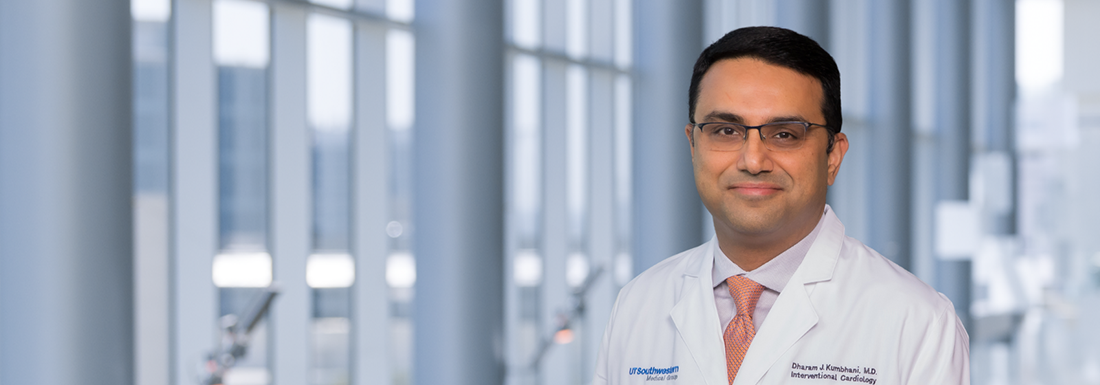
Kumbhani Chairs ACC Scientific Statement on Direct Oral Anticoagulants
Dharam J. Kumbhani, M.D., S.M., a Professor in the Division of Cardiology, Section Chief of Interventional Cardiology, and Cath Lab Director at Clements University Hospital, chaired the writing committee for a new American College of Cardiology (ACC) scientific statement providing evidence-based guidance on the use of direct oral anticoagulants (DOACs) for the prevention and treatment of thrombotic conditions.
Published in the Journal of the American College of Cardiology (JACC), the statement summarizes current evidence and offers practical recommendations for DOAC use across a range of clinical settings, including atrial fibrillation, venous thromboembolism, chronic coronary disease, stroke, cancer-associated thrombosis, and other complex patient populations.
The document comes at a time when indications for DOAC therapy continue to expand, yet many eligible patients remain untreated. According to the statement, approximately one-third of patients with atrial fibrillation who are candidates for anticoagulation do not receive therapy. To help address this gap, the writing committee developed clinical algorithms and risk-assessment tools to guide decisions about medication selection, dosing, treatment duration, and management of bleeding risk.
Dr. Kumbhani said one of the statement’s key messages is helping clinicians move beyond subjective assessments when caring for patients who require anticoagulation.
“As the evidence base continues to grow, clinicians increasingly have the tools to personalize anticoagulation therapy rather than relying on one-size-fits-all approaches,” Dr. Kumbhani said. “Our goal was to provide practical guidance that helps clinicians make informed decisions for the diverse patients they see every day.”
Jose Joglar, M.D., a Professor in the Division of Cardiology and Vice Chair of Clinical Operations at Parkland Health, also served on the writing committee. ■
Dr. Kumbhani holds the Jim and Norma Smith Distinguished Chair for Interventional Cardiology. Dr. Joglar holds the Elizabeth Thaxton and Ellis Batten Page Professorship in Cardiac Electrophysiology Research.
Research Report
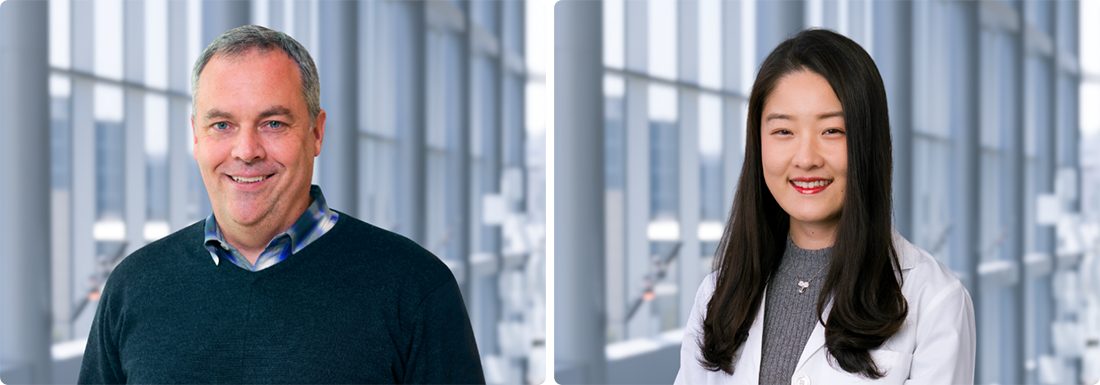
Carroll, Qin Receive KCP Pilot Awards
Thomas Carroll, Ph.D., a Professor in the Division of Nephrology, and Qian (Janie) Qin, M.D., an Assistant Professor in the Division of Hematology and Oncology, have received Pilot Awards from the Kidney Cancer Program SPORE Grant.
Dr. Carroll, Director of Basic Science Research in Nephrology, received a Developmental Research grant for his project, “Defining Immune Mechanisms of SETD2-mediated Tumor Control in Sarcomatoid Renal Cell Carcinoma.”
Dr. Qi received a Career Enhancement grant for her project, “HIF2α Inhibitor for the Treatment of Hypercalcemia of Malignancy.”
In total, four grants were awarded for developmental research and career enhancement pilot projects. Other recipients are Sashi Debanath, Ph.D., an Instructor of Radiology, for his project, “Novel Renal Cell Carcinoma Theranostics Targeting Kidney Injury Molecule-1,” and Weibo Luo, Ph.D., an Associate Professor of Pathology, for his project, “In Vivo CRISPR Screen Identifies Novel Suppressors of ccRCC in Brain Metastasis.” ■
Dr. Carroll holds The NCH Corporation Distinguished Chair in Molecular Transport. Dr. Qin is a Eugene P. Frenkel, M.D. Scholar in Clinical Medicine.
Education & Training
Hematology Interest Group Marks Five Years of Mentorship and Research Excellence
The UT Southwestern Hematology Interest Group is celebrating its fifth year of mentoring trainees and advancing collaborative research in hematology. Founded and led by Taha Bat, M.D., an Assistant Professor in the Division of Hematology and Oncology and Director of Bone Marrow Failure, the program has grown into a competitive, multidisciplinary initiative that combines education, mentorship, and scholarly research for trainees across multiple stages of their careers.
Supported by the Simmons Cancer Center Educational Fund, the program accepts 10 new trainees each year into a structured two-year curriculum, with opportunities to extend participation while completing advanced research projects. More than 10 faculty members from adult Hematology and Oncology, pediatric Hematology and Oncology, and Hematopathology contribute to the program, with operational coordination provided by Research Coordinator Taysom Wallace.
A hallmark of the program is its “seniors leading juniors” mentorship model, which pairs faculty guidance with peer mentorship. Senior trainees such as Internal Medicine resident Jimmy Lee, M.D., supported by the UT-StARR Program, and Physician-Scientist Training Program fellow Eileen Hu, M.D., Ph.D., mentor junior members while pursuing their own research activities.
The program has mentored more than 80 undergraduate students, medical students, residents, fellows, and pathology trainees. Participants have collectively produced more than 25 peer-reviewed publications and earned more than 20 abstract awards at national and international scientific meetings.
Recent accomplishments include Emily Ballard, M.D., a first-year pathology resident, who was selected to present her research at the European Meeting for Complement in Human Disease. Lucas Wang, M.D., a third-year Hematology and Oncology fellow, will present findings at the International Society on Thrombosis and Haemostasis Annual Congress on the association between complement C5 inhibitor treatment duration and outcomes in atypical hemolytic uremic syndrome.
The group collaborates with more than five institutions to study a range of benign and malignant hematologic disorders. Trainees are expected to present their work at national or international meetings and publish in peer-reviewed journals, helping build research experience early in their careers.
In addition to research and education, the program promotes community through twice-yearly social gatherings and monthly research lunches where teams share ongoing projects and receive feedback from peers and faculty. Its growing national profile recently earned recognition from the American Society of Hematology Ambassador Program for its commitment to mentorship, academic productivity, and trainee development. ■