
News Highlights - June 23, 2026
Kudos
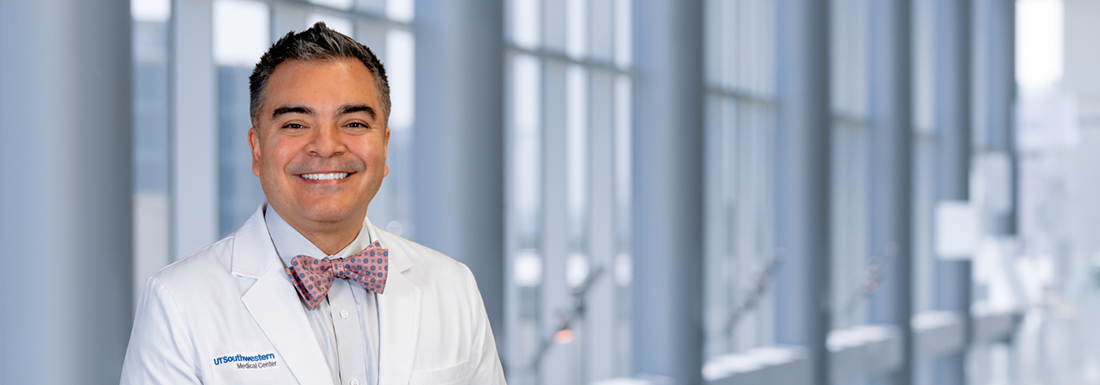
La Hoz Selected as an ISDA Featured Educator
Ricardo M. La Hoz, M.D., an Associate Professor in the Division of Infectious Diseases and Geographic Medicine, Distinguished Teaching Professor, Director of Transplant Infectious Diseases, Program Director of the Transplant Infectious Diseases Fellowship, and Medical Director of the Transplant Services Center, has been selected as a Featured Educator by the Medical Education Community of Practice of the Infectious Diseases Society of America (IDSA).
The IDSA Featured Educator recognition highlights Dr. La Hoz’s longstanding commitment to medical education, mentorship, and the training of future infectious diseases physicians. Through his leadership in Transplant Infectious Diseases and his dedication to learners at all stages of training, he has made a lasting impact on medical education at UT Southwestern and across the infectious diseases community.
The Featured Educator program recognizes individuals who have demonstrated excellence in teaching, innovation in education, and a sustained commitment to mentoring the next generation of infectious diseases professionals. ■
Read Dr. La Hoz’s Featured Educator Profile
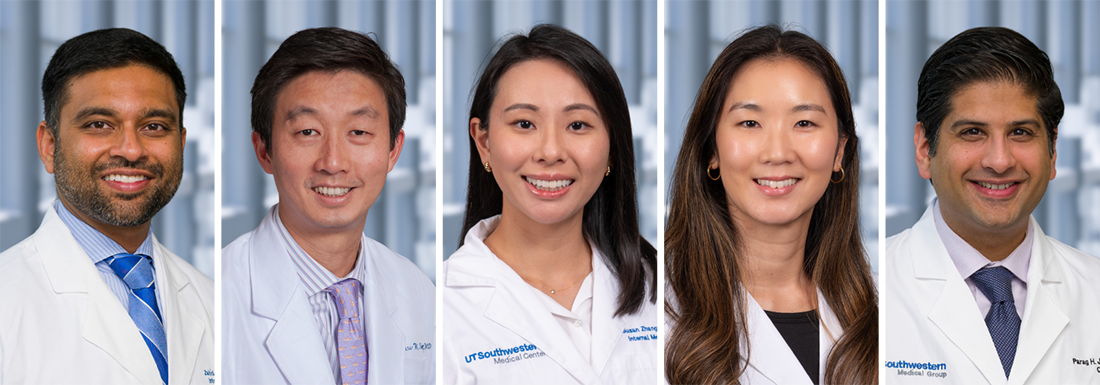
Faculty Members Selected for National Lipid Association Leadership Roles
Several faculty members in the Department of Internal Medicine have been recognized with leadership roles in the National Lipid Association (NLA), reflecting the department’s continued contributions to lipid research, clinical care, and education.
Zahid Ahmad, M.D., an Associate Professor in the Division of Endocrinology, has been named President-Elect of the NLA. Dr. Ahmad directs the Lipid Clinic at Parkland Health and serves as Co-Director of the Familial Hypercholesterolemia Clinic at UT Southwestern. His work focuses on improving the identification and management of inherited lipid disorders and addressing disparities in cardiovascular risk.
In addition, Associate Professor Kyaw Soe, M.D., and Assistant Professors Susan Zhang, M.D., and Emily Zhang, M.D., also in the Division of Endocrinology, have been elected as at-large members of the NLA’s Southwest regional chapter, which includes members in Arizona, Colorado, Louisiana, New Mexico, Oklahoma, Texas, and Wyoming. Parag Joshi, M.D., an Associate Professor in the Division of Cardiology and Medical Director of the Cardiac Rehabilitation Program, has also been selected to serve as Secretary of the Southwest chapter.
These appointments highlight the growing role of UT Southwestern faculty in shaping national efforts to advance lipid science, clinical practice, and education. ■
The guideline also reinforces the role of early and aggressive prevention. Recommendations include routine screening for CKM risk factors, prioritization of lifestyle interventions such as weight management and physical activity, and appropriate use of pharmacologic therapies, including newer agents that address metabolic and cardiovascular risk simultaneously. By identifying patients earlier in the disease continuum, the approach aims to slow or even reverse disease progression.
“Nearly 90 percent of adults have at least one component of CKM syndrome, making it a major driver of cardiovascular risk nationwide,” Dr. Lingvay said. “By providing a unified framework for risk assessment and management, the guideline offers clinicians a practical roadmap to address one of the most significant and complex contributors to chronic disease burden.” ■
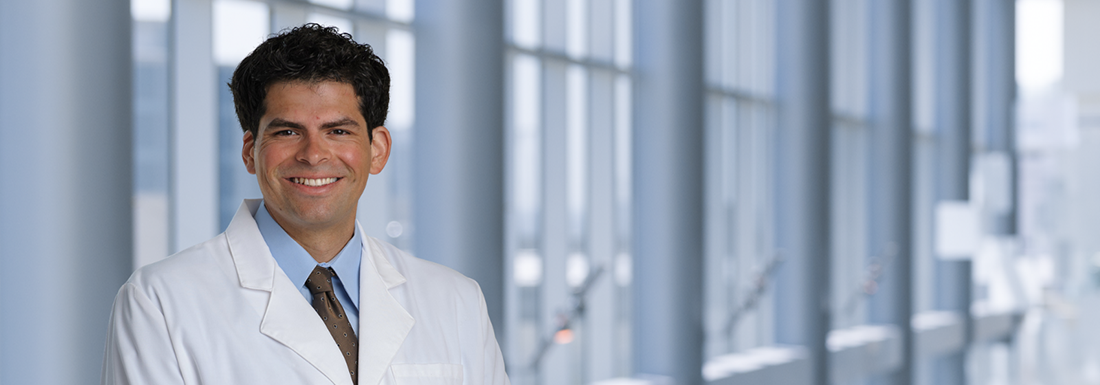
Dominguez Named Parkland’s ‘Unsung Physician of the Month’
Arturo Dominguez, M.D., an Associate Professor in the Division of General Internal Medicine, has been named the Unsung Physician of the Month by Parkland Health, “for work that often happens quietly, behind the scenes,” according to an announcement by the Medical Executive Committee.
Dr. Dominguez, whose primary appointment is in the Department of Dermatology, founded the inpatient dermatology consult service for UT Southwestern-affiliated hospitals and expanded teledermatology at Parkland, and he is also a dedicated teacher to residents and a longtime advocate for patients with limited access to care, according to the Committee announcement.
Dr. Dominguez holds a bachelor’s degree in molecular biology from Princeton University and earned his medical degree at UT Southwestern. He completed internal medicine residency training at the University of Washington School of Medicine followed by dermatology residency training at UT Southwestern.
His research focuses primarily on autoimmune blistering diseases.
He joined the UT Southwestern faculty in 2012. ■
Research Report
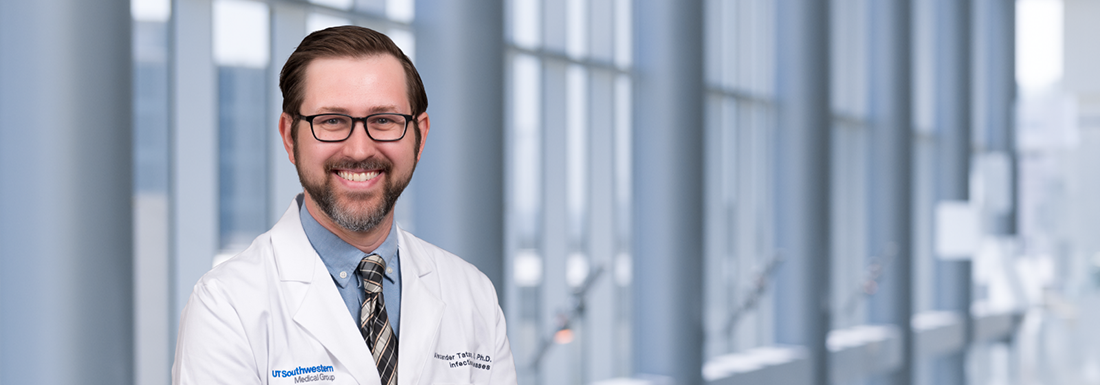
Tatara Receives UT System Grant to Advance Infection Prevention After Trauma
Alex Tatara, M.D., Ph.D., Assistant Professor in the Division of Infectious Diseases and Geographic Medicine, has been awarded a $500,000 grant from the Trauma Research and Combat Casualty Care Collaborative, an initiative of the University of Texas System, to support research aimed at preventing infections following severe injury.
Infection remains a common and serious complication after trauma, affecting up to one-third of patients during recovery. These infections can prolong hospitalization and, in severe cases, result in amputation or death. Dr. Tatara’s project seeks to address this challenge by examining how trauma disrupts the immune system and by developing strategies to prevent infections before they take hold.
The research team will use advanced immunologic techniques to better understand the mechanisms by which trauma compromises immune defenses, creating an environment that allows bacteria to proliferate. In parallel, the team is evaluating a newly developed biomaterial-based immunotherapy designed to enhance specific immune cell populations and strengthen the body’s ability to fight infection.
“Infection is one of the most devastating complications following trauma,” Dr. Tatara said. “This funding allows us to both better understand why trauma patients are so vulnerable to infection and to develop new therapies to boost specific immune populations and prevent trauma-related infection from occurring.”
By integrating approaches from immunology and bioengineering, the project aims to move beyond reactive treatment toward proactive prevention. The goal is to develop therapies that can be deployed early in the course of care, reducing the likelihood that infections will develop and improving overall outcomes for patients recovering from severe injury.
Dr. Tatara emphasized the broader implications of the work for patient care
“Up to a third of trauma patients suffer from infection at some point during their recuperation,” he said. “By combining our knowledge of immunology and bioengineering, we hope to build new therapies to prevent trauma-related infections and deliver better care to our patients.”
Benjamin Levi, M.D., Chief of the Division of General and Acute Care Surgery and Director of the Charles and Jane Pak Center for Mineral Metabolism and Clinical Research, is a collaborator on the project. ■

Study Highlights Gaps in Post-Discharge Care for Medicaid Patients
A study led by Joshua M. Liao, M.D., M.Sc., a Professor in the Division of General Internal Medicine, looked at how patients use care after leaving the hospital under different Medicaid programs. The findings showed that patients in managed care plans were less likely to visit the emergency department and more likely to have follow-up clinic visits after discharge. However, older adults in these plans had a slightly higher risk of being readmitted to the hospital.
For the study, published in Health Affairs Scholar, the researchers reviewed 1.65 million hospital discharges using Medicaid claims data from 2015 to 2019 and 2021 to 2022. They focused on what happens after patients return home, including emergency department visits, observation stays, readmissions, and follow-up care.
Patients enrolled in managed care were less likely to visit the emergency department and more likely to see a clinician after discharge compared with those in fee-for-service programs. This pattern held for both younger and older adults. At the same time, older adults in managed care had a small increase in readmission risk. Rates of observation stays were similar across both types of programs.
Overall follow-up rates remained modest, with about 29 percent of younger adults and 39 percent of older adults receiving follow-up care. Transitional care management visits, which help patients move safely from the hospital back to the community, were used in fewer than 2 percent of cases.
The authors noted that stronger incentives for care coordination in managed care may help explain the higher follow-up rates and lower emergency department use. At the same time, the higher readmission risk among older adults pointed to gaps in access to post-acute care and continuity of care. These findings may help inform efforts by federal and state policymakers to improve care for Medicaid patients.
Joseph Joo, M.D., M.S., an Assistant Professor in the Division of General Internal Medicine, also contributed to the study. ■
Education & Training
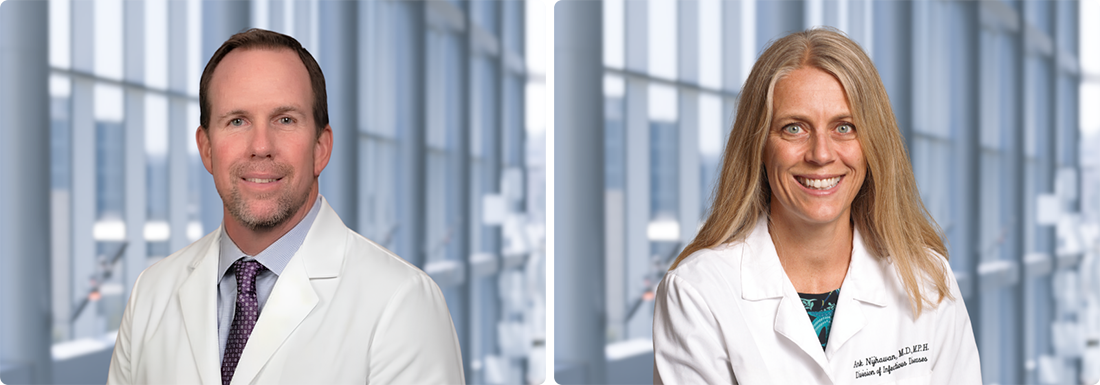
Division Receives T32 Grant to Train Future Infectious Diseases Leaders
David Beckham, M.D., Professor and Chief of the Division of Infectious Diseases and Geographic Medicine, has announced the Division received a T32 training grant to support the development of the next generation of physician-scientists focused on infectious diseases and immunity to pathogens.
“The program brings together a broad group of investigators across multiple disciplines, reflecting a coordinated approach to advancing research and training in infectious diseases,” said Dr. Beckham, who serves as Program Director. “The effort includes collaboration among the departments of Internal Medicine, Pediatrics, Immunology, and Microbiology, with additional integration of expertise from the Peter O’Donnell Jr. School of Public Health.”
T32 grants are institutional training awards from the National Institutes of Health that provide funding to support structured research training programs. These grants typically cover stipends, tuition, and research-related expenses for trainees, allowing early-career physicians and scientists to dedicate protected time to mentored research. By supporting both trainees and program infrastructure, T32 funding helps institutions build sustainable pipelines of investigators equipped to address complex biomedical challenges.
“Through this program, trainees will receive interdisciplinary mentorship and formal research training designed to strengthen expertise in host-pathogen interactions, emerging infections, and translational science,” said Ank Nijhawan, M.D., M.P.H., a Professor in the Division of Infectious Diseases and Geographic Medicine and Assistant Program Director. “The initiative is expected to enhance opportunities for physician-scientists to develop independent research careers and contribute to advancing prevention, diagnosis, and treatment of infectious diseases.” ■
Dr. Beckham holds the Jay P. Sanford Professorship in Infectious Diseases.

VanWagner Expands Role in Resident Research
Lisa VanWagner, M.D., M.Sc., an Associate Professor in the Division of Digestive and Liver Diseases and Director of its Clinical Research, has been appointed Associate Program Director for the Internal Medicine Residency, succeeding Ambarish Pandey, M.D., M.S.C.S., who oversaw resident research.
In addition to serving as Director of the Clinical Scientist Training Program, Dr. VanWagner will, in her expanded role, work closely with incoming Chief Residents for Research Malcolm Su, M.D., and Maria Clara Saad Menezes, M.D., to guide residents in their scholarly work, strengthen access to mentorship, and support the development of research across the residency program.
“Dr. VanWagner brings the perspective and experience needed to elevate resident scholarship and further integrate research into the training experience,” said Salahuddin “Dino” Kazi, M.D., a Professor in the Division of Rheumatic Diseases, Vice Chair of Education, and Program Director for the Internal Medicine Residency. ■
In Case You Missed It

Hill to Conclude Tenure as Editor-in-Chief of Circulation
Joseph A. Hill, M.D., Ph.D., a Professor in the Division of Cardiology and Director of the Moss Heart Center, will conclude his tenure as Editor-in-Chief of Circulation, the American Heart Association’s flagship cardiovascular journal, concluding a decade of leadership marked by growth in the journal’s global reach and scientific influence.
In a recent American Heart Association (AHA) feature highlighting his tenure, Dr. Hill reflected on the scale and rigor of the journal’s editorial process. Each week, approximately 100 manuscripts are submitted, with only a small number selected for publication following discussion among an international team of editors spanning multiple countries. The weekly editorial meetings, he noted, became a defining part of the role, combining close scientific scrutiny with a sense of shared purpose among colleagues.
The AHA credited Dr. Hill with strengthening Circulation’s position as a leading source of cardiovascular research while expanding its global footprint. Those efforts, carried out through a distributed editorial model and a highly selective review process, helped shape the journal during a period of rapid change in both science and publishing.
“This has been a huge endeavor for cardiology and been very successful with a more than doubling of the journal’s impact factor and broad support from the cardiovascular community,” said James de Lemos, M.D., Professor and Cardiology Division Chief. “Besides Joe, lots of involvement from UTSW cardiology, and also pulmonary, pediatric cardiology as editors and contributors.”
Dr. Hill has long emphasized the global evolution of cardiovascular disease, noting that its burden continues to grow across regions while presenting in different forms. These shifts informed the journal’s editorial priorities, as Circulation sought to highlight discoveries that address both emerging and established patterns of disease worldwide.
The AHA also recognized Dr. Hill’s broader contributions to the field, including his mentorship of trainees and his role in advancing cardiovascular research and care. Throughout his tenure, he has pointed to the importance of building strong teams and creating space for others to excel.
As he concludes his tenure this month, Dr. Hill leaves Circulation positioned to continue its role as a central platform for cardiovascular discovery, supported by a global network of editors and a sustained commitment to rigorous science. ■
Dr. Hill holds the Frank M. Ryburn Jr. Chair in Heart Research and the James T. Willerson, M.D., Distinguished Chair in Cardiovascular Diseases.