
News Highlights - June 16, 2026
Kudos
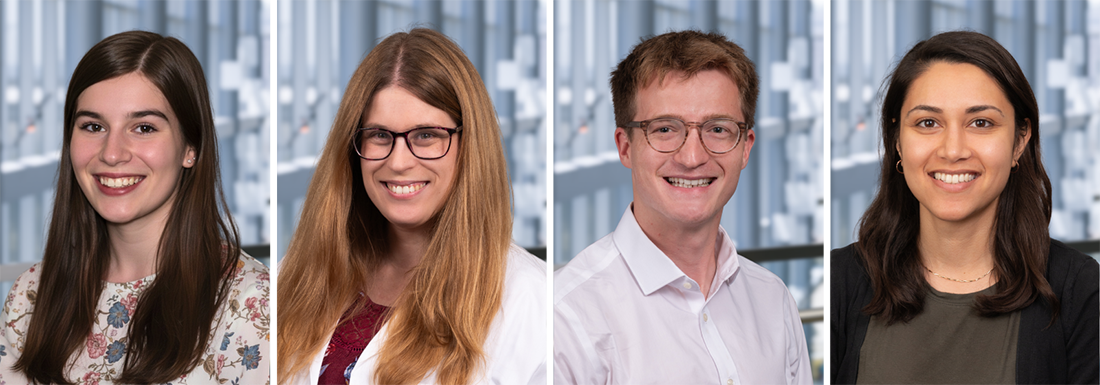
Seidenfeld Infectious Diseases Research Symposium Recognizes Top Trainee Presentations
The Division of Infectious Diseases held its inaugural Seidenfeld Infectious Diseases Research Symposium on June 4, bringing together trainees and faculty to showcase research across clinical and basic science disciplines. The event featured six oral presentations and 40 poster presentations, highlighting the breadth of work across the division, as well as a keynote address by Jatin “Jay” Vyas, M.D., Ph.D., Professor of Medicine at Columbia University Vagelos College of Physicians and Surgeons, Associate Dean for Academic Innovation and Director of the Physician‑Scientist Training Program in the Vagelos Institute for Biomedical Education Research.
Awards for best oral presentations were selected by audience vote. In the clinical category, medical student Cameron Mitchell, B.A., (pictured at left), was recognized for her presentation, “Low Utilization of First-Line Latent Tuberculosis Regimens in People with HIV in the Short-Course Era,” mentored by Assistant Professor Hayden Andrews, M.D. Instructor Jennifer Berger, Ph.D. (second from left), received the award in the basic science category for her presentation, “Bystander CD8+ T Cells Make up an Important Immune Response in the Brain,” mentored by Professor David Beckham, M.D.
Poster presentation awards were determined by a panel of six faculty judges. In the clinical category, PGY-1 resident Julian Merville, M.D., (second from right), was recognized for his poster, “HIV Care Cascade Among Individuals Diagnosed during Incarceration,” mentored by Professor Ank Nijhawan, M.D. In the basic science category, postdoctoral researcher Kubra Naqvi, Ph.D. (pictured at right), received the award for “Mycobacterial Phenolic Glycolipid Triggers ATP-Mediated Neuronal P2X3 Signaling and Cough,” mentored by Professor Michael Shiloh, M.D., Ph.D.
Organizers noted strong participation and engagement throughout the symposium and recognized all trainees and mentors for their contributions. ■
Dr. Beckham holds the Jay P. Sanford Professorship in Infectious Diseases.
Dr. Shiloh holds the James P. Luby, M.D. Professorship in Infectious Diseases.
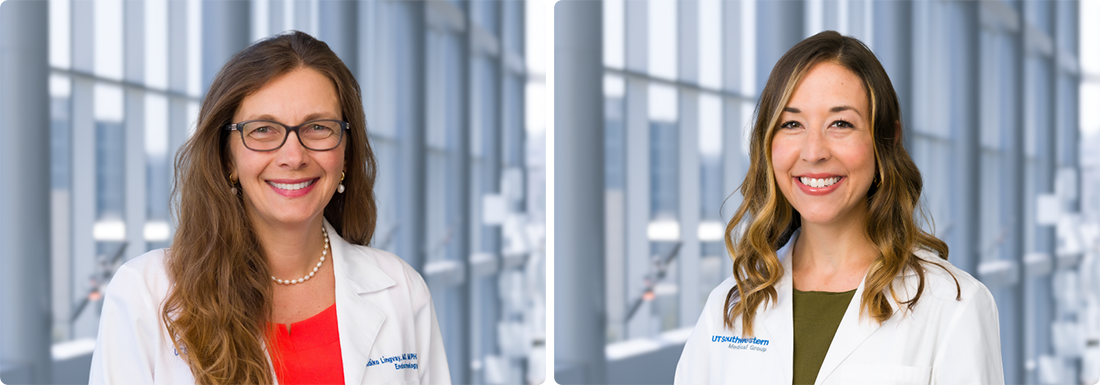
Lingvay, VanWagner Contribute to Guidance on CKM Syndrome
Ildiko Lingvay, M.D., M.P.H., M.S.C.S., a Professor in the Division of Endocrinology, and Lisa VanWagner, M.D., M.Sc., an Associate Professor in the Division of Digestive and Liver Diseases, were among the writing group members of a newly released American Heart Association (AHA) and American College of Cardiology (ACC) clinical practice guideline addressing cardiovascular-kidney-metabolic (CKM) syndrome, an emerging framework that integrates cardiovascular, kidney, and metabolic health. Published in Circulation and the Journal of the American College of Cardiology, the document represents the first comprehensive U.S. guideline focused on this interconnected set of conditions.
CKM syndrome reflects the close relationship among cardiovascular disease, chronic kidney disease, diabetes, obesity, and related risk factors. Rather than treating these conditions in isolation, the guideline defines CKM as a spectrum of disease driven by shared biology and overlapping risk factors, which together substantially increase the risk of adverse outcomes, including heart attack, kidney failure, and premature mortality.
The new guidance introduces a four-stage classification system that spans early risk through established cardiovascular disease, allowing clinicians to identify patients earlier and tailor prevention and treatment strategies over time. It also emphasizes more comprehensive risk assessment, including use of updated tools such as the PREVENT risk equations, and highlights the importance of recognizing social determinants of health alongside traditional clinical factors.
“A central theme of the guideline is the need for coordinated, multidisciplinary care,” said Dr. VanWagner. “Because CKM syndrome often spans multiple organ systems, patients frequently receive fragmented care across specialties. In this document, we call for greater collaboration among cardiology, endocrinology, nephrology, hepatology, obesity medicine, and primary care to improve outcomes and deliver more holistic, patient-centered management.”
The guideline also reinforces the role of early and aggressive prevention. Recommendations include routine screening for CKM risk factors, prioritization of lifestyle interventions such as weight management and physical activity, and appropriate use of pharmacologic therapies, including newer agents that address metabolic and cardiovascular risk simultaneously. By identifying patients earlier in the disease continuum, the approach aims to slow or even reverse disease progression.
“Nearly 90 percent of adults have at least one component of CKM syndrome, making it a major driver of cardiovascular risk nationwide,” Dr. Lingvay said. “By providing a unified framework for risk assessment and management, the guideline offers clinicians a practical roadmap to address one of the most significant and complex contributors to chronic disease burden.” ■
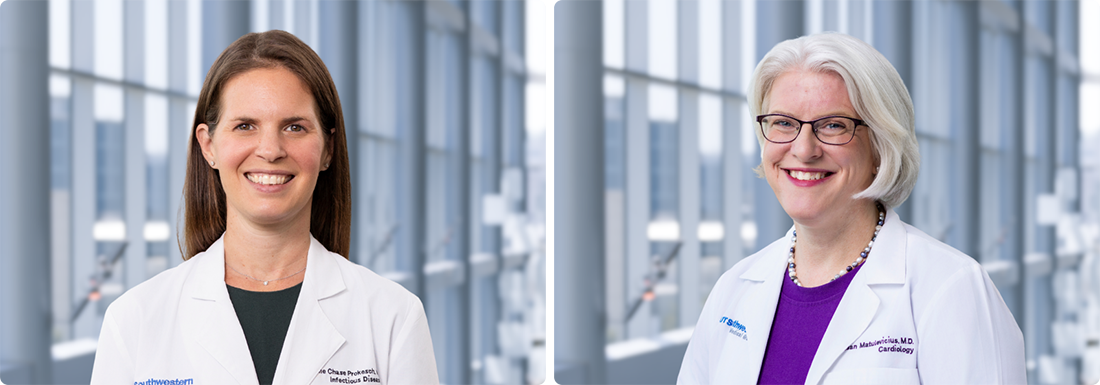
Prokesch, Matulevicius Contribute to Women in Medicine Leadership Conference
Bonnie Prokesch, M.D., an Associate Professor in the Division of Infectious Diseases and Geographic Medicine, recently presented at the Dallas County Medical Society’s inaugural Women in Medicine Leadership Conference. Her session, “A Coaching Approach for Women in Medicine: Transforming Our Workplaces (and Ourselves),” introduced practical coaching techniques designed to help physicians address common challenges and strengthen both personal and professional effectiveness.
The interactive session included demonstrations of core coaching skills, guided practice, and group reflection. Discussion focused on issues frequently encountered by women in medicine and emphasized the use of targeted questions to better understand and navigate these challenges. The session also highlighted how coaching approaches can be applied in daily clinical and leadership settings to support growth and resilience.
Susan Matulevicius, M.D., a Professor in the Division of Cardiology and Associate Dean of Faculty Wellness, also participated in the program, leading a breakout session titled “Personal Entitlement, Claiming Your Power.” Her session explored strategies for recognizing professional value and advocating effectively within complex health care environments. ■
Research Report

Study Identifies Placental Metabolism as a Key Regulator of Labor Timing
A new multi-institutional study led by Samir M. Parikh, M.D., Professor and Chair of Internal Medicine, shows that a key metabolic molecule in the placenta helps control when labor begins, offering new insight into preterm birth and potential strategies to improve patient care.
Published in Science, the research brought together investigators from multiple departments, including Internal Medicine, Pediatrics, and the Green Center for Reproductive Biology at UT Southwestern, highlighting the strength of interdisciplinary collaboration in tackling complex clinical problems.
The researchers focused on nicotinamide adenine dinucleotide, or NAD+, a molecule essential for cellular energy and normal metabolic function. They found that NAD+ levels in the placenta naturally decline late in pregnancy. When levels drop too quickly or too early, labor can begin prematurely.
Using mouse models, researchers showed that reducing placental NAD+ triggered early labor, while increasing NAD+ levels delayed delivery. The findings point to a direct biological link between placental metabolism and the timing of birth.
The study also identified how this process works. NAD+ supports an enzyme that helps keep labor-triggering signals, known as prostaglandins, in check. When NAD+ levels fall, those signals build up and can initiate labor.
Importantly, the researchers demonstrated that NAD+ levels can be influenced through supplementation with nicotinamide, a vitamin B3 derivative. In animal models, this approach helped maintain placental NAD+ and reduced the risk of preterm labor in certain settings.
“These findings have clear implications for patient care,” said Dr. Parikh, the study’s senior author. “Preterm birth remains a leading cause of complications for newborns, and treatment options are limited. By identifying a modifiable metabolic pathway, this work suggests a new direction for preventing early labor and improving outcomes. It may also help refine how labor is induced at term by better preparing the body for delivery.” ■
Dr. Parikh holds the Donald W. Seldin Distinguished Chair in Internal Medicine and the Ruth W. and Milton P. Levy Sr. Chair in Molecular Nephrology.
Education & Training

Scielzo Examines AI’s Growing Role in Medical Education and Rheumatology Training
Shannon Scielzo, Ph.D., M.S., an Associate Professor and Associate Director of Education, explores how artificial intelligence is reshaping clinical care and physician training in a recent publication in Rheumatic Disease Clinics. Co-authored by Salahuddin “Dino” Kazi, M.D., a Professor in the Division of Rheumatic Diseases and Vice Chair of Education, the article highlights how AI tools are increasingly used to support diagnostic reasoning, interpret imaging, and synthesize large volumes of patient data. While these tools can enhance efficiency and expand differential diagnoses, they generate probabilistic suggestions rather than definitive answers and may introduce risks such as overconfidence or premature diagnostic conclusions, particularly among trainees.
The authors emphasize that the growing use of AI requires a fundamental shift in medical education. Rather than focusing primarily on knowledge acquisition, training programs must cultivate adaptive expertise. This includes teaching trainees to critically evaluate AI-generated output, recognize bias, and maintain clinical judgment in the face of algorithmic recommendations. The article introduces structured approaches such as the DEFT-AI framework, which guides learners to articulate their reasoning and use AI to test, rather than replace, their clinical thinking.
The publication also examines how AI is changing the physician-patient dynamic. Patients are increasingly using AI tools to seek medical information and may place significant trust in these outputs, even when they are inaccurate. As a result, physicians must be prepared to address patient-generated AI insights, manage expectations, and incorporate these discussions into shared decision-making. In parallel, AI is expected to influence trainee selection, assessment, and educational design, including the development of more individualized, data-driven approaches to training. ■
In Case You Missed It

Hammers Leads Research Behind FDA Approval of Kidney Cancer Drug
The U.S. Food and Drug Administration has approved the use of belzutifan, in combination with the immunotherapy drug pembrolizumab, for certain patients with earlier-stage kidney cancer following surgery, marking the latest expansion for a therapy rooted in discoveries at UT Southwestern.
The approval is based on results from LITESPARK-022, a Phase 3 clinical trial conducted at 285 sites worldwide, including UT Southwestern. The study evaluated the combination in patients with clear cell renal cell carcinoma after nephrectomy. At a median follow-up of 28.4 months, the regimen reduced the risk of disease recurrence by 28 percent compared with pembrolizumab alone.
“LITESPARK-022 demonstrated an improvement in disease-free survival by 28 percent when belzutifan was combined with pembrolizumab in patients with higher risk for kidney cancer recurrence,” said Hans Hammers, M.D., Ph.D., a Professor in the Division of Hematology and Oncology and co-leader of clinical research and immunotherapy in the Kidney Cancer Program, who served as UT Southwestern’s site leader for the trial.
Belzutifan, developed by Merck, was first approved in 2021 and has since gained indications across multiple tumor types, including von Hippel-Lindau disease-associated tumors and advanced renal cell carcinoma. Pembrolizumab, a checkpoint inhibitor also manufactured by Merck, is a standard immunotherapy used in several cancer settings.
The drug traces its origins to research at UT Southwestern in the 1990s, when scientists identified HIF-2α, a protein that enables cells to adapt to low oxygen conditions but also contributes to kidney cancer growth. Subsequent work uncovered a druggable site within the protein, ultimately leading to the development of HIF-2α inhibitors through Peloton Therapeutics, a company founded to advance the discovery. Merck acquired Peloton in 2019 and continued clinical development.
UT Southwestern’s Kidney Cancer Program is one of only two National Cancer Institute-designated SPORE programs in kidney cancer and has played a central role in advancing targeted therapies and immunotherapies for the disease. ■