
News Highlights - May 12, 2026
Announcements

Kuppalli Selected as Co-Medical Director for Statewide World Cup Initiative
The Texas Department of State Health Services and the University of Texas System have joined forces to launch a first-of-its-kind infectious disease physician consultation hotline in advance of the 2026 FIFA World Cup, which will bring multitudes of international visitors to Texas this summer.The hotline is a provider-to-provider consultation service designed to support physicians at hospitals and clinics across Texas as they manage patients presenting with potential travel-related infectious diseases throughout the tournament. FIFA World Cup will host nine matches at AT&T Stadium in Arlington and seven matches at NRG Stadium in Houston, with events running through July.
The initiative is co-led by Krutika Kuppalli, M.D., an Associate Professor in the Division of Infectious Diseases and Geographic Medicine and Medical Director of UT Southwestern’s Travel Clinic, and Susan McLellan, M.D., a Professor in the Division of Infectious Diseases at the University of Texas Medical Branch in Galveston. Together, they serve as Co-Medical Directors of the hotline, drawing on their clinical expertise in infectious disease, global health, and outbreak response.
“Mass gatherings like FIFA World Cup create unique infectious disease challenges,” said Dr. Kuppalli. “When physicians encounter a febrile traveler from an endemic region and are uncertain of the diagnosis or next steps, we want them to have an expert they can call immediately, which is what the hotline provides.”
“Texas is welcoming the world this summer, and with that comes a spectrum of travel-related illnesses,” said Dr. McLellan. “Our goal is to ensure that any provider from the region has access to specialized infectious disease consultation so that patients receive the right care, in the right setting, as quickly as possible.”
The hotline will be staffed by infectious disease physicians from four UT System institutions: UTMB Galveston, UT Southwestern, UT Health San Antonio, and UTHealth Houston. Physicians will be available 24/7 throughout the tournament period, providing guidance on diagnosis, testing, isolation, treatment, and mandatory public health reporting for diseases of concern.
The service is intended to complement existing public health infrastructure and will operate in close coordination with local health authorities to ensure rapid identification ad response to any high-consequence infectious disease situations. ■
Kudos

Rashdan Named a 2026 Patient Safety Star
Sawsan Rashdan, M.D., an Associate Professor in the Division of Hematology and Oncology, was recognized by the UT Southwestern Health System as a Patient Safety Star in the outpatient category during its Celebration of Excellence on Friday, May 1. The Patient Safety Star award recognizes individuals who advance safe, high-quality care through a commitment to learning from mistakes, teamwork, and creating a safe environment for patients, visitors, and staff. Awardees are honored across inpatient and outpatient settings in clinical staff, non-clinical staff, and provider categories.
Dr. Rashdan was recognized for her strong commitment to patient safety and quality care. As Quality Officer, she works closely with leaders at the Simmons Comprehensive Cancer Center to review safety events, spot patterns, and lead efforts that improve care. She helped guide clinic improvements after a serious safety event, including leading the Hand-Off Taskforce, and contributed to changes such as a redesigned pre-infusion checklist now used across infusion clinics. She has also supported efforts to improve smoking cessation rates and ensure blood pressure is properly rechecked for patients with hypertension. Known for being approachable and collaborative, Dr. Rashdan regularly joins team debriefs and promotes an environment where staff feel safe speaking up, helping drive lasting improvements in patient safety and outcomes.
Dr. Rashdan earned her medical degree at the Faculty of Medicine of Damascus University in Syria. She performed her residency in internal medicine at the Indiana University School of Medicine, where she also completed advanced fellowship training in hematology and oncology. She joined the faculty in 2016. ■
Education & Training
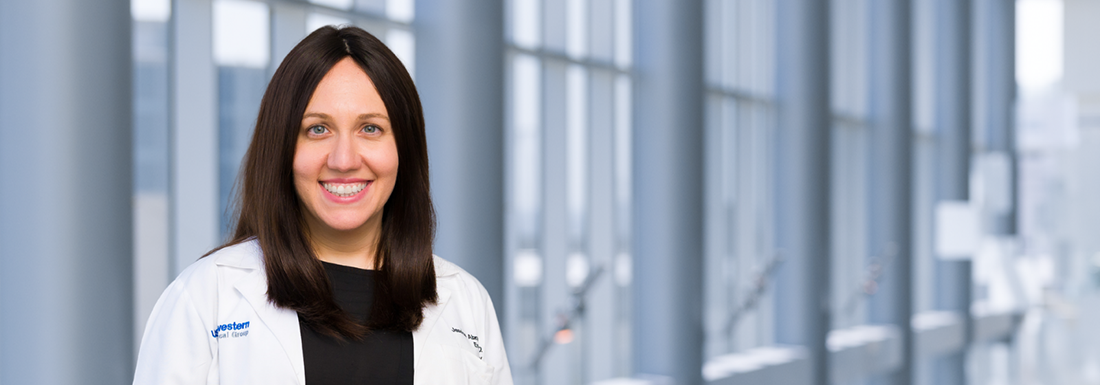
UT Southwestern Selected for Endocrine Society Medical Student Engagement Program
The Division of Endocrinology has been selected as a national site for the Endocrine Society’s Medical School Engagement Program (MSEP) for the 2026–2027 cycle, earning competitive funding to expand opportunities for medical students to explore careers in endocrinology.
The MSEP is a national initiative designed to address a growing workforce gap in endocrinology by increasing student exposure to the specialty and connecting learners with mentors and professional opportunities. Despite rising demand for endocrine care, fewer U.S. medical graduates are pursuing the field, prompting efforts to strengthen the pipeline of future specialists.
Through the award, UT Southwestern will receive funding and resources to build on its existing Endocrine Interest Group, which was established in 2024. Program support includes funding for faculty-led educational sessions, student engagement activities, and structured mentorship opportunities that highlight the clinical and research breadth of endocrinology.
The initiative also supports student recognition and professional development.
“This designation will strengthen our efforts to engage medical students early, foster mentorship, and encourage more trainees to consider careers in endocrinology,” said Jessica Abramowitz, M.D., an Associate Professor in the Division of Endocrinology and Associate Program Director of the Endocrinology Fellowship. “We plan to use the funds to establish student awards and provide opportunities for trainees to attend the Endocrine Society’s annual meeting, where award recipients can participate in national programming and connect with leaders in the field.”
In addition to financial support, participating institutions receive access to curated educational resources and complimentary Endocrine Society memberships for student participants, further enhancing exposure to the specialty.
By expanding programming and creating new pathways for involvement, the initiative aims to build sustained interest in a field critical to managing conditions such as diabetes, thyroid disease, and metabolic disorders. ■
High Engagement, Positive Ratings Highlight Residency Program Strengths in ACGME Survey
A new study published in the Journal of General Internal Medicine finds that Medicare Advantage plans are slowly expanding The latest ACGME resident survey reveals that residents are engaged, supported, and largely positive about their training experience.
With a 96.1% response rate, nearly every resident participated in the 2026 survey, offering a comprehensive view of the program. Overall performance remained strong, with an average compliance rate of 87.5% across 52 measures, closely tracking with specialty peers and holding competitive standing nationally. The program outperformed specialty benchmarks on more than half of all items and exceeded national benchmarks in several areas.
“At the center of the results is a clear pattern of support, professionalism, and strong teaching,” said Salahuddin Kazi, M.D., a Professor in the Division of Rheumatic Diseases, Vice Chair of Education, and Residency Program Director. “Teaching and supervision continue to be standout strengths, with multiple measures exceeding both specialty and national benchmarks. That really reflects the program’s focus on high-quality instruction and mentorship.”
Residents reported strong access to confidential mental health services and high levels of faculty professionalism, each at 96.0%. Nearly all residents confirmed access to evaluations and the ability to provide confidential feedback on faculty, reflecting a culture of transparency and continuous feedback.
Just as important, residents continue to describe their experience in positive terms. Nearly 93% said their experience has been somewhat or very positive, and nearly 88% would choose the program again. Together, those numbers point to a training environment that is both rigorous and supportive.
“The survey also highlights areas where we can keep getting better, particularly in systems-based practice and teamwork,” Dr. Kazi said. “We see that as an opportunity to build on a strong foundation and further strengthen the resident learning experience.”
Faculty feedback echoed the overall positive tone.
“Some of the variation in program director ratings reflects the balance we’re constantly managing,” Dr. Kazi said. “We’re working to protect educational time and standards while also navigating the realities of a complex clinical environment. Those priorities don’t always align perfectly, but they’re both essential. Overall, these results reinforce that we remain a strong program, committed to supporting our residents and preparing them for success in internal medicine.” ■