
News Highlights - February 17, 2026
Kudos
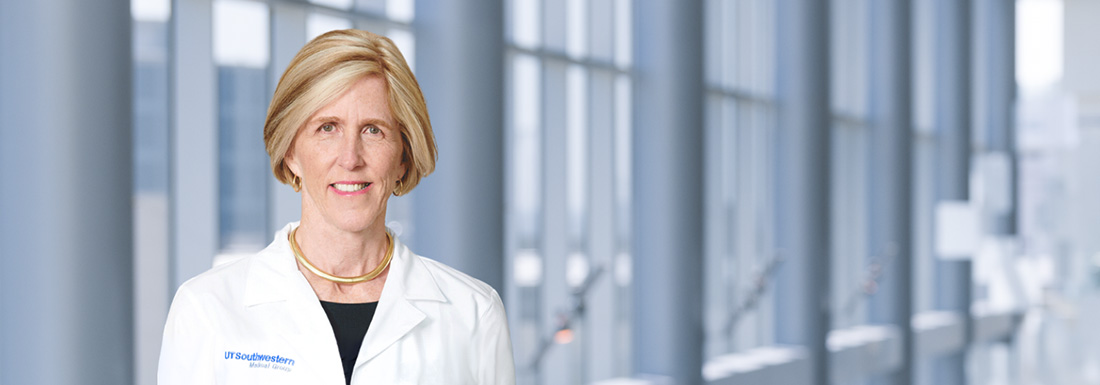
Hobbs to Receive Distinguished Alumni Award
Helen H. Hobbs, M.D., a Professor and Division Chief of Clinical Genetics, has been selected for Internal Medicine’s 2026 Distinguished Alumni Award. She will receive the award during the Residency Graduation Dinner on Saturday, May 16, and deliver commencement remarks. Dr. Hobbs will also present the second annual Daniel W. Foster Lecture during Internal Medicine Grand Rounds on Friday, May 15.
Originally from Boston, Dr. Hobbs holds a bachelor’s degree in human biology from Stanford University in Palo Alto, California. She earned her medical degree at Case Western Reserve University in Cleveland, Ohio, and obtained internal medicine residency training at UT Southwestern, where she served as Chief Resident, and then completed fellowship training in endocrinology and metabolism.
Dr. Hobbs joined the UT Southwestern faculty in 1987. From 2000 to 2024, Dr. Hobbs served as Director of the McDermott Center for Human Growth and Development.
An internationally recognized physician-scientist whose work has changed our understanding of cholesterol, heart disease, and fatty liver disease, Dr. Hobbs studies how differences in our genes affect the way the body processes fats, and her discoveries have helped explain why some people develop high cholesterol or liver disease while others do not. One of her major achievements was establishing the Dallas Heart Study, a landmark, multiethnic, population-based cohort that enabled groundbreaking discoveries, most notably the identification of variations in the PCSK9 gene that naturally keep cholesterol low and protect against heart disease, and the discovery of genetic changes that contribute to fatty liver disease. In addition, her work led to the identification of PNPLA3 variants as one of the most important genetic risk factors for fatty liver disease. Through this work, she has identified new biological pathways and potential targets for treatment, shaping how doctors think about preventing and treating heart and liver conditions.
Over her career, Dr. Hobbs has been honored with many of the highest awards in medicine and science, reflecting the global impact of her research. She has received major prizes from organizations around the world, including top honors from the American Heart Association, the European Atherosclerosis Society, and the prestigious Breakthrough Prize in Life Sciences. Universities such as Johns Hopkins, Mount Sinai, and Case Western Reserve have awarded her honorary degrees in recognition of her achievements. She has also been elected to elite scientific groups, including the National Academy of Sciences, the National Academy of Medicine, the American Academy of Arts and Sciences, and the American Society of Clinical Investigation. An Investigator in the Howard Hughes Medical Institute, Dr. Hobbs is frequently invited to give high‑profile lectures across the globe, underscoring her reputation as one of the leading voices in genetic and medical research. ■
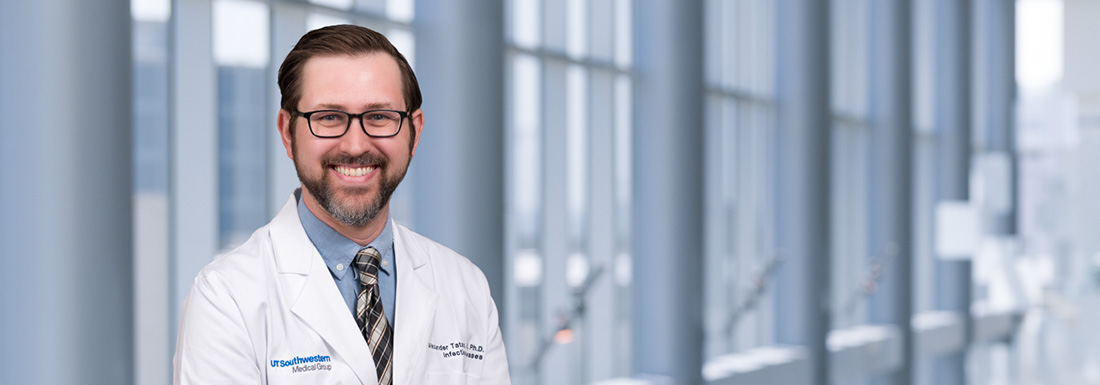
Tatara Selected as Grand Prize Winner in TAMEST Protégé Poster Challenge
Alexander Tatara, M.D., Ph.D., an Assistant Professor in the Division of Infectious Diseases and Geographic Medicine, was selected as the Grand Prize winner of the TAMEST (Texas Academy of Medicine, Engineering, Science, & Technology) Protégé Poster Challenge. He was chosen from among 63 early career researchers participating in this year’s program.
The TAMEST Protégé Program pairs early‑career scientists and industry professionals with TAMEST members, offering mentorship and the chance to share emerging research at the organization’s annual conference. Protégés also compete in the poster challenge, which highlights work with potential to advance scientific understanding and benefit society.
Since the program’s launch in 2004, TAMEST has welcomed 1,286 protégés. Many have continued on to distinguished careers: 42 have received major TAMEST‑associated honors, including the Edith and Peter O’Donnell Awards, Hill Prizes, and the Mary Beth Maddox Award and Lectureship, and 58 have been elected to the National Academies and inducted as TAMEST members. ■
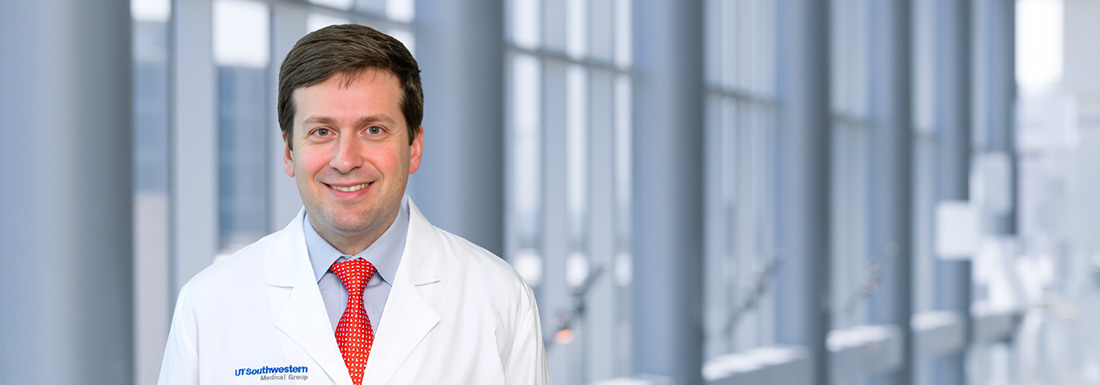
Maalouf Begins Term as President of Leading Kidney Stone Research Organization
Naim Maalouf, M.D., a Professor in the Division of Endocrinology and Associate Director of the Charles and Jane Pak Center for Mineral Metabolism and Clinical Research, has begun his term as President of the R.O.C.K. (Research On Calculus Kinetics) Society. The Society is the leading professional organization focused on kidney stone research, with membership by invitation only. Its annual meeting brings together experts across urology, nephrology, radiology, epidemiology, physical chemistry, and basic science pathophysiology to discuss emerging findings in stone biology and clinical care.
Dr. Maalouf has gained national recognition for his research on the mechanisms, prevention, and treatment of kidney stone disease, with emphasis on calcium phosphate, calcium oxalate, and uric stone formation. His work explores the metabolic and dietary factors that influence stone risk, including protein intake, obesity, and weight loss, as well as emerging therapies such as hydroxycitrate. He also studies strategies to optimize fluid therapy and stent management in adults and children with nephrolithiasis.
As President, Dr. Maalouf will organize and host the 2027 R.O.C.K. Annual Meeting in Dallas. He will also oversee the Society’s kidney stone research sessions held during the American Urological Association Meeting in Washington, D.C., in May 2026. ■
Research Report

UT Southwestern Team Contributes to Landmark Study on Advance Care Planning for Older Adults
A new study published in the Journal of the American Geriatrics Society marks an important milestone for the UT Southwestern team participating in the EQUAL ACP study, a major multi-site project aimed at improving the quality of end-of-life care for older adults, particularly African Americans, who have historically faced disparities in care. The study’s first published paper analyzes baseline data and highlights early insights into what helps older adults feel ready to make decisions about their future medical care.
The UT Southwestern effort was led by Anupama Gangavati, M.D., an Associate Professor in the Division of Geriatric Medicine and site principal investigator, under the leadership of Ramona Rhodes, M.D., also an Associate Professor in the Division of Geriatric Medicine. Together, Drs. Gangavati ad Rhodes provided essential oversight and direction for the project locally, ensuring strong engagement across clinical and community partners, while working closely with study coordinator Sherone (Rhani) Williams-Bryant and community board advisory member Heather Nemec, LCSW.
The study is part of the larger Reducing Disparities in the Quality of Palliative Care for Older African Americans (EQUAL ACP) project, a longitudinal, cluster-randomized trial that spans 10 outpatient clinics in five Southern states, including Duke University, the University of Alabama at Birmingham, Emory University, two community health centers in South Carolina, and UT Southwestern.
The newly published paper focuses on baseline findings from 792 adults aged 65 and older living with serious illness or multiple chronic conditions. The research team examined what makes people feel ready to discuss or document their care preferences, a process known as advance care planning (ACP).
The study found that overall readiness to plan for future medical care did not differ significantly between African American and White participants. Across both groups, individuals who felt more comfortable talking about death were more prepared to engage in ACP. The reasons behind that readiness, however, differed by race. Among African American participants, attending religious services more often was linked to greater readiness. For White participants, readiness was more closely tied to preferring care that focuses on comfort and pain relief rather than extending life at any cost.
Other factors often assumed to influence ACP engagement, such as trust in health providers, perceived discrimination, or communication quality, were not found to play a significant role in this initial analysis.
These early findings underscore the importance of tailoring advance care planning to reflect different cultural backgrounds, beliefs, and priorities. They also lay the groundwork for future phases of the project, which will evaluate how various ACP strategies can improve quality of care and reduce disparities. ■
Education & Training

Medical Students Praise Faculty, Fellows, and Residents in Annual Learning Evaluation
Medical students reported highly positive experiences with faculty, fellows, and residents in this year’s Learning Evaluation Survey, highlighting the strength of clinical teaching across the Department of Internal Medicine.
The Internal Medicine Undergraduate Medical Education (UME) program supports more than 650 student enrollments each year across nine courses delivered in 12 four‑week sessions. Learners rotate through four major multi‑ward sites—Clements University Hospital, Parkland Memorial Hospital, the VA North Texas Health Care System, and Methodist Hospital Dallas—along with approximately 30 ambulatory clinics. Conferences and lectures reinforce the clinical curriculum throughout each block.
“Students praised the quality of instruction and mentorship they received during both core clerkships and electives, noting that teaching teams consistently fostered clinical reasoning, professionalism, and confidence at the bedside,” said Salahuddin Kazi, M.D., a Professor in the Division of Rheumatic Diseases and Vice Chair of Education. “Many highlighted the accessibility and commitment of faculty and trainees who create an environment that supports learning, inquiry, and patient-centered care.”
Beyond clinical training, the Internal Medicine UME program provides key support for students’ professional development, including guidance on residency applications, mentorship for research and scholarly work, recognition of academic excellence, and opportunities for visiting learners.
The positive survey results reflect the collective dedication of teaching faculty, fellows, and residents whose contributions shape the next generation of physicians. ■