
News Highlights - February 10, 2026
Kudos
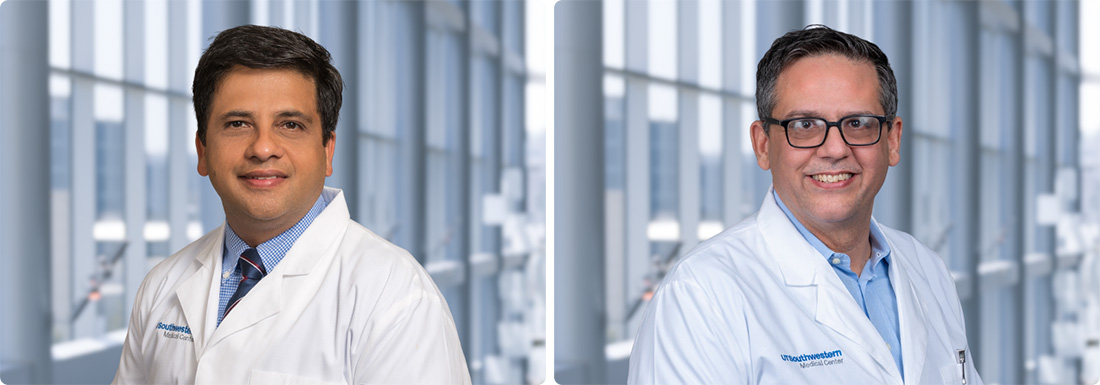
Girotra, Turer Elected to ASCI
Saket Girotra, M.D., M.S., a Professor in the Division of Cardiology, and Emre Turer, M.D., Ph.D., an Associate Professor in the Division of Digestive and Liver Diseases, were among 100 physician-scientists recommended for election into the American Society for Clinical Investigation (ASCI) for 2026. The ASCI received 262 nominations for this year’s group.
They join 39 active and emeritus faculty with primary or secondary appointments in Internal Medicine.
“Dr. Girotra and Dr. Turer exemplify the strength of our physician‑scientist community,” said Ezra Burstein, M.D., Ph.D., Professor and Interim Chair of Internal Medicine. “Their election to the ASCI reflects not only their scientific rigor and innovative contributions, but also their commitment to advancing clinical care through discovery.”
Dr. Girotra earned his medical degree at the All India Institute of Medical Sciences in New Delhi. He also earned a master’s degree in epidemiology from the Harvard University School of Public Health in Boston. He completed internal medicine residency training at the Medical College of Wisconsin in Milwaukee and then obtained advanced training through fellowships in cardiovascular medicine and interventional cardiology at the University of Iowa in Iowa City, where he served as Chief Fellow. Before joining the UT Southwestern faculty in 2022, he served as Director of the Cardiac Catheterization Laboratory at the Veterans Affairs Medical Center in Iowa City and was a member of the University of Iowa faculty. His research focuses on improving care delivery for cardiac arrest, cardiovascular and peripheral artery disease, and diffusion of new technology.
“Dr. Girotra is a remarkable clinician‑scientist whose work has reshaped how we view and improve systems of care for cardiac arrest and cardiovascular disease,” said James de Lemos, M.D., Professor and Division Chief of Cardiology. “His insights have had a measurable impact on patient outcomes, and his election to the ASCI is a fitting acknowledgment of his leadership and his contributions to the field.”
Dr. Turer earned his medical degree and doctoral degree in biological sciences at the University of Chicago and completed internal medicine residency training and a fellowship in digestive and liver diseases at UT Southwestern as part of the Physician-Scientist Training Program. He joined the UT Southwestern faculty in 2015. His research focuses on discovery of new genes involved in maintaining intestinal homeostasis.
“Dr. Turer brings an exceptional blend of scientific curiosity and clinical perspective to his research on intestinal biology,” said Amit Singal, M.D., M.S., Professor and Interim Division Chief of Digestive and Liver Diseases. “His discoveries continue to open new pathways for understanding gastrointestinal disease.”
Established in 1908, the ASCI is one of the nation’s oldest and most respected medical honor societies, with 3,500 elected members.
“We are proud to see their achievements recognized at this national level,” Dr. Burstein said. “The ASCI’s recognition highlights the influence of their work and the trajectory of their growing impact.”
New members will be inducted officially on April 17. ■
Dr. Burstein holds the Berta M. and Dr. Cecil O. Patterson Chair in Gastroenterology. Dr. de Lemos holds the Sweetheart Ball - Kern Wildenthal, M.D., Ph.D., Distinguished Chair in Cardiology. Dr. Singal is a Dedman Family Scholar in Clinical Care and holder of the Willis C. Maddrey, M.D. Distinguished Chair in Liver Disease.

Mullins to Serve on AAHPM Research Committee
Megan Mullins, Ph.D., M.P.H., an Assistant Professor in the Division of General Internal Medicine, has been appointed to the Research Committee of the American Academy of Hospice and Palliative Medicine (AAHPM), an organization representing more than 5,400 doctors, nurses, social workers, and other healthcare professionals who care for patients with serious illness.
Dr. Mullins holds a bachelor’s degree in political science from Southwestern University in Georgetown, Texas, and a master’s degree in epidemiology from the University of Michigan School of Public Health in Ann Arbor, where she also earned her doctorate in epidemiologic sciences. She completed post-doctoral training at the University of Michigan’s Rogel Cancer Center where she was a T32 fellow in cancer care delivery research and the inaugural Cancer Care Delivery Research Fellow at NRG Oncology, a research base in the NCI Community Oncology Research Program (NCORP).
She joined the faculty in 2022.
Dr. Mullins’ research program is focused on improving the quality and equity of cancer care for people with advanced stage cancers. Her work is centered in three broad areas: 1) team-based care; 2) actionable patient data collection; and 3) palliative and end-of-life care. Dr. Mullins uses mixed-methods approaches for care delivery research to inform the implementation of evidence-based interventions. She has specific expertise in the analysis of large population-based and medical claims data, in-depth interviewing, surveying patients and providers, and health disparities research. ■
Research Report

Ahmad Helps Lead Major Update on a Common but Often Missed Genetic Condition
A new national report led by Zahid Ahmad, M.D., an Associate Professor in the Division of Endocrinology, shines a spotlight on familial hypercholesterolemia (FH), an inherited condition that causes very high cholesterol from birth and greatly increases the risk of early heart disease. Although FH is one of the most common genetic disorders, most people who have it don’t know it. Early diagnosis and treatment can be lifesaving, and this updated guidance aims to help more families get the care they need sooner.
FH also has a deep scientific connection to UT Southwestern. In the 1970s, UTSW researchers Michael Brown, M.D., Professor of Molecular Genetics and Internal Medicine, and Joseph Goldstein, M.D., Chair and Professor of Molecular Genetics and Internal Medicine, discovered that FH is caused by a deficiency or mutation in LDL receptors, preventing the body from properly clearing LDL cholesterol from the bloodstream. Their landmark work uncovered the LDL receptor pathway, which was fundamental to understanding cholesterol metabolism, and earned them the 1985 Nobel Prize in Physiology or Medicine. Their discoveries laid the groundwork for developing statins, the class of medications most commonly prescribed to lower cholesterol that continue to shape FH care today.
“This report explains that FH affects about one in 300 people worldwide and often runs silently in families through generations,” Dr. Ahmad said. “Because the condition begins at birth, cholesterol levels build up over a lifetime, making early heart attacks from more likely if treatment is delayed.”
In the report published in the Journal of Clinical Lipidology, Dr. Ahmad and a team of national experts outlined several important updates for doctors and the public. These include clearer ways to recognize FH, recommendations for cholesterol testing in children, and strong encouragement for “cascade screening,” in which family members get tested once someone in the family receives a diagnosis of FH. According to the authors, this approach is one of the most effective ways to identify people with FH early, before heart disease develops.
The new guidance also highlights how much treatment has advanced. While statins remain the foundation of care, there are now more powerful newer medications that can dramatically lower cholesterol for people with FH, including those with the more severe form of the condition.
“The report stresses that FH isn’t caused by lifestyle choices and can‘t be fixed with diet and exercise alone,” Dr. Ahmad said. “But with lifelong treatment and early detection, people with FH can live long, healthy lives.”
Amit Khera, M.D., a Professor in the Division of Cardiology, Director of Preventive Cardiology and Clinical Chief of Cardiology, also contributed to this report. ■
Dr. Khera is the Dallas Heart Ball Chair in Hypertension and Heart Disease.

Ying Receives ACS Funding to Advance Esophageal Cancer Prevention Technology
Binbin Ying, Ph.D., an Assistant Professor in the Division of Digestive and Liver Diseases and the Department of Biomedical Engineering, has received an American Cancer Society-funded grant from the Simmons Comprehensive Cancer Center to develop a soft, wireless device that can monitor chronic acid reflux over extended periods. The technology is designed to gently attach to the esophageal lining and continuously measure pH and electrical signals that indicate reflux severity. By capturing this data more comfortably and accurately than current short‑term tools, the system may help physicians identify early signs of Barrett’s esophagus and esophageal adenocarcinoma, two serious complications of untreated reflux.
“This project extends Dr. Ying’s established exciting research in soft medical devices engineered for challenging environments inside the body,” said Amit Singal, M.D., M.S., Professor and Interim Chief of Digestive and Liver Diseases. “His background spans mechanical and biomedical engineering allows him to leverage novel materials and electronics to advance diagnostics and therapeutics for several diseases.”
Dr. Ying holds a bachelor’s degree in mechanical engineering from Donghua University and a bachelor’s degree in international economics and trade from the Shanghai Institute of Foreign Trade. He earned his master’s degree in biomedical engineering from Shanghai Jiao Tong University and his doctorate in mechanical engineering from McGill University. Before joining the UT Southwestern faculty, he was a Banting Postdoctoral Fellow in the laboratories of Giovanni Traverso, Ph.D., and Robert Langer, Sc.D., at the Massachusetts Institute of Technology and Brigham and Women’s Hospital. His work includes hydrogel adhesives, soft medical robots, and ingestible devices used for diagnostics and therapeutics in diseases such as cancer and dementia.
“My lab is dedicated to translating flexible, patient‑friendly devices into clinical practice,” Dr. Ying said. “This new grant advances that goal by addressing a widespread digestive disorder with significant cancer‑prevention potential.” ■
Dr. Singal is a Dedman Family Scholar in Clinical Care and holder of the Willis C. Maddrey, M.D. Distinguished Chair in Liver Disease.
Education & Training

Wang to Participate in GI Rotation at National Cancer Center in Tokyo
A new meta-analysis co‑led by UT Southwestern researchers offers the most detailed assessment to date of continuous glucose monitoring (CGM) in gestational diabetes. The study reviewed 11 randomized clinical trials involving more than 1,200 participants to understand whether CGM provides an advantage over traditional finger‑stick testing during pregnancy. Those results concur with recently published guidelines from the American Diabetes Association.
In the study, published in the Italian journal Acta Diabetologica, the researchers found that women using CGM were more likely to achieve healthy, guideline‑recommended weight gain and delivered infants with slightly lower birth weights, a factor associated with safer deliveries. Although CGM did not significantly improve overall glucose control, nor did it change rates of gestational hypertension, cesarean delivery, preterm birth, newborn hypoglycemia, or NICU admissions, most included trials showed a clear patient preference of CGM over finger sticks.
“CGM is a safe and useful tool, and we’re encouraged by its potential to support healthier weight gain and fetal growth,” said Marconi Abreu, M.D., an Associate Professor in the Division of Endocrinology and the study’s senior author, noting the importance of interpreting these findings in context. “At the same time, our review shows that many clinical outcomes remain similar to standard glucose monitoring. Larger, rigorously designed trials involving blinded CGM in the control arm and evaluating the use of CGM earlier in pregnancy, are essential to clarify which patients benefit most.”
The authors emphasize that while CGM can be incorporated based on patient and provider preference, it should not yet be considered a replacement for standard monitoring. Several ongoing trials may provide clearer answers in the years ahead.
Other UTSW researchers who contributed to the study include Jessica Abramowitz, M.D., and Sasan Mirfakhraee, M.D., both Associate Professors in the Division of Endocrinology. ■
“It’s important to make these procedures widely available while also ensuring they’re done safely,” said Saket Girotra, M.D., a Professor in the Division of Cardiology and joint first author. “As programs continue to grow, health systems and policymakers may need to find ways to keep quality high, such as encouraging more consistent
In Case You Missed It

Navar Publishes Findings From International Trial of New Cholesterol-Lowering Drug
A new international study led by Ann Marie Navar, M.D., Ph.D., an Associate Professor in the Division of Cardiology at UT Southwestern, suggests that a daily pill could offer a powerful new way to lower “bad” cholesterol. The medication, called enlicitide, is part of a newer class of drugs known as PCSK9 inhibitors, which help the body remove LDL cholesterol, the type that increases the risk of heart attacks and strokes. Until now, these treatments have only been available as injections.
The study, published in The New England Journal of Medicine, followed more than 2,900 adults from 14 countries for one year as they took either enlicitide or a placebo while continuing standard cholesterol‑lowering medications such as statins. After 24 weeks, people taking the pill saw their LDL cholesterol drop by 57 percent, while the placebo group experienced a small increase. These improvements continued through all 52 weeks of the trial, and the medication also lowered other cholesterol‑related markers tied to cardiovascular risk.
Just as important, the study found that people taking enlicitide were no more likely to experience side effects than those taking the placebo, indicating that the medicine was generally well‑tolerated. Dr. Navar noted that an effective oral PCSK9 inhibitor could make it easier for many patients to manage their cholesterol, especially those who need more help than statins alone can provide.
Researchers are now conducting a follow‑up study to determine whether the cholesterol‑lowering effects of enlicitide will ultimately lead to fewer heart attacks, strokes, and other cardiovascular events. ■