
News Highlights - February 3, 2026
Kudos
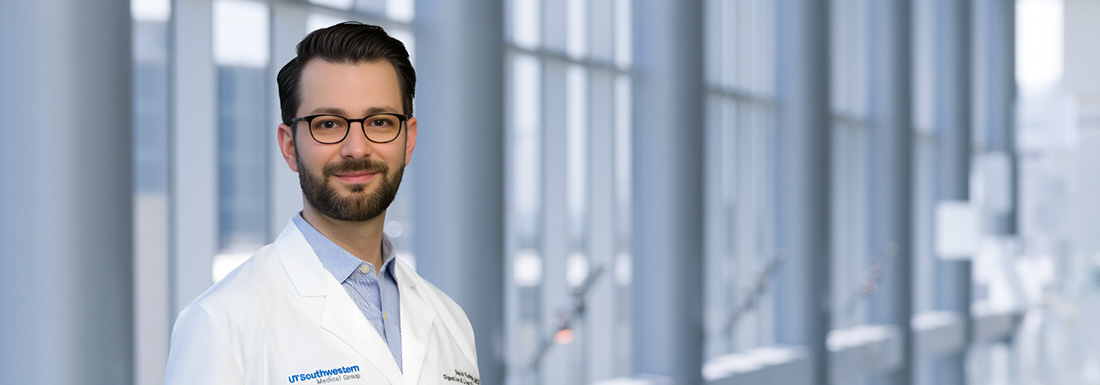
Fudman Named to the IBD Qorus Wall of Fame
David Fudman, M.D., an Associate Professor in the Division of Digestive and Liver Diseases and Medical Director of the Inflammatory Bowel Disease Clinic, has been selected for the IBD Qorus Wall of Fame, a national recognition awarded through the Crohn’s & Colitis Foundation.
The Foundation oversees multiple initiatives aimed at advancing research and improving care for people with inflammatory bowel disease (IBD). Of these, the “Quality of Care: IBD Qorus” initiative is a centerpiece program that serves as a nationwide learning health system. Participating care centers and their patients track outcomes in a shared, prospective database that highlights patterns in care delivery. Insights from this collaborative have led to measurable improvements, including reductions in corticosteroid and opioid use, emergency room visits, and hospitalizations. UT Southwestern is one of six participating sites in Texas.
“Dr. Fudman’s selection to the Wall of Fame reflects his leadership within this national effort,” said Amit Singal, M.D., M.S., Professor and Interim Chief of the Division of Digestive and Liver Diseases. “Through his work, UT Southwestern continues contributing meaningful data and innovative approaches that help shape the future of IBD care.”
Dr. Fudman was cited for showing “exceptional leadership and initiative at UT Southwestern, cultivating a highly engaged and productive team. He is spearheading analyses examining the prevalence of bowel urgency among patients in IBD Qorus — an outcome consistently ranked by patients as one of the most impactful factors in defining IBD remission. In addition, his team was selected as one of ten sites to evaluate the real-world feasibility of implementing a Treat-to-Target strategy in clinical practice — an approach that has shown immense potential for improving patient outcomes and remission rates.” ■
Dr. Singal is a Dedman Family Scholar in Clinical Care and holder of the Willis C. Maddrey, M.D. Distinguished Chair in Liver Disease.
Staff Members Take on New Roles
We congratulate the following staff members who recently took on new positions within the Department:
- Michael Edwards – Sr. Department Operations Analyst, Department Administration
- Kyle Grose – Business Operations Analyst, Center for Hypothalamic Research
- Shihong Ma – Sr. Research Nurse, Nephrology
- Erika Machuca – Sr. Grants & Contracts Specialist, Research Administration
- Kirra Mathis – Administrative Associate, General Internal Medicine
- Guadalupe Isabel Perez – Clinical Research Coordinator, General Internal Medicine
Research Report
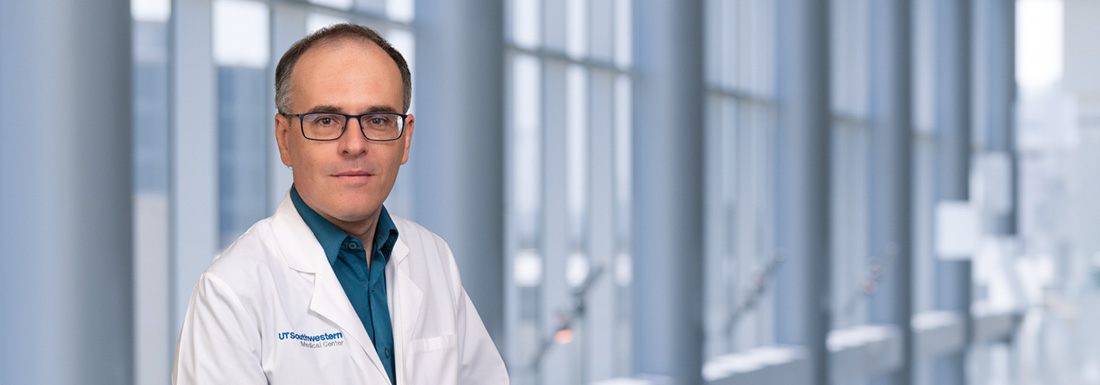
Gautron, Colleagues Publish First Map of GLP1R in Human Nodose Ganglion
A new study published in the Journal of Comparative Neurology reveals that the GLP1 receptor (GLP1R), a target of popular diabetes and obesity drugs, is enriched in a specific population of neurons in the human nodose ganglion.
For the study, Laurent Gautron, Ph.D., an Associate Professor in the Center for Hypothalamic Research, and colleagues obtained human nodose ganglia, an uncommon and difficult-to-access tissue. Using RNAscope technology, the researchers identified GLP1R expression in a subset of neurons from human donors. These findings uncover a previously unknown neural target through which GLP1R drugs may exert their therapeutic effects and/or side effects.
Dr. Gautron noted that the work also broadens the field's understanding of receptor distribution.
“We found that low-level GLP1R expression occurs in a much larger portion of nodose neurons than previously understood, which suggests a wider functional reach for GLP1R-based therapies,” he said. “We also observed clear species differences. While mice show strictly neuronal expression, humans display GLP1R in nonneuronal cells of the vagus nerve, which is an important distinction for translating preclinical findings.”
Further research is needed to fully characterize the molecular profile of human nodose neurons on a larger scale. ■
Learn More About Dr. Gautron's Research
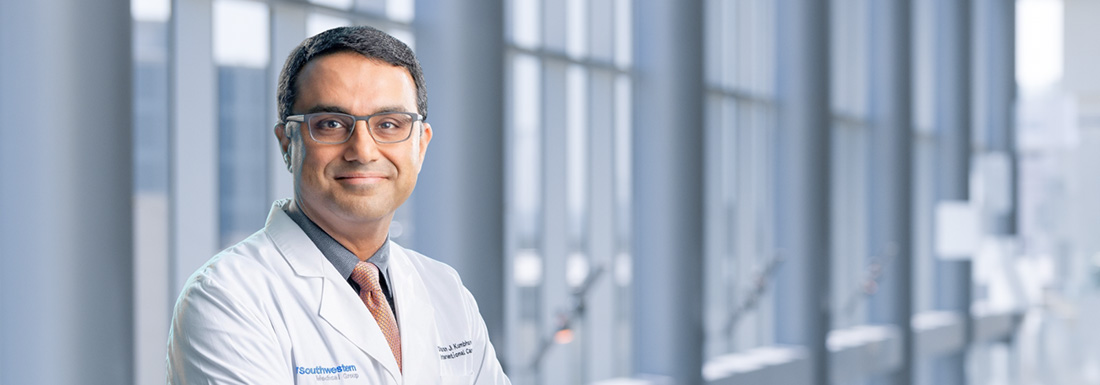
Study Highlights Operator Experience in Heart Valve Procedures
A new study led by Dharam Kumbhani, M.D., a Professor in the Division of Cardiology and Section Chief of Interventional Cardiology, shows that patients tend to have better results when their heart procedure is performed by doctors who do these procedures more often.
Published in JAMA Cardiology the study looked at more than 400,000 heart valve procedures done in the United States between 2020 and 2023. These included TAVR, a minimally invasive way to replace a narrowing aortic valve, and MTEER, a procedure used to repair a leaking mitral valve.
“Even though these procedures are becoming more common, many doctors still perform them only a handful of times each year,” said Dr. Kumbhani. “More than 20 percent of doctors performing TAVR and half of those performing MTEER did 10 or fewer procedures per year, sometimes less than one a month. And the pattern held true regardless of where the procedures were performed. Even at high-volume hospitals, patients did better when their doctor personally had more experience.”
These procedures have expanded quickly in recent years, especially as new devices and updated guidelines have allowed more patients to qualify. As more hospitals start offering TAVR and MTEER, the number of doctors performing the procedures has also grown, but their individual experience levels vary widely.
Currently, Medicare sets minimum case requirements for hospitals, but not for the doctors themselves. Since the study showed a 10–15% higher risk of problems for patients treated by low‑volume doctors, the findings could influence future policy decisions about training and oversight.
A full list of contributors can be found in the published story. ■
Dr. Kumbhani holds the Jim and Norma Smith Distinguished Chair for Interventional Cardiology.
Continuous Glucose Monitoring Shows Modest Benefits in Gestational Diabetes
A new meta-analysis co‑led by UT Southwestern researchers offers the most detailed assessment to date of continuous glucose monitoring (CGM) in gestational diabetes. The study reviewed 11 randomized clinical trials involving more than 1,200 participants to understand whether CGM provides an advantage over traditional finger‑stick testing during pregnancy. Those results concur with recently published guidelines from the American Diabetes Association.
In the study, published in the Italian journal Acta Diabetologica, the researchers found that women using CGM were more likely to achieve healthy, guideline‑recommended weight gain and delivered infants with slightly lower birth weights, a factor associated with safer deliveries. Although CGM did not significantly improve overall glucose control, nor did it change rates of gestational hypertension, cesarean delivery, preterm birth, newborn hypoglycemia, or NICU admissions, most included trials showed a clear patient preference of CGM over finger sticks.
“CGM is a safe and useful tool, and we’re encouraged by its potential to support healthier weight gain and fetal growth,” said Marconi Abreu, M.D., an Associate Professor in the Division of Endocrinology and the study’s senior author, noting the importance of interpreting these findings in context. “At the same time, our review shows that many clinical outcomes remain similar to standard glucose monitoring. Larger, rigorously designed trials involving blinded CGM in the control arm and evaluating the use of CGM earlier in pregnancy, are essential to clarify which patients benefit most.”
The authors emphasize that while CGM can be incorporated based on patient and provider preference, it should not yet be considered a replacement for standard monitoring. Several ongoing trials may provide clearer answers in the years ahead.
Other UTSW researchers who contributed to the study include Jessica Abramowitz, M.D., and Sasan Mirfakhraee, M.D., both Associate Professors in the Division of Endocrinology. ■
“It’s important to make these procedures widely available while also ensuring they’re done safely,” said Saket Girotra, M.D., a Professor in the Division of Cardiology and joint first author. “As programs continue to grow, health systems and policymakers may need to find ways to keep quality high, such as encouraging more consistent
Education & Training

Med-Geri Residency Offers Early, Immersive Training
UT Southwestern’s Medicine–Geriatrics (Med‑Geri) pathway is a four‑year combined Internal Medicine residency and Geriatric Medicine fellowship, designed for physicians who know they want to become geriatricians. The program introduces core geriatric frameworks, skills, and clinical experiences beginning in intern year.
“Because Internal Medicine and Geriatric Medicine naturally overlap, we’re able to give residents a strong foundation in both while opening more time in fellowship to pursue interests such as medical education, research, aging policy, or medical directorship,” said Deborah Freeland, M.D., an Assistant Professor in the Division of Geriatric Medicine and Med‑Geri Track Director.
Residents are fully integrated with categorical trainees while receiving longitudinal mentorship from the Geriatric Medicine Division. Throughout the four years, they participate in continuity house calls, geriatric didactics, journal clubs, and hands‑on experiences across UT Southwestern, Parkland Health, and the Dallas VA. Clinical training includes Home‑Based Primary Care, the Geriatric Assessment Program Clinic, the Acute Care of the Elderly Unit, the POSH Program, the Community Living Center, geriatric inpatient consults, and additional specialty programs supporting older adults.
“The mentorship and educational opportunities in Med‑Geri have been invaluable,” said Jennyly Nguyen, M.D., a current Med-Geri resident. “One of the most important lessons I’ve learned is that medicine is an art of discernment—identifying what matters most to each patient and addressing their greatest concerns with care and intention. In this community, the opportunities to learn feel limitless.” ■