
News Highlights - January 27, 2026
Research Report
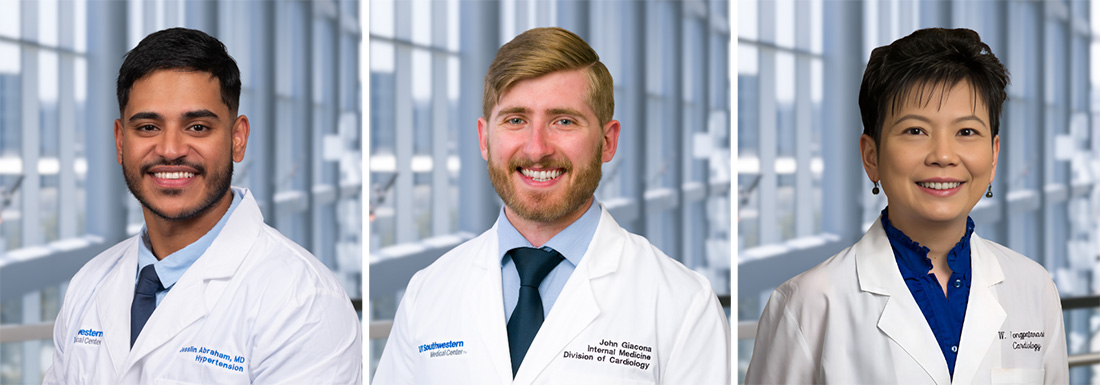
Study Finds “Eyeballing” Home Blood Pressure Logs Often Leads to Missed Treatment Opportunities
A new study from the Hypertension Section at UT Southwestern, conducted by Jesslin Abraham, M.D., John Giacona, Ph.D., PA-C, and Wanpen Vongpatanasin, M.D., examined how accurately clinicians estimate home blood pressure readings when reviewing patient logs. Home blood pressure monitoring is an important part of diagnosing and managing hypertension, but many devices still rely on paper logs or electronic systems that do not calculate averages. This means providers often scan the numbers and make quick visual estimates.
To test how accurate those estimates are, the research team surveyed 194 providers across the departments of Internal Medicine and Family Medicine, and the School of Health Professions. Participants reviewed five simulated blood pressure logs and estimated average systolic and diastolic pressures. For two of the logs, which represented a patient with stage‑2 hypertension, they also made treatment recommendations.
The study, published in Hypertension, found that visual estimation frequently missed the true average. On average, providers slightly overestimated both systolic and diastolic pressures, but more than 30% of all estimates were off by more than 5 mm Hg, a margin that can meaningfully affect clinical decisions. Underestimation was also common, associated with lack of medication intensification when BP was truly above target.
“These inaccuracies influenced treatment choices,” said Dr. Vongpatanasin, a Professor in the Division of Cardiology and Director of the Hypertension Section. “Providers who underestimated the patient’s blood pressure were significantly less likely to recommend the guideline‑supported two‑drug therapy for stage‑2 hypertension. They were also more likely to delay intensifying treatment when blood pressure remained high.”
The authors note that these findings highlight a need for simple tools that can calculate average home blood pressure reliably. Such tools could help clinicians make more accurate decisions and reduce delays in treating uncontrolled hypertension.
"The collaboration across multiple UTSW departments, including involvement of many faculty and trainees, made the study possible and we want to gratefully highlight their participation in the survey,” said Dr. Giacona, an Assistant Professor in Applied Clinical Research and in the Hypertension Section of the Division of Cardiology.
Other UT Southwestern researchers who contributed to the study include Yinying Wei, M.C.N. RD, LD, CPT; Bau Tran, Pharm.D., Ph.D.; Stephanie Brinker, M.D.; Angela Price, M.D.; Zaiba Jetpuri, D.O.; and Salahuddin Kazi, M.D. ■
Dr. Vongpatanasin holds the Fredric L. Coe Professorship in Nephrolithiasis Research in Mineral Metabolism and the Norman and Audrey Kaplan Chair in Hypertension.

Researchers Advance Evidence on Equity Gaps in Cirrhosis and Liver Cancer Care
Two studies published in Clinical Gastroenterology and Hepatology by researchers in the Division of Digestive and Liver Diseases highlight how personal experiences and social factors can affect the care patients receive for cirrhosis and liver cancer, and where improvements could make a meaningful difference.
The first study surveyed more than 1,000 people with cirrhosis across four major health systems. Many reported facing discrimination in everyday life, and some said those experiences carried over into their medical care. Black patients were the most likely to report discrimination and medical mistrust. While these experiences did not directly predict short‑term medical problems in the study, the researchers note that feeling mistreated or unheard can discourage patients from seeking care, following up, or fully trusting their providers.
A second study followed more than 800 patients who had received a diagnosis of hepatocellular carcinoma (HCC), the most common form of liver cancer. Regular screening, which included routine imaging to check for cancer, was one of the strongest predictors of finding cancer early, when treatment options are most effective. However, fewer than half of patients had received screening. The study found that patients with stronger health literacy were more likely to get screening, and those who reported good communication with their care team were more likely to be diagnosed at an early stage.
“Together, these studies point to the same conclusion, namely, improving trust, communication, and access could help close long‑standing gaps in liver disease and liver cancer outcomes,” said Amit Singal, M.D., M.S., Professor and Interim Chair of Digestive and Liver Diseases, and senior author on both studies. “The Division’s research program is already shaping efforts to strengthen patient–provider communication, improve health education, and make surveillance easier to access, with the goal of ensuring that all patients receive timely, effective care.”
A full list of contributors can be found in the published studies. ■
Dr. Singal is a Dedman Family Scholar in Clinical Care and holder of the Willis C. Maddrey, M.D. Distinguished Chair in Liver Disease.
Transitions
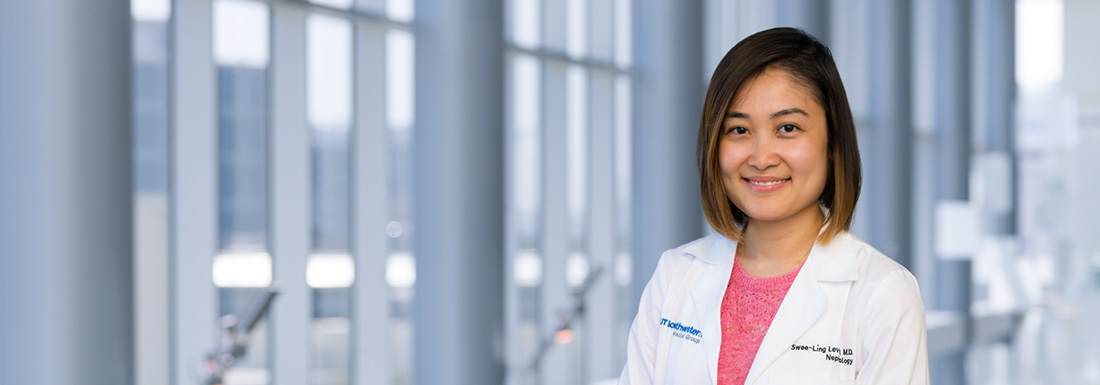
Levea to Direct Kidney Transplant Program at UTHealth Houston
Swee-Ling Levea, M.D., an Associate Professor in the Division of Nephrology, has been appointed Section Chief and Medical Director of the Kidney Transplant Program at the University of Texas Health Science Center at Houston (UTHealth Houston).
“This promotion is enormously well-deserved,” said Samir M. Parikh, M.D., Professor and Division Chief of Nephrology. “All of us will miss her, yet we are absolutely certain she will elevate her new program to unprecedented heights.”
Dr. Levea joined the UT Southwestern faculty in 2015 after completing fellowships in nephrology and transplant nephrology at Vanderbilt University, where she also served as Chief Fellow. Originally from Kuala Lumpur, Malaysia, she has established a national reputation in living donor and transplant nephrology.
During her tenure at UT Southwestern, Dr. Levea served on multiple institutional committees, including the Antibiotic Stewardship Committee, the Nephrology Fellowship Clinical Competency Committee, and the Nephrology Fellowship Recruitment Committee. She also co-chaired the Supporting Women in Achieving Greatness (SWAG) Professional Development Sub-committee. Since 2024, she served as Medical Director of the Living Donor program.
Dr. Levea has been an active member of the American Society of Transplantation, where she has served on the Executive Committee of the Living Donor Community of Practice (LDCOP), co-chaired the Living Donor GFR Workgroup, and contributed as an active member of the Metabolic Workgroup focused on living donors and kidney transplant recipients. ■
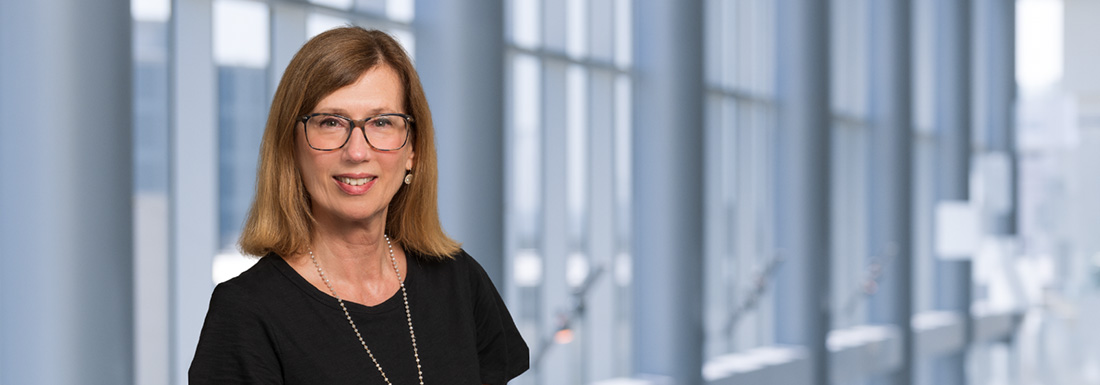
Fernandez to Retire After 24 Years of Service
Lynn Fernandez, RN, a Senior Research Nurse in the Cystic Fibrosis and Bronchiectasis Program, will retire on January 31 after working at UT Southwestern since 2002.
Ms. Fernandez started at UT Southwestern as a Research Assistant in the Division of Cardiology and quickly advanced to a Research Nurse position. In 2017, she joined the Cystic Fibrosis research team in the Division of Pulmonary and Critical Care Medicine.
“Lynn has a track record of successfully leading our most complex clinical trials,” said Ashley Keller, M.P.H., Manager of Research Programs. “She is known for being incredibly thorough and being prepared for almost anything. She will be extremely missed by her research subjects and her co-workers.” ■