
Dual-Signal Nanoparticle Trigger STING Pathway
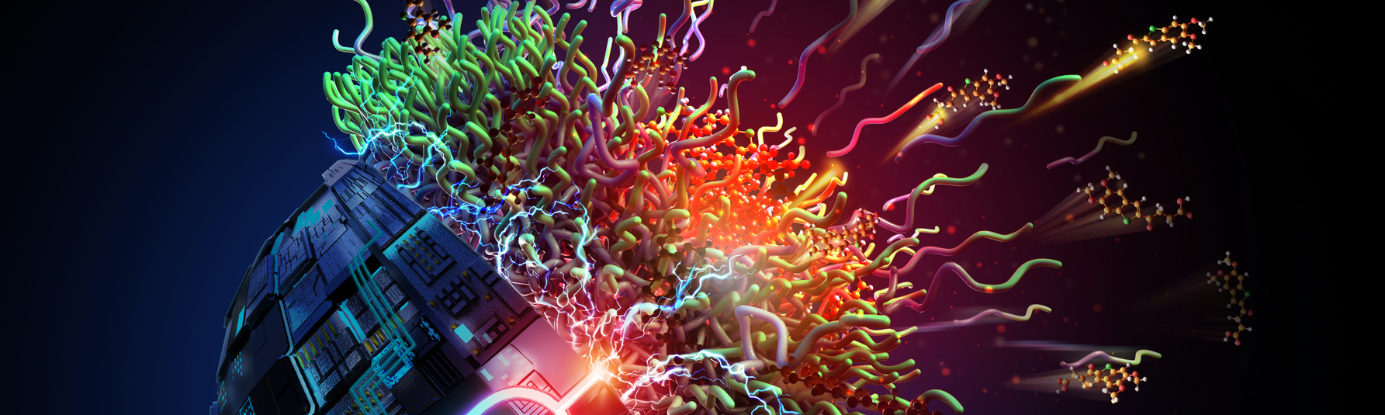
UT Southwestern researchers have created a new nanoparticle-based drug capable of eradicating metastatic cancers in mouse models. Their study, published in Nature Nanotechnology, successfully targeted and treated multiple cancer foci by activating the STING pathway after intravenous injection of a nanoparticle that responds to two tumor-specific signals.

The STING protein, which stands for “stimulator of interferon genes,” was discovered in 2008 and is an alarm bell in the immune system. STING acts as an early-warning sensor for aberrant DNA strands inside cell cytosol, which arises in cancer formation. When activated, STING launches an anti-tumor immune response. Inadvertent STING activation, however, also causes autoimmune disorders or cytokine storm.
“STING is an essential signaling pathway with its main function being to alert the immune system to mount host protection against infection or cancer,” study leader Jinming Gao, Ph.D., a professor in UT Southwestern’s Harold C. Simmons Comprehensive Cancer Center and the Department of Biomedical Engineering, said. “The challenge is how to activate STING properly, without causing undesirable side effects.”
While Dr. Gao and his research team have previously found success by direct injection of STING particles into tumors for local treatment, prior studies were not able to robustly target multiple tumors at a time. For this study, the researchers discovered a way to deliver the STING nanoparticle by allowing it to circulate and seek out metastatic tumors throughout the body before its activation.
Achieving tumor-specific immune activation has historically been difficult. Conventional therapies such as immune checkpoint inhibitors often lead to on-target, off-tumor toxicities. The research team had previously invented a transistor-like pH-sensitive nanoparticle, pegsitacianine, that turns on imaging signals when exposed to acidic tumor microenvironment. The therapy has received the breakthrough therapy designation by the Food and Drug Administration in precision cancer surgery. However, delivering a therapeutic payload such as STING drug by a single pH-gated response is not adequate. To overcome this obstacle, the research team introduced an AND logic design that requires acidic pH and an additional hypoxia signals, both unique in the tumor microenvironment, for STING activation.
“We are inspired by colleagues in the electronic industry in the invention of transistors and logic gates for information transfer,” Dr. Gao said. “This is a first step to apply these concepts in complex biological systems to regulate immune signals for cancer immunotherapy.”
Dr. Gao and his team are hopeful that this breakthrough will lead to new immunotherapy for cancer patients. Currently, intratumoral injection of STING nanoparticles is under Phase I clinical evaluations which requires a physician to give the drug. The new STING therapy, however, can be administered by a nurse practitioner.
“Intravenous injection can be carried out in most clinics,” Dr. Gao said. “Through immune engineering and AND logic design, the current STING therapy has the potential for safe tumor eradication with lower clinical barriers for translation.”
Dr. Gao holds the Elaine Dewey Sammons Distinguished Chair in Cancer Research, in honor of Eugene P. Frenkel, M.D. Dr. Shuyue Ye, first author of the publication, received an early-stage investigator award from the SCCC Liver Cancer SPORE career enhancement program.