
Search
Smith named Chair of Applied Clinical Research, inaugural Mitchell Professor - CT Plus - UT Southwestern
https://www.utsouthwestern.edu/ctplus/stories/2021/smith-chair.html
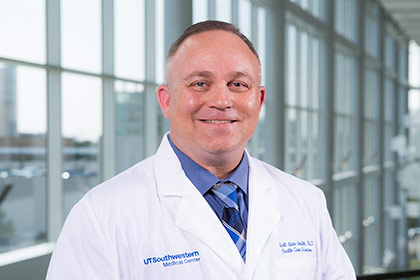
For several years, Dr. Scott Smith, Associate Dean of Research in the UT Southwestern School of Health Professions, worked closely with the Dean, Dr. Jon Williamson, to secure approval from the Texas Higher Education Coordinating Board for the state’s first Ph.D. program in Applied Clinical Research. Approval came in April 2019, and the program welcomed its first cohort of Ph.D. students that fall. Providing rigorous clinical research training for allied health professionals aspiring to pursue careers as independent clinician investigators, the program is an essential part of the plan to stimulate growth in the School of Health Professions’ research enterprise.
Virtual forums initiate campus conversations about racial diversity - UT Southwestern - CT Plus
https://www.utsouthwestern.edu/ctplus/stories/2020/diversity-webinars.html

In a year when protests over racial justice gripped the nation, UT Southwestern’s Office of Institutional Equity and Access, Office of Student Diversity and Inclusion, and Office of Faculty Diversity and Development found ways to bring the campus together for necessary conversations about race. The offices sponsored both collaborative and independent virtual events to keep staff, students, and faculty engaged even as a large part of the UTSW community continued to work and learn remotely due to the COVID-19 pandemic.
Program Development Award - CT Plus - UT Southwestern
https://www.utsouthwestern.edu/ctplus/stories/2020/lce20-program-development-award.html
Program Development Award
World-renowned imaging expert named Director of AIRC
https://www.utsouthwestern.edu/ctplus/stories/2019/airc-director-henning.html
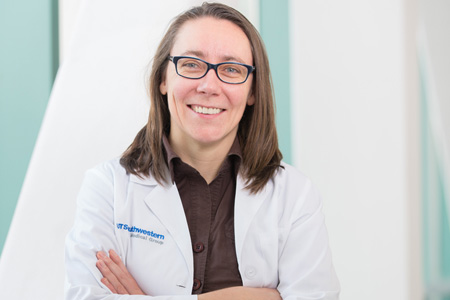
Dr. Anke Henning, an internationally recognized expert in the latest medical imaging technologies, has joined UT Southwestern as Director of the Advanced Imaging Research Center (AIRC).
Special Grant Incentive - UT Southwestern, Dallas, Texas
https://www.utsouthwestern.edu/education/nondegree-programs/sgi.html
UT Southwestern’s Special Grant Incentive (SGI) program encourages UT Southwestern faculty members to further pursue federal awards to advance science and benefit our patients.
Rising Star Award - CT Plus- UT Southwestern
https://www.utsouthwestern.edu/ctplus/stories/2019/lce19-rising-star-award.html
Rising Star Award
Half a century later, Dr. Steven McKnight reflects on how war and a dog changed his life
https://www.utsouthwestern.edu/ctplus/stories/2020/mcknight-vietnam.html
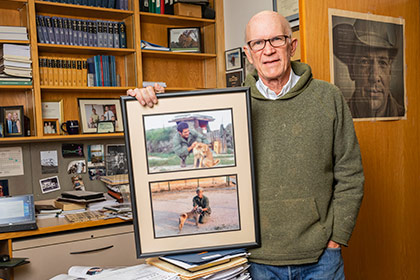
When the esteemed scientist, Professor, and former Chair of the Department of Biochemistry started his first year of college in 1968, he didn’t take his studies seriously. “I wasn’t interested in studying,” Dr. McKnight said. “I was interested in the whole college experience – anything but studying.”
UT Southwestern physician-scientist helps in Ebola fight
https://www.utsouthwestern.edu/ctplus/stories/2019/ebola-guidelines-perl.html
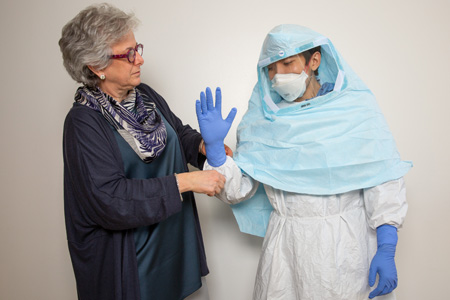
Dr. Trish Perl, a UT Southwestern infectious disease specialist who has worked with the World Health Organization (WHO) on Ebola issues, recently led its effort to come up with guidelines for the protective gear worn by health care workers treating Ebola patients. Those guidelines have been adopted and published by WHO.
Resources for Owners and Referring Veterinarians, Veterinary Research and Oncology Clinic: UT Southwestern Medical Center, Dallas, TX
https://www.utsouthwestern.edu/departments/radiation-oncology/veterinary-research-oncology-clinic/resources.html
Appointments, billing, guidelines, and referral contacts for pet owners and referring veterinarians at UT Southwestern’s Veterinary Research Oncology Clinic.
FAQ - VROC: Department of Radiation Oncology - UT Southwestern, Dallas, TX
https://www.utsouthwestern.edu/departments/radiation-oncology/veterinary-research-oncology-clinic/faq.html
Answers to common questions about veterinary oncology services, clinical trials, and patient care at UT Southwestern’s Veterinary Research and Oncology Clinic.