
Search
STARS gives students, teachers access to cutting-edge science
https://www.utsouthwestern.edu/ctplus/stories/2019/stars-program.html
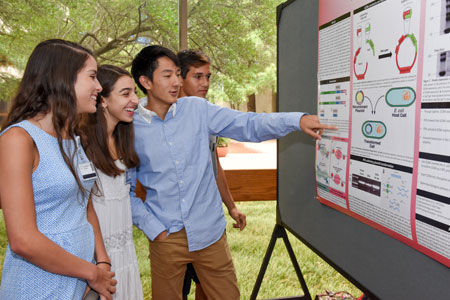
The STARS program recently completed its 27th year of activities, with 51 high school students and a half-dozen teachers participating in the Summer Research Program (SRP) that featured eight weeks of research and learning in UT Southwestern laboratories plus weekly seminars.
Dedman Scholars: Education Programs - UT Southwestern, Dallas, TX
https://www.utsouthwestern.edu/education/nondegree-programs/dedman/scholars.html
Learn about the faculty members who have been named Dedman Scholars at UT Southwestern.
Neuroscience Research: Psychiatry - UT Southwestern, Dallas, TX
https://www.utsouthwestern.edu/departments/psychiatry/research/neuroscience.html
In the Department of Psychiatry, basic research at the molecular and cellular levels focuses on the fundamental processes controlling neuronal function and their abnormalities in various neuropsychiatric disorders.
SPA Videos
https://www.utsouthwestern.edu/research/spa/process/videos.html
SPA Videos Jump to a specific video … How do I find out what Sub K invoices have been paid? Which reports does SPA Maintenance Team use to monitor awards? How to determine and clear budget errors in PeopleSoft? How to complete a re-budget request for an award setup outside of eGrants? How to reconcil…
UTSW scientists map life expectancy of Texans by area, race, and gender - CT Plus - UT Southwestern
https://www.utsouthwestern.edu/ctplus/stories/2019/life-expectancy-texas.html
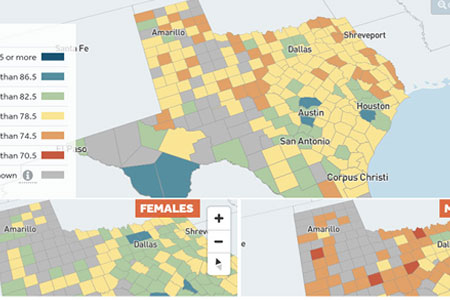
UT Southwestern scientists for the first time have calculated and mapped life expectancy by gender and race/ethnicity down to the ZIP code and county levels in Texas.
Preemie Party! Babies who arrived too early celebrate life with hospital staff who worked to save them: CT Plus - UT Southwestern
https://www.utsouthwestern.edu/ctplus/stories/2019/nicu-preemie-reunion.html

UTSW party reunited about 100 former preemie (prematurely born) patients and family members with the NICU nurses and other medical staff who cared for them at Clements University Hospital.
Dr. Eugene P. Frenkel, pioneering oncologist who led UT Southwestern Hematology-Oncology Division for 30 years, dies : CT Plus - UT Southwestern
https://www.utsouthwestern.edu/ctplus/stories/2019/eugene-frenkel.html
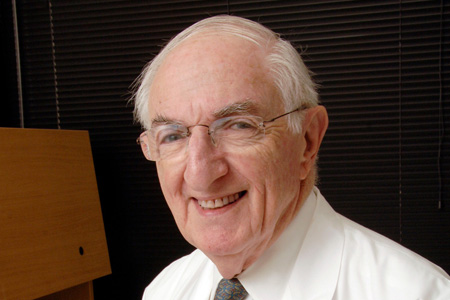
Dr. Eugene P. Frenkel was revered for his compassionate bedside care and was highly respected as an academic mentor who supported the career development of countless students, residents, fellows, and junior faculty during a remarkable 57-year career at UT Southwestern.
Exploration of the ultimate frontier: the brain: CT Plus - UT Southwestern
https://www.utsouthwestern.edu/ctplus/stories/2019/whs-symposium-brain.html
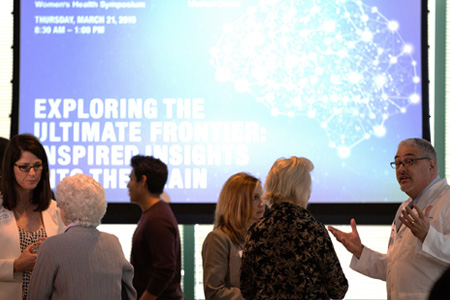
UT Southwestern scientists have discovered a molecular origin of Alzheimer’s disease, led national efforts to improve depression treatment, and now are developing gene therapies for children with the rarest of deadly neurological diseases. These are a few of the distinguishing achievements of faculty associated with the Peter O’Donnell Jr. Brain Institute, which is seeking to position UT Southwestern as a national leader in brain research and care.
Dr. John Schoggins: Investigator in the Pathogenesis of Infectious Disease - CT Plus - UT Southwestern
https://www.utsouthwestern.edu/ctplus/stories/2019/burroughs-wellcome-schoggins.html
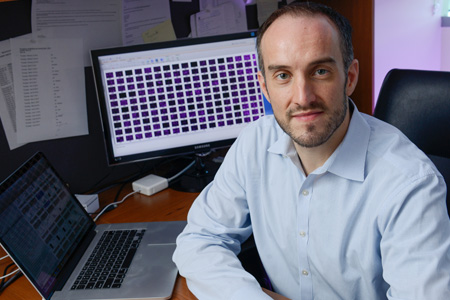
Dr. John Schoggins, known for his studies on antiviral immunity, has been named a 2019 Investigator in the Pathogenesis of Infectious Disease. He is among 11 early career scientists selected for the Burroughs Wellcome Fund (BWF) award, which provides research funding of $500,000 over five years.
New screening approach helps identify sources of rare genetic diseases in children: CT Plus - UT Southwestern
https://www.utsouthwestern.edu/ctplus/stories/2019/pediatric-genetic-diseases.html
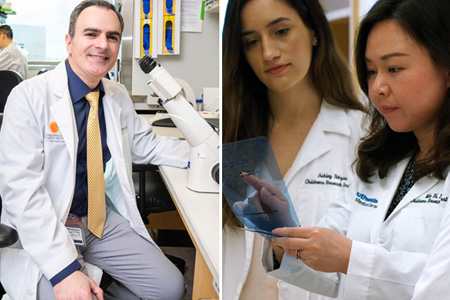
Scientists at the Children’s Medical Center Research Institute at UT Southwestern (CRI) are using a new approach to pinpoint the causes of rare genetic diseases in children and identify treatment options faster than with traditional methods. The new approach combines DNA sequencing and a chemical analysis called metabolomics to identify mutant genes that cause defective metabolic pathways in patients.