
News


Currently In the News
A home-based test kit for UTI?
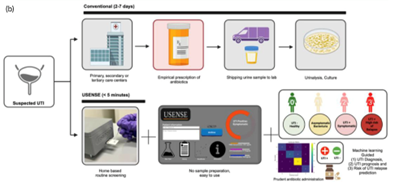
Well, not just yet, but researchers at the University of Texas have tested a new device that – in a matter of minutes – measures three infection-related markers to identify urinary infection. Moreover, using machine learning, the researchers were able to assess risk of future infection. The device exhibited high accuracy, with 93% correct UTI diagnosis and over an 84% prediction of risk of recurrence. Further development of this device could not only offer fast answers from home, but also enhance the use of more appropriately targeted antibiotic prophylaxis.
Could removal of superficially-infected tissues in the bladder offer relief for women with tenacious recurring UTIs?
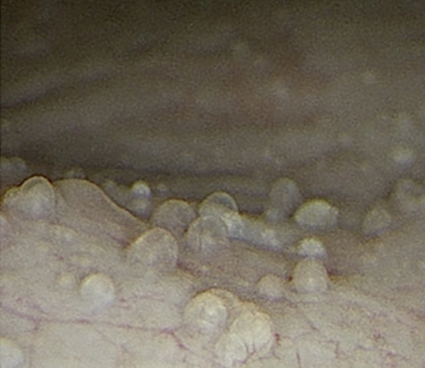
Some women harbor small fluid-filled blisters in the bladder wall which result in discomfort and recurring bladder infections. Researchers at the Cain Center for Bladder Health (CBC) found that gently eliminating these unhealthy areas on the bladder lining using a certain medical procedure (electrofulguration) offered 3-years of relief from recurring UTIs for roughly 71% of women. Approximately two-thirds of these women required only a single treatment and no need for follow-up procedures or antibiotics.
Novel biotechnologies could reshape how we find and treat urinary challenges
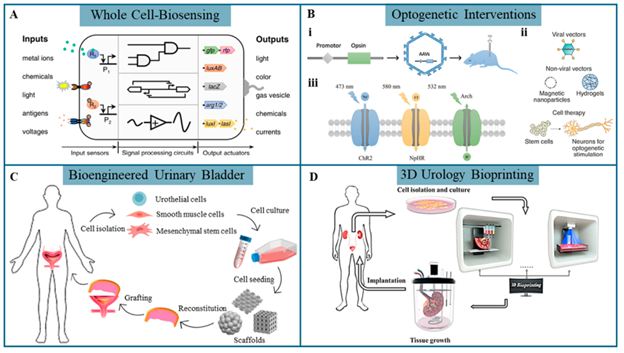
Technologies are rapidly evolving; let's leverage these to improve diagnostic accuracy, personalize treatment, and enhance outcomes for those struggling from urinary tract diseases. Four particularly interesting strategies are being explored by collaborators of Dr. Zimmern at the University of Houston: A) living-cell sensors that can monitor and detect specific stimuli and various biological chemicals; B) light to manipulate nerve or bladder cell activity; C) generating bladder-like tissues using an implanted lattice comprised of living cells; and D) 3-D printing of urinary tract components, layer-by-layer to match each individual’s needs.
Engineered gels release “good” bacteria in timely fashion
Using gel-like scaffolding, scientists collaborating with the CBC discovered they can release probiotics (good bacteria) in a controlled manner for at least 100 days. The speed of release may be altered by adjusting gel stiffness and how many bacteria are inside. This means we can design materials to deliver beneficial microbes over time to support bladder health.

Speaking of gels, implantable scaffolds could also monitor bladder health or deliver targeted therapy!
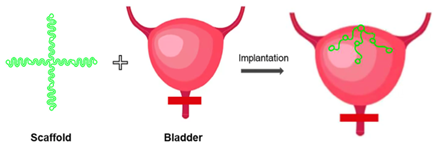
Colleagues at the University of Houston designed a silicone scaffold that can wrap around the bladder and stretch and contract with the bladder’s natural volume changes. These implants are compatible with living cells, thus rendering them candidates for long-term implantable devices that monitor bladder health or deliver targeted therapy to improve or restore bladder function.
Were you aware that stimulating certain nerves may improve bladder function following a spinal cord injury?
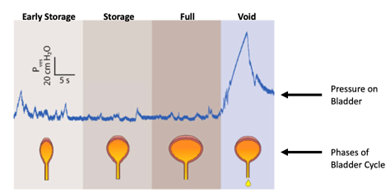
Researchers at Case Western (Cleveland, OH), who collaborate with the CBC, proposed that stimulating the nerve that runs from the brainstem to the abdomen could help retrain the nervous system after spinal cord injuries, improving bladder control without drugs. This could offer a new, less invasive option for people living with long-term urinary problems after injury.
Does diet matter when it comes to recurring UTIs?
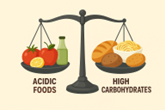
It is believed that a more acidic urine (lower pH) could be protective against infection by hindering bacterial growth. Several researchers from the CBC tracked a collection of food logs to determine if diet with higher acidity would result in lower, more acidic urinary pH. They found that dietary differences did not seem to change urine pH, so perhaps the acidity of one’s diet doesn’t matter as much as focusing on hygiene habits, timely medical evaluation, and other lifestyle strategies linked to prevention.
How bacteria control surface structures and maintain their stickiness
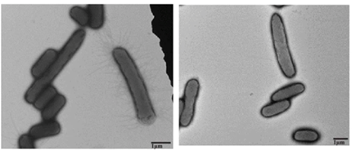
Together, scientists at University of Texas at Dallas and Dr. Zimmern discovered how bacteria tightly regulate hairlike structures called pili (used to stick to surfaces) and other molecules. They determined that without sufficient levels of putrescine, which also causes urine odor, bacteria are unable to produce pili and lose the ability to stick to surfaces. Understanding these systems helps explain how bacteria survive in the body and could lead to better treatments for infections like UTIs.
Stubborn bacteria living in bladder walls increased risk of reinfection
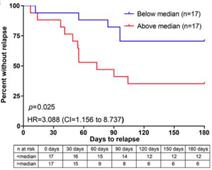
Why is it that some postmenopausal women experience persistent bladder infections that return even after treatment? In collaboration with Dr. DeNisco and her team at UT Dallas, CBC researchers found that women who had higher levels of bacteria deep in their bladder tissue were more likely to get another infection within six months following electrofulguration, a procedure that gently removes infected tissues on the surface of the bladder. This suggests doctors may need to look beyond standard urine tests and consider hidden bacteria in bladder tissue when treating recurrent UTIs.
Repeat prolapse surgery can succeed, but may carry higher risk complications.
Researchers and clinicians at the Cain Bladder Center worked together to study women who had robotic-assisted mesh surgery to repair pelvic organ prolapse, a condition where the bladder, uterus, and rectum drop. They sought to determine whether prior prolapse surgery impacted clinical outcomes. While those with prior prolapse surgery experienced more complications during the procedure, the long-term outcomes were comparable to those without a prior prolapse surgery.
References
- Ganguly, A., Basu, U., Gunda, V., Krishnan, A., Ramesh, P., Jivnani, K., Raghuram, A., Bhagavatula, S., Khan, S., Zimmern, P., et al. (2025). USENSE : A proof‐of‐concept self‐screening tool for home‐based recurrent urinary tract infection management. Bioengineering & Transla Med, e70038. https://doi.org/10.1002/btm2.70038.
- Chao, T.-C., Christie, A.L., Alhalabi, F., and Zimmern, P.E. (2025). Midterm Follow-up of Electrofulguration for Vesicular Cystitis in Women With Recurrent Urinary Tract Infections. Urology 196, 102–109. https://doi.org/10.1016/j.urology.2024.10.072.
- Liu, C., Rivera Ruiz, A., Zhang, Y., Zimmern, P., and Li, Z. (2025). Emergent biotechnology applications in urology: a mini review. Front. Bioeng. Biotechnol. 13, 1539126. https://doi.org/10.3389/fbioe.2025.1539126.
- Kalairaj, M.S., George, I., George, S.M., Farfán, S.E., Lee, Y.J., Rivera-Tarazona, L.K., Wang, S., Abdelrahman, M.K., Tasmim, S., Dana, A., et al. (2025). Controlled Release of Microorganisms from Engineered Living Materials. ACS Appl. Mater. Interfaces 17, 40326–40339. https://doi.org/10.1021/acsami.5c11155.
- Wang, Y., Garmroudi, A., Liu, C., Zimmern, P., and Li, Z. (2025). Design of Soft, Stretchable Bladder‐Integrated Scaffolds for Advanced Bioelectronic Implants. Adv Materials Technologies, e00552. https://doi.org/10.1002/admt.202500552.
- Sargusingh, M.J., Addo, J.J.A., Damaser, M.S., Zimmern, P., Hays, S.A., and Hernandez-Reynoso, A.G. (2025). Enhancing Neuroplasticity via vagus nerve stimulation to improve urinary dysfunction after spinal cord injury: a perspective. Bioelectron Med 11, 15. https://doi.org/10.1186/s42234-025-00178-5.
- Chavez, J.M., Christie, A.L., and Zimmern, P.E. (2025). Deciphering the Complex Relationships Between Potential Renal Acid Load, Carbohydrate Intake, and Urine pH in Postmenopausal Women With Recurrent Urinary Tract Infections. American Journal of Lifestyle Medicine, 15598276251344486. https://doi.org/10.1177/15598276251344486.
- Mehta, I., Hogins, J.B., Hall, S.R., Vragel, G., Ambagaspitiye, S., Zimmern, P.E., and Reitzer, L. (2025). Control of pili synthesis and putrescine homeostasis in Escherichia coli. eLife 13, RP102439. https://doi.org/10.7554/eLife.102439.3.
- Gadhvi, J.G., Kenee, P.R.M., Lutz, K.C., Khan, F., Li, Q., Zimmern, P.E., and De Nisco, N.J. (2024). Bladder-resident bacteria associated with increased risk of recurrence after electrofulguration in women with antibiotic-recalcitrant urinary tract infection. Preprint, https://doi.org/10.1101/2024.07.03.24309902 https://doi.org/10.1101/2024.07.03.24309902.
- Guérin, S., Alhalabi, F., Lutz, K., and Zimmern, P. (2025). Impact of Previous Pelvic Organ Prolapse Repair on Outcomes of Robotic-assisted Mesh Sacrocolpopexy. Urology, S009042952500682X. https://doi.org/10.1016/j.urology.2025.07.008.
Formerly In the News
- News Archive
2025 Articles
Have you ever wondered what foods you should stay away from when being treated for a urinary tract infection? Dr. Philippe Zimmern shared some insight in a recent Everyday Health article that reveals a closer look on foods patients may want to avoid. View this article on Everyday Health.
Dr. Philippe Zimmern sat down with TIME Magazine to discuss which bathroom habits are normal vs. abnormal. View this article on TIME Magazine's website.