
From Code to Care : How Paulo Kuriki, M.D., is helping bring artificial intelligence into everyday radiology practice.
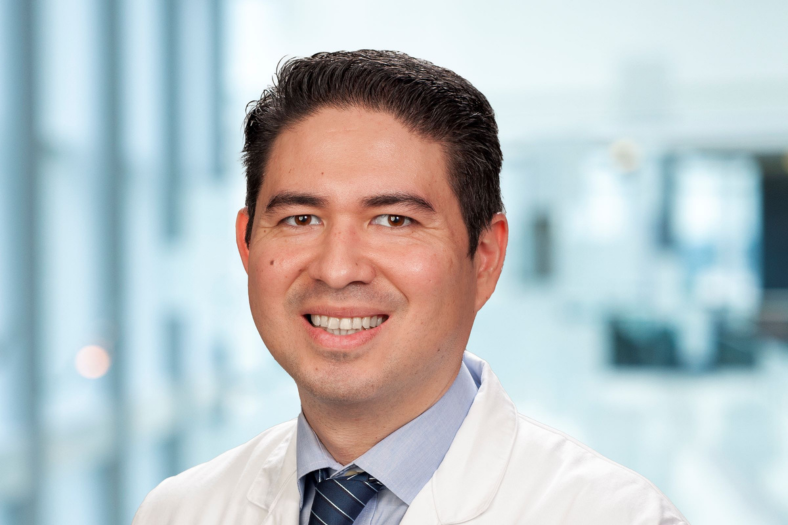
For Paulo Kuriki, M.D., radiology did not begin with anatomy. It began with code.
Well before he interpreted MRI scans, Kuriki worked as a software developer. He met neuroradiologist and mentor Dr. Nitamar Abdala during medical school, who helped him combine his interests in medicine and informatics. It was then that he realized radiology was the only specialty that brought together everything he enjoyed.
“I realized radiology brought together everything I loved: medicine, technology and challenging cases,” he said. “No other specialty did that.”
That realization set the course for his career. During residency, Kuriki developed a computer program designed to predict the differential diagnosis of brain tumors and presented the work at the Radiological Society of North America (RSNA) Annual Meeting in 2010. The idea was ambitious. But the deep learning that would transform artificial intelligence was still years away.
“It was a great idea,” he said, “but about a decade too early.”
Today, as Assistant Professor of Neuroradiology and Director of the AI in Radiology Hub (AIR-Hub) at UT Southwestern, Kuriki is helping turn ideas that once seemed ahead of their time into practical tools that improve patient care.
Created alongside Dr. Ivan Pedrosa and Dr. Ronald Peshock, the AIR-Hub was built with a straightforward goal: using informatics and artificial intelligence to solve everyday challenges in radiology, from improving diagnostic confidence to reducing errors and easing the parts of the job that contribute to burnout.
“The AIR-Hub exists to provide better care to our patients,” Kuriki said. “We use informatics and AI to solve the bottlenecks we face every day in radiology.”
Despite rapid advances in artificial intelligence, he believes one of medicine’s biggest challenges is not creating new technology but making it useful in clinical practice. While radiology accounts for roughly 75 percent of all FDA-cleared AI tools in medicine, integration into everyday workflows remains difficult because the process of validating, clearing, and securely deploying new tools is inherently slow.
Closing that gap has become AIR-Hub’s mission.
Kuriki believes that artificial intelligence should strengthen physicians, not replace them. He envisions AI taking on repetitive tasks that do not require clinical judgment, such as performing measurements, comparing prior examinations and organizing information, allowing radiologists to spend more time focused on diagnosis and patient care.
“I don’t see AI replacing us,” he said. “I see it taking on the non-interpretive tasks that don’t need our clinical judgment.”
Looking ahead, he is especially excited about AI systems capable of supporting the entire workflow of an imaging study. But just as important as building new models, he says, is ensuring they continue to perform safely and reliably after they become part of patient care.
“Building the model is the easy part,” he said. “Keeping it safe and trustworthy in real care is the real work.”
Returning to academic medicine after years in private practice also transformed Kuriki’s career. Before joining UT Southwestern, he served as Head of Artificial Intelligence at the largest diagnostic company in Latin America. Accepting the opportunity in Dallas meant leaving behind an established career in Brazil, returning to fellowship training and adapting to a new language and culture alongside his family.
“It was tough for me and my family,” he said. “But it was the right move.”
At UT Southwestern, he rediscovered the parts of medicine he missed most: research, teaching and mentoring. He also found himself surrounded by colleagues who continually challenged one another to improve ideas and push projects further.
That environment changed how he approaches innovation. The radiologists using the tools he develops are often sitting just a few feet away in the reading room, offering honest feedback about what helps and what creates new obstacles. Rather than building technology for clinicians, Kuriki says he builds it with them.
That same philosophy extends to education. His team developed RADAR, a tool that compares residents’ preliminary interpretations with attending physicians’ final reports, highlighting cases with the most significant differences so trainees can focus their learning where it matters most.
None of it, Kuriki is quick to point out, has been done alone. Behind RADAR, and every other tool to come out of the AIR-Hub, is a team of machine learning engineers and informatics specialists whose work makes this possible.
"I haven't built any of this by myself," he said. "The team behind the AIR-Hub is the reason any of it works."
His experiences have also reshaped how he thinks about leadership.
“The best leaders I’ve had, then and now, create opportunities for others and support them through the hard parts,” he said. “Leadership in academic medicine is less about moving fast and owning every decision, and more about building consensus, mentoring and creating the conditions for other people to do their best work.”
Like many innovations, the hardest part has not been building new technology. It has been earning the trust of busy physicians and integrating new tools into their daily routines.
Kuriki credits the department's collaborative culture for helping turn promising ideas into technology that reaches patients, along with the steady support of Chair Dr. Martin Pomper. An accomplished physician-scientist and innovator, Pomper recognized the potential of the AIR-Hub early and has continued to champion its AI initiatives, support that Kuriki says he does not take for granted.
He also credits mentors who continue to shape his growth as a physician and leader. Dr. Marco Pinho, Chief of the Neuroradiology Division, remains someone he learns from every day, while Dr. Ronald Peshock, Vice Chair of Informatics, helped him understand how an academic medical center can translate AI research into practical innovations that improve patient care.
Despite leading AI initiatives, Kuriki still considers himself a neuroradiologist first. He continues reading cases every day, and says the most rewarding moments are often the simplest: hearing from a colleague that a tool made the day a little easier, or seeing something his team built become part of real patient care.
For Kuriki, those moments reflect what makes UT Southwestern a uniquely powerful place to innovate. The institution combines exceptional clinical volume, robust imaging data, engineering expertise and a culture willing to bring new ideas into practice. Through UT Southwestern, Parkland and Children’s Health, those innovations reach a broad and diverse patient population.
“What makes this place special,” he said, “is how short the distance is from an idea to a patient.”