From Chemistry to Clinical Care: Xiankai Sun, Ph.D., and Radiopharmaceutical Innovation
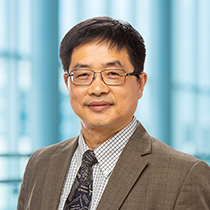
In the aftermath of China’s Cultural Revolution, as the surrounding “ridges of the Hills Everlasting” were crumbling, young students suddenly found a universe of ideas at their fingertips. Among those inspired by that moment was Xiankai Sun, Ph.D., now Director of the Cyclotron and Radiochemistry Program in the Department of Radiology at UT Southwestern.
“Originally from China,” he said, “my early school years were after the catastrophic cultural revolution, when China was opening to the western world. Perhaps all young minds in that period’s China were marveled at and got attracted to science and technology. I was one of them.”
Chemistry drew him in at a young age. “There were many influences that landed me in chemistry,” he said. “For instance, in middle school I read the fascinating stories in ‘The Discovery of the Solar Element’. I didn’t know positrons are created during the generation of helium though.” This curiosity eventually led to a scientific career that now impacts patient care in Texas and beyond.
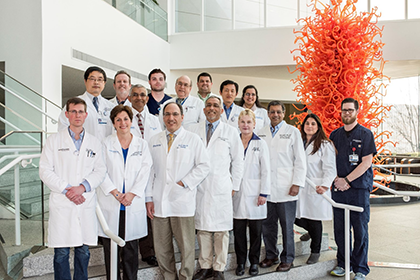
After earning his Ph.D. from the University of New Hampshire, Dr. Sun completed postdoctoral training in radiochemistry at the Mallinckrodt Institute of Radiology at Washington University School of Medicine in St. Louis. He was later recruited to UT Southwestern to spearhead the research of positron emission tomography (PET), a newly emerged molecular imaging technology then that would transform the precision medicine in healthcare. Soon after his arrival, he undertook the major effort of establishing UT Southwestern’s first cyclotron and radiochemistry facility.
“The cyclotron facility planning was not started until the ‘NIH Stimulus Act’ was announced in 2009,” he explained. “Advised by Dean Gilman, we submitted a high-end instrumentation grant proposal (over 300 pages) to the stimulus funding mechanism for a cyclotron facility setup at UT Southwestern. The proposal scored well but was not funded.”
This initial application would later help secure major state support.
“However, it laid a solid foundation for us to apply for a shared instrumentation award from the Cancer Prevention and Research Institute of Texas (CPRIT) in 2011. The CPRIT proposal scored 1.4 and was funded with $4.2M to initiate our cyclotron and radiochemistry facility setup.”
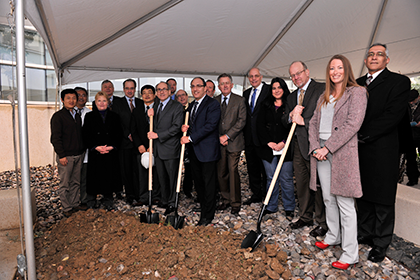
That launched a six-year effort that demanded extensive coordination across departments and disciplines. “Leading the cyclotron facility setup was the most challenging or daunting task in my work,” he said. From receiving funding in 2011 to “the first human PET scan performed with our cyclotron-produced radiotracer in January 2017,” Dr. Sun noted that “it took nearly six years for us to claim that we had established a state-of-the-art and fully functional cyclotron and radiochemistry facility at UT Southwestern. Obviously, it took a village to reach that milestone.” The facility now makes it possible to develop new radiopharmaceuticals on site rather than relying on outside sources, which shortens and facilitates the translation from molecular discovery to clinical trial.
Today, Dr. Sun leads research funded by the National Institutes of Health (NIH), the Department of Defense (DOD), and CPRIT, developing novel imaging probes and theranostic agents, compounds designed to both diagnose and treat disease. “Our current funded projects focus on novel agent development for oncology, particularly prostate and kidney cancers,” he said. And while he is proud of every project, one stands out: “If I have to choose one, I would say ‘imaging HIF2a in kidney cancer’ because we developed an imaging agent based on original discoveries at UT Southwestern from benchtop to bedside in collaboration with the kidney cancer program.”
His research group brings together the range of expertise needed to move new radiopharmaceuticals into clinical trials. “Most of my team are synthetic chemists by training,” he said, describing a collaborative model that integrates biomedical engineering, biology, pharmacology, and regulatory expertise. “As the purpose of our work is to enable precision patientcare by noninvasive imaging, my team is positioned in the Division of Nuclear Medicine,” he said, which allows collaboration with numerous departments across UT Southwestern. Working within a clinical environment helps ensure that their scientific innovation moves directly toward patient impact.
Looking ahead, Dr. Sun is focused on clinical translation. “We are striving to move our imaging and theranostic agents into first-in-human clinical trials timely under the leaderships of Radiology through our established partnerships with other Centers and Departments.” He adds that the field faces significant workforce challenges. “Consistent funding aside, I would say understaffed team and talent retention. The field is booming. We and other academic institutes must compete with our industry counterparts for talents in radiopharmaceutical chemistry.”
Dr. Sun emphasizes that UT Southwestern’s collaborative structure has shaped both his trajectory and his approach to scientific service. “Being part of UT Southwestern reshaped my career path and shifted a significant amount of my time from research to core-facility operations,” he said. “However, such changes are beneficial to the eventual goal of my career on a medical campus as a chemist for the betterment of patientcare.”
The most meaningful part of his career, he says, comes not from infrastructure or grants, but from patient response. “It is most rewarding when receiving messages from patients inquiring if there are clinical trials of my published studies.” And the consistency of his scholarship is notable with undisrupted external fundings since the second year (2005) of his independent career. Dr. Sun has been PI or Co-PI (MPI) on external grants with awards of ~$32M.
Dr. Sun recently began serving as Director of the Small Animal Imaging Shared Resource of the Simmons Comprehensive Cancer Center and was elected to the Council of Distinguished Investigators of the Academy for Radiology and Biomedical Imaging Research.
As he looks towards the future, he sees major opportunity in UT Southwestern’s momentum in molecular imaging. He emphasized this particularly with the arrival of Martin G. Pomper, M.D., Ph.D., Chair of Radiology at UT Southwestern. “The translational opportunities of novel theranostic radiopharmaceuticals upon the arrival and new leadership of Dr. Pomper,” he said, adding that the field requires what he calls “strong scientific leadership” paired with modern industry partnerships. “Under his leadership, we’re poised to accelerate radiopharmaceutical innovations for precision treatment of patients.”
When asked about personal influences, Dr. Sun recalled a defining moment early in his career: meeting radiopharmaceutical chemistry pioneer Michael Welch, Ph.D., who was invited to give a University Lecture at the University of New Hampshire. “He was truly inspirational, and I was so lucky to have him as my postdoctoral mentor. This completely changed my career path for good.”
Though he directs a highly complex multidisciplinary research program, he doesn’t articulate a formal leadership philosophy. “I don’t know if I ever have had a leadership approach. For me, I highly value the citizenship as a UT Southwestern employee to contribute to the mission of UT Southwestern.”
He describes himself simply: “As a first-generation immigrant, I have taken ‘The Road Less Traveled’. If we have to say ‘leadership’, I lead by my citizenship and the quality of my work.”
That philosophy continues to drive him as he advances new technologies toward the clinic, builds scientific partnerships, and expands opportunities for patients. The story he is writing at UT Southwestern is still unfolding, grounded in persistence, collaboration, and conviction that innovation matters most when it reaches the people who need it.