

Past Southwestern Vision Science Summit Meetings
- 2026
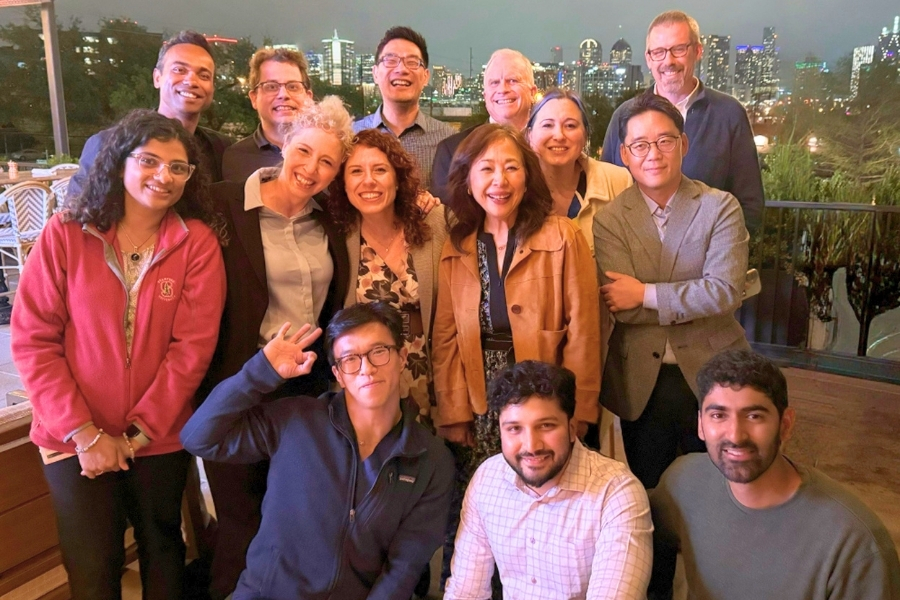
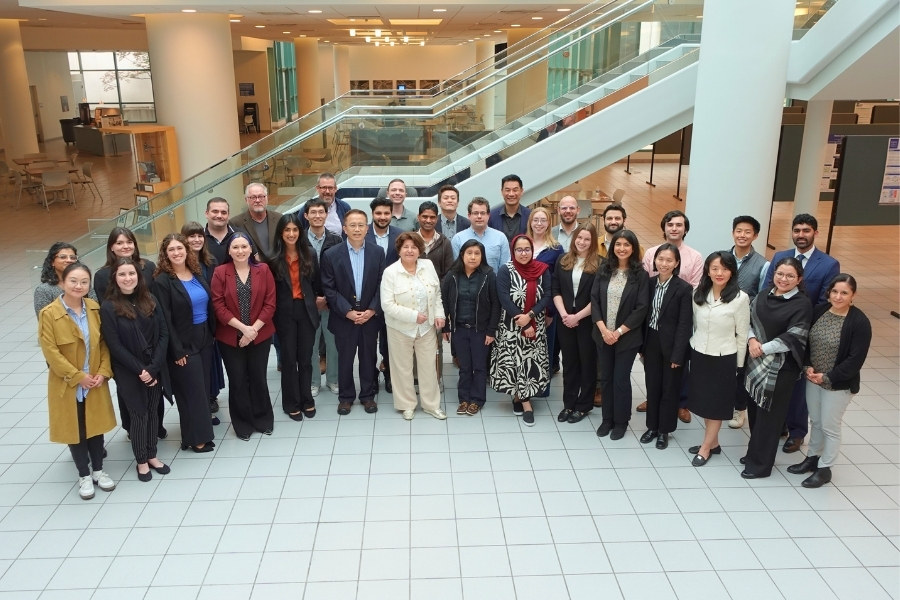
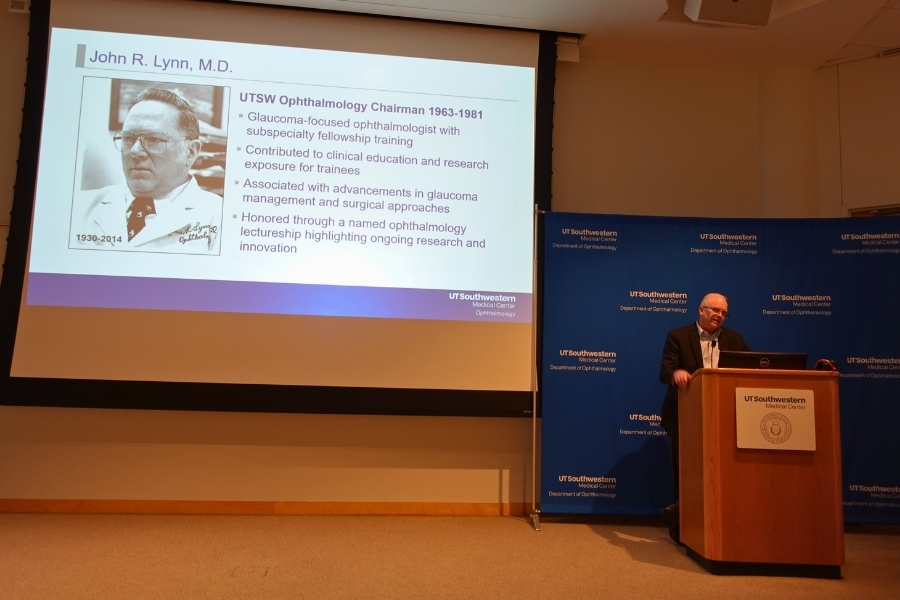
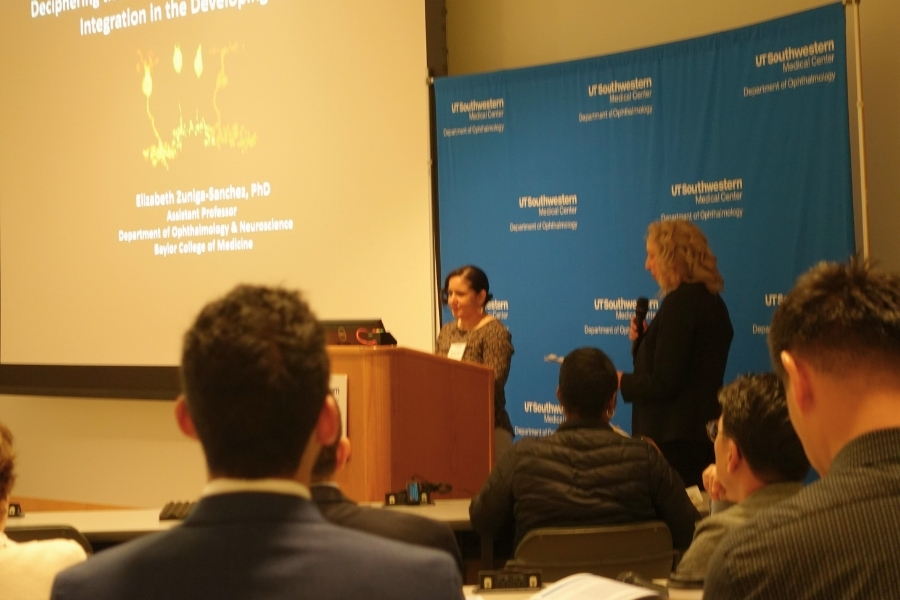
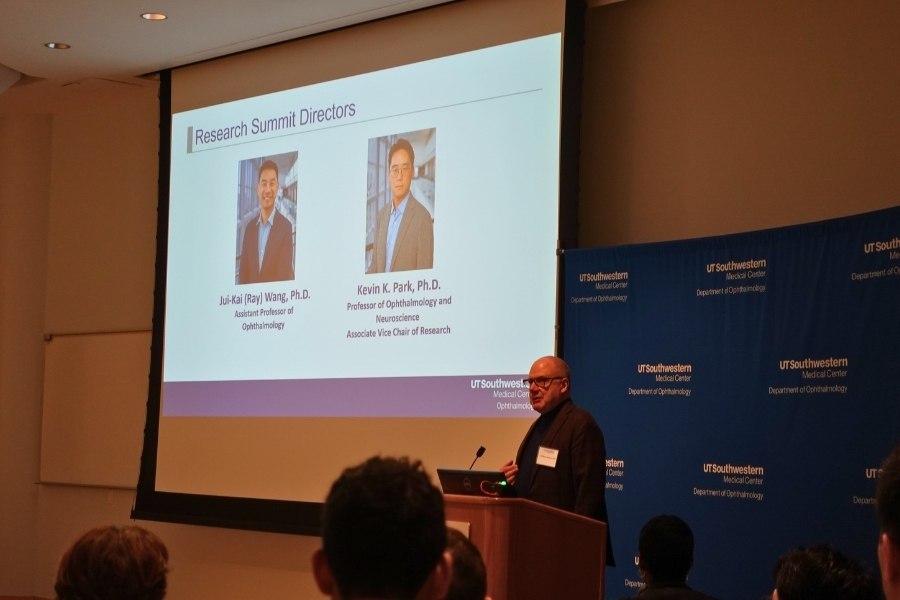
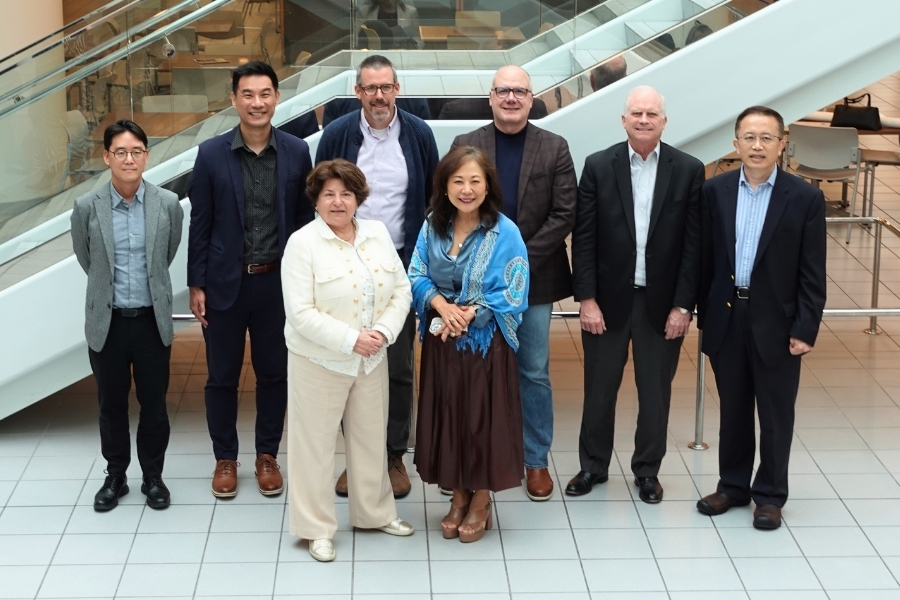
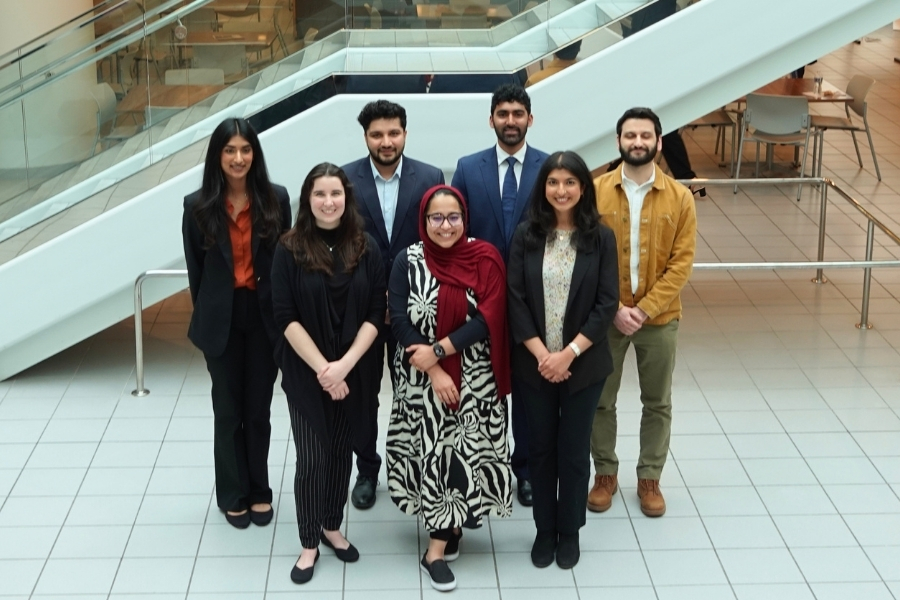
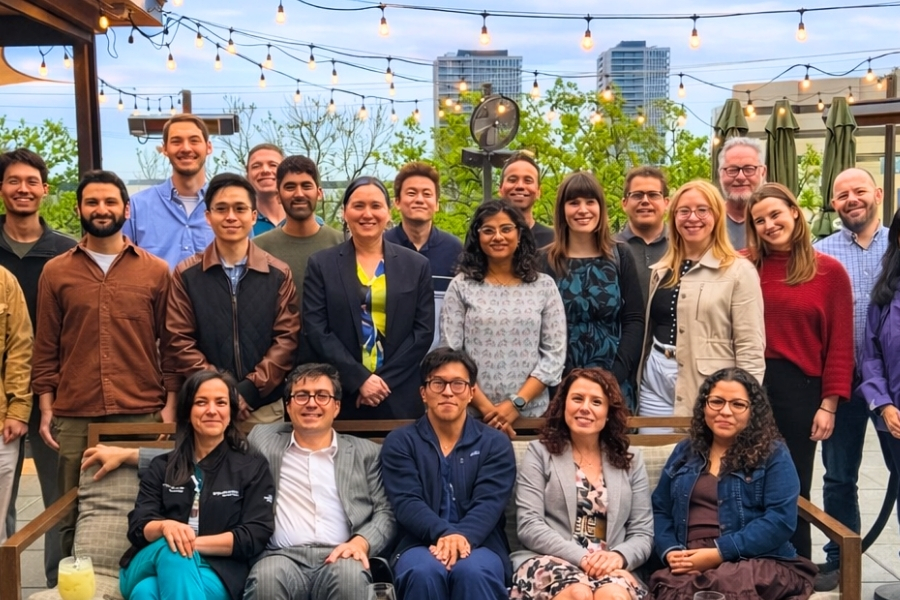
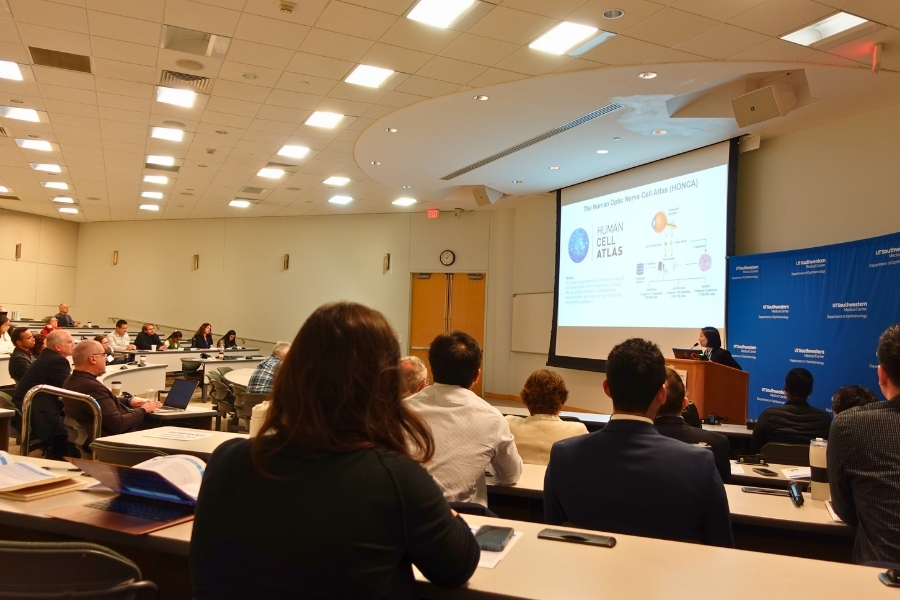
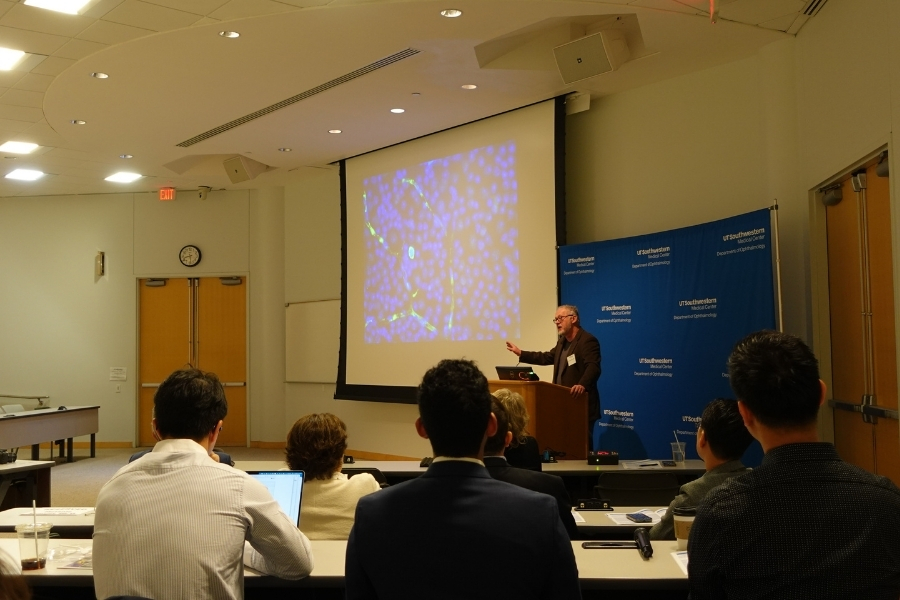
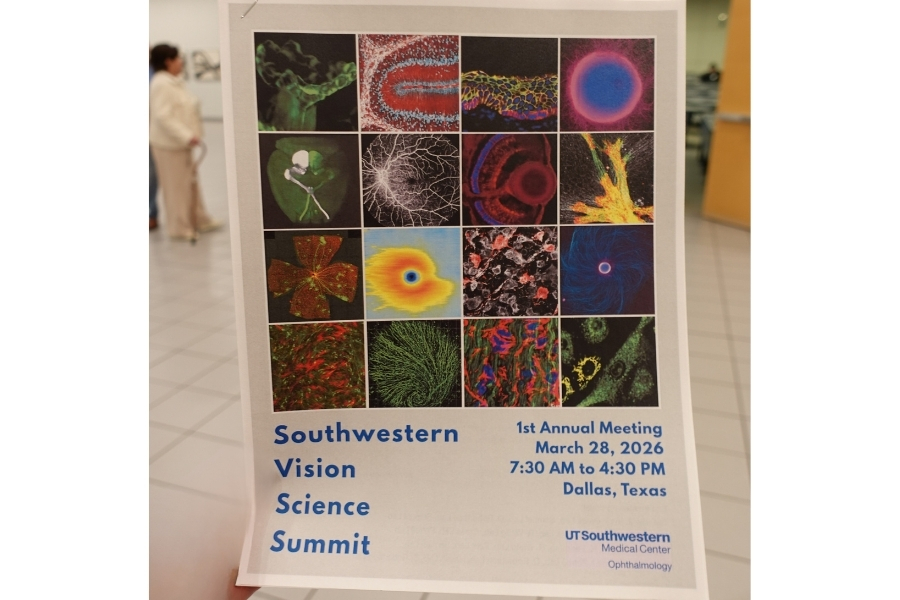
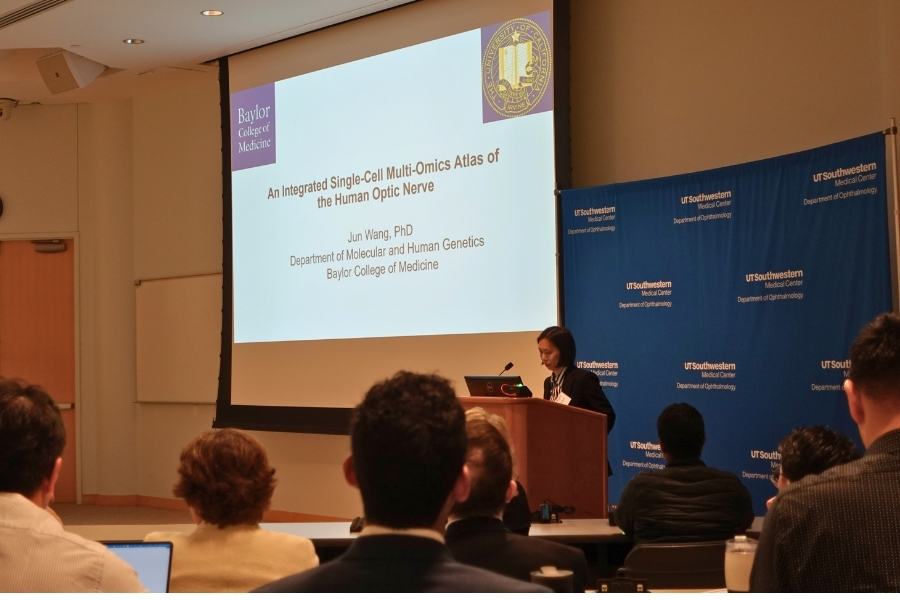
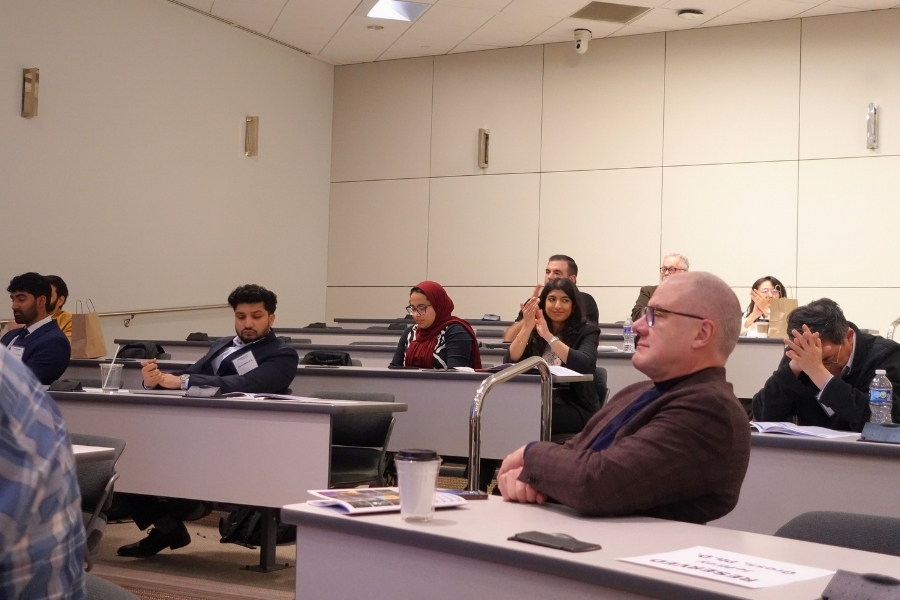
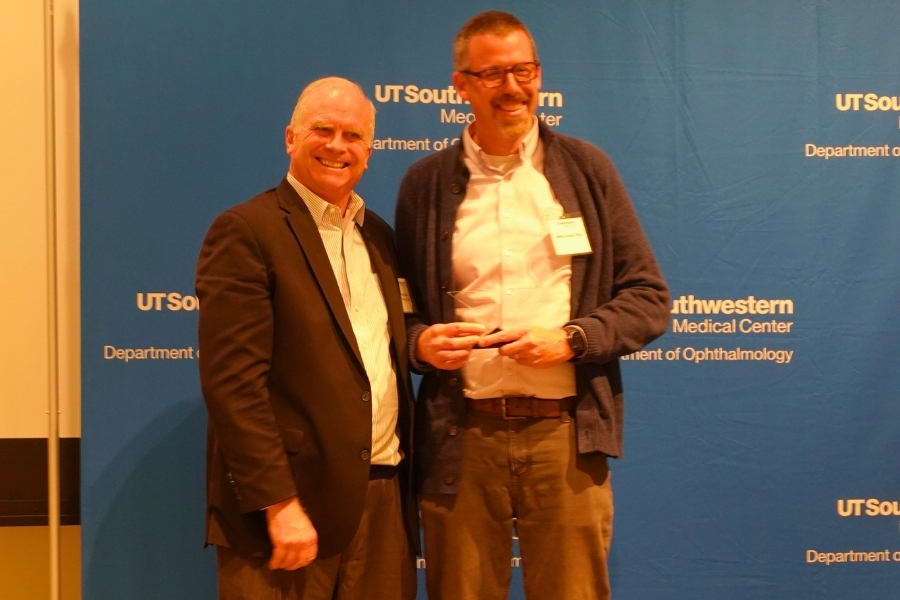
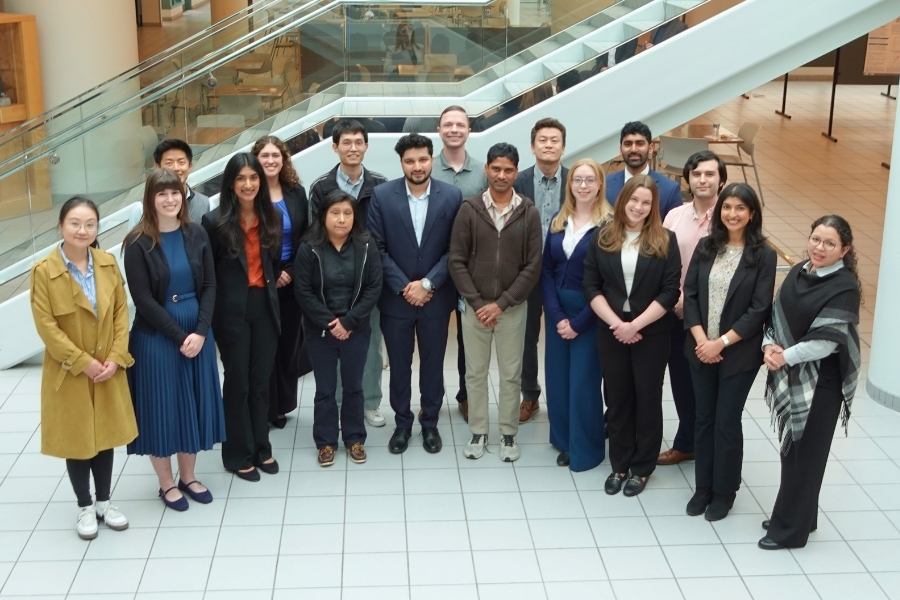
The UTSW Department of Ophthalmology hosted the inaugural Southwestern Vision Science Summit (SVSS) to bring together faculty, postdoctoral fellows, graduate students, clinician-scientists, and reseaerch trainees from across the region. This intimate yet wide-ranging gathering is designed to support scientific exchange, spark new collaborations, and showcase the exceptional vision research taking place at UT Southwestern and partner institutions.
For more information about this and future SVSS meetings, please email Jui-Kai (Ray) Wang, Ph.D., or Kevin K. Park, Ph.D.
Friday, March 27
5:30 pm -- Dinner and networking (off-campus venue)
Saturday, March 28
7:30 am -- Breakfast
8:00 am to 4:30 pm -- Scientific Sessions and Poster Presentations
4:30 pm -- Awards and Closing
Speaker Presentation Title Jeffrey M. Gross, Ph.D. - Keynote Speaker, in Honor of John R. Lynn, M.D. Using Zebrafish to Develop Regenerative Approaches to Treat Ophthalmic Diseases Melanie Samuel, Ph.D. (Session Chair) Cellular Drivers of Visual Circuit Assemby and Function Muna Naash, Ph.D. (Session Chair) Novel Usherin Knockin Models Provide Valuable Insights for the Characterization of USH2a Pathogenesis Yuqing Huo, M.D., Ph.D. (Session Chair) Endothelial Pfkfb3 in the Development of Subretinal Fibrosis Markus Kuehn, Ph.D. (Professor of Ophthalmology, University of Iowa) Autoimmune Contributions to Retinal Ganglion Cell Loss in Glaucoma Elizabeth Zuniga-Sanchez, Ph.D. (Assistant Professor of Ophthalmology, Baylor College of Medicine) Decipering the Molecular Basis of Neuronal Subtype Integration in the Developing Retina Jun Wang, Ph.D. (Instructor of Molecular and Human Genetics, Baylor College of Medicine) An Integrated Single-Cell Multi-Omics Atlas of the Human Optic Nerve Katherine J. Wert, Ph.D. (Assistant Professor of Ophthalmology and Molecular Biology, UT Southwestern) The Impacts of Estrogen Receptor Antagonization on Neuro-Degeneration and Neuroinflammation in an Inhereited Retinal Degenerative Disease Tylor Lewis, Ph.D. (Assistant Professor of Ophthalmology and Visual Sciences, University of Alabama at Birmingham) RPE Pseudopods Maintain Photoreceptor Outer Segment Renewal Despite Subretinal Space Expansion in Adam9 Knockout Mice Supraja Varadarajan, Ph.D. (Assistant Professor of Neuroscience and Ophthalmology) Molecular Mechanisms Underlying Neuronal Activity-Induced Visual Repair Hongli (Catherine) Wu, Ph.D. (Professor, North Texas Eye Research Institute and Pharmaceutical Sciences) Forever 21 - The Redox Strategy to Turn Back Aging Oliver Gramlich, Ph.D. (Associate Professor of Ophthalmology and Visual Sciences, University of Alabama at Birmingham) Disrupted Cholesterol Homeostasis Orchestrates Optic Nerve Inflammation in EAE and Multiple Sclerosis Ross Poché, Ph.D. (Associate Professor of Integrative Physiology, Baylor College of Medicine) Hippo and Wnt Pathway Crosstalk During the Müller Glial Damage Response Lightning Talk Presenter Presentation Title Anushka Mandalapu, B.S. (Med Student, UT Southwestern) Use of Intraoperative Intravitreal Bevacizumab for Diabetic Vitrectomy Nafisa Nuzhat, Ph.D. (Postdoc, Wert Lab, UT Southwestern) PRDM13 Promotes Cell Cycle Exit and Regulates Cell Fate Specification of Inhibitory Neurons in the Retina Tiffany Yee, B.S. (Ph.D. Candidate, Wert Lab, UT Southwestern) Uncovering the Effects of Fic-Mediated AMPylation in the Mammalian Retina During Chronic and Acute Stress Yun Jae Choi, M.S. (Department of Electrical and Computer Engineering, UT Dallas) Two-Step Deep Learning Workflow for Retinal Ganglion Cell Complex Segmentation in Mouse OCT Adapted from a Human OCT Model WINNER: Best Presentation
Emily Nettesheim, B.S. (Ph.D. Candidate, Wert Lab, UT Southwestern)PRDM13 Regulates bHLH and Homeodomain Genes to Impact Amacrine and Phtoreceptor Cell Rate Specification Dogan Can "John" Kirman, Ph.D. (Postdoc, Ufret-Vincenty Lab, UT Southwestern) Exploring the Roles of Microglia in Retinal Degeneration Mouse Models Driven by Diverse Molecular Mechanisms Vincent (Runzhe) Xu, B.S. (Med Student, UT Southwestern) Single-Cell Transcriptomic Landscape of Retinoblastoma Reveals Novel States Associated with Clinical Behavior Mishel Malik, B.A. (Med Student, UT Southwestern) Visual Outcomes After Surgical Management of Medically Refractory Idiopathic Intracranial Hypertension at a Quaternary Care Center WINNER: Best in Show
Nikhil Gadiraju, B.S.E. (Med Student, UT Southwestern)Imaging Device Influences on Fundus Photograph Latent Space: Insights from Foundation Models in Diabetes Karan Mehta, M.D. (Postdoc, Department of Internal Medicine, UT Southwestern) Developing an Optimized ctDNA Platform in Uveal Melanoma Poster Author Poster Title Kambiz Ameli, M.D. (Assistant Professor of Ophthalmology, UT Southwestern) Fooled by Steroids: Optic Nerve Sheath Meningioma Masquerading as Optic Perineuritis Angelica Sanjuan Bermudez, M.S. (Department of Bioengineering, UT Dallas) Using Photocrosslinking to Alter the Mechanical Properties of the Embryonic Cornea in vivo Ema Shamasdin Bidiwala, Ph.D. (Postdoc, Mondal Lab, UT Southwestern) Integrative Multi-Omics to Map Retinal Aging Pathways and Their Response to Dietary Variables Katherine Borner, B.M.E. (Ph.D. Candidate, Petroll Lab, UT Southwestern) Characterization of Corneal Stromal Wound Healing Using Spatial Transcriptomics Yongfeng Cai, Ph.D. (Department of Ophthalmology, Baylor) Inhibition of Endothelial PFKFB3 Decreases Subretinal Fibrosis via Histone Modifications Ashleigh Crane, M.S. (Department of Bioengineering, UT Dallas) Intraocular Pressure Impacts Patterns of Cell Migration During Embryonic Corneal Development WINNER: Best Poster
Victoria Cuevas (Ph.D. Candidate, Department of Neuroscience, Samuel Lab, Baylor)Human Microglial Immune Tolerance as a Regulator of Visual System Circuit Refinement Nikhil Gadiraju, B.S.E. (Med Student, UT Southwestern) Imaging Device Influences on Fundus Photograph Latent Space: Insights from Foundation Models in Diabetes Solomon Gibson, Ph.D. (Department of Ophthalmology, Baylor) Loss of HTR1B Worsens Visual Decline in Experimental Glaucoma Ana Herget, B.S. (Wert Lab, UT Southwestern) Effects of PRDM13 Over-Expression on Retinal Cell Fate in Retinal Organoids Belinda Hernandez, Ph.D. (Postdoc, Robertson Lab, UT Southwestern) Hyperosmolar Stress Promotes the Release of Small Extracullular Vesicles Containing Metabolic Proteins from Corneal Epithelial Cells Harrison Lee, B.S. (Robertson Lab, UT Southwestern) The Insulin-like Growth Factor Binding Protein-3 Mediates Mitochondrial Homeostasis in TALLYHO Mice, a Model for Type 2 Diabetes Mellitus Alyssa Low, B.S. (Med Student, UT Southwestern) Identification of Key Scheimpflug Imaging Parameters in Fuchs’ Endothelial Corneal Dystrophy Mishel Malik, B.A. (Med Student, UT Southwestern) Visual Outcomes After Surgical Management of Medically Refractory Idiopathic Intracranial Hypertension at a Quaternary Care Center Anushka Mandalapu, B.S. (Med Student, UT Southwestern) Use of Intraoperative Intravitreal Bevacizumab for Diabetic Vitrectomy Ryker McKnight, B.S. (Department of Computer Engineering, Weber State University) A Two-Stage Diffusion Framework for Retinal Layer Segmentation in Optical Coherence Tomography Karan Mehta, M.D. (Postdoc, Department of Internal Medicine, UT Southwestern) Developing an Optimized ctDNA Platform in Uveal Melanoma Rene Menchaca, B.S., B.S.A., B.A. (Med Student, UT Southwestern) Associations Between Impairment of Daily Activities, Visual Impairment, and Home Hazards Cameron "Cammie" Mitchell, B.A. (Med Student, UT Southwestern) Successful Treatment of Diffuse Choroidal and Central Nervous System Metastasis with High-Dose Osimertinib in EGFR-Positive Adenocarcinoma of the Lung: A Case Report Navnit Mohan, B.S. (Med Student, UT Southwestern) Prevalence and Outcomes of Peripheral Retinal Vascular Leakage in Patients with Pseudophakic Cystoid Macular Edema Eyad Shihabeddin, Ph.D. (Department of Neuroscience, Baylor) Region-Specific Brain Targets Drive Circuit Formation and Maturation of Human Retinal Ganglion Cells Tarik Shihabeddin, Ph.D. (Department of Bioengineering, UT Dallas) The Effects of Topography and ECM Composition on Keratocyte Morphology Dynamics Noriyoshi Takahashi, B.S.E. (Wang Lab, UT Southwestern) Intuitive Representation of LSFG Waveforms: A Deep Learning Approach to Ocular Hemodynamic Mapping Venu Talla, Ph.D. (Postdoc, Kevin Park Lab,UT Southwestern) Neuritin1 Cis-Regulatory Elements Enable Gene Expression Preferentially in Retinal Ganglion Cells Siqi Tang, Ph.D. (Postdoc, Wert Lab, UT Southwestern) Natural History Study of Retinitis Pigmentosa in a Mouse Carrying the P304L Mutation in HGSNAT Tung Tran, B.Sc. (Med Student, UT Southwestern) Ultrasound Biomicroscopy (UBM) for Evaluating Quadrant-Specific Variations in Patients with Narrow Angles Gizem Ulker-Yilmazer, M.D. (Medical Neuro-Ophthalmology Fellow, UT Southwestern) Unilateral Orbital Inflammation Secondary to Cytokine Release Syndrome Following CAR-T Therapy: A Case Report Jui-Kai (Ray) Wang, Ph.D., Assistant Professor of Ophthalmology, UT Southwestern) Automated Two-Step Retinal Layer Segmentation in Non-Human Primate OCT with Severe Motion Artifacts Ebru Yaman, M.D. (Department of Ophthalmology, Baylor) Dry Eye Disease Narrows Palpebral Aperture and Alters Ocular Protective Reflexes in Mice and Humans Tian Yu, M.D., Ph.D. (Ufret-Vincenty Lab, UT Southwestern) Loss of Transcription Factor 12 (Tcf12) Leads to Early-Onset Retinal Degeneration and Molecular Dysregulation in Mice Jeffrey Zhu, B.S. (Department of Neuroscience, Samuel Lab, Baylor) Molecular Drivers of Non-Image Forming Circuit Development and Maturation Keynote Speaker and Session Chairs
Jeffrey M. Gross, Ph.D., is the Professor and Chair of the Department of Molecular Biosciences at the University of Texas at Austin. The Gross Lab focuses on vertebrate eye development, disease modeling and regeneration utilizing the zebrafish as a model system. Combining forward genetic screens with reverse genetic and embryological manipulations we hope to understand the molecular, cellular and developmental events that regulate eye formation and visual function, ocular diseases and regenerative responses. Current areas of interest in the lab include studies focusing on the development of the retina, lens and retinal pigmented epithelium (RPE), elucidation of the cellular mechanisms that regulate ocular morphogenesis, the molecular regulation of retina and RPE regeneration and neuroprotection. Our research combines molecular, cellular, genomic, biochemical, transgenic and in vivo imaging techniques to address these questions. It is our hope that these studies will ultimately lead to a better understanding of visual system disorders and the development of new therapeutic interventions.
Melanie Samuel, Ph.D., is an Associate Professor of Neuroscience at Baylor College of Medicine and an Investigator at the Duncan Neurological Research Institute in Houston, Texas. She completed her PhD at Washington University School of Medicine in St. Louis, Missouri and postdoctoral training at Harvard in Cambridge, Massachusetts. Recent breakthroughs in understanding visual and brain disorders have highlighted surprising roles for non-neuronal cells -- such as glial cells and blood vessels -- in neuron health and resilience. The Samuel lab focuses on investigating how interactions between neurons and these other brain cell types affect development and disease outcomes. The Samuel lab integrates analyses of human and mouse brain models for advancing disease treatments by combining genetic, molecular, and cellular approaches using human pluripotent cell-derived systems, in vivo mouse models of disease, and advanced imaging approaches. By uncovering shared mechanisms across neurodegenerative conditions like Alzheimer's disease and epilepsy, the Samuel lab aims to identify conserved therapeutic targets for broad-impact interventions. Additionally, the lab works to uncover pathways that enhance neuronal resilience in critical neural circuits, with the goal of improving the survival of both vulnerable endogenous neurons and transplanted neurons in preclinical therapeutic approaches.
Muna Naash, Ph.D., is the John S. Dunn Endowed Professor in the Department of Biomedical Engineering at the University of Houston in Houston, Texas. She earned her Ph.D. in Biochemistry from Baylor College of Medicine, followed by postdoctoral training in Ophthalmology at the Cullen Eye Institute, also at Baylor College of Medicine. Dr. Naash is widely recognized as an authority on genetic mutations underlying hereditary retinal diseases. Her multidisciplinary research program integrates molecular bioengineering, ocular and auditory biology, and chemistry to uncover the mechanisms of vision and hearing loss in retinal degenerations and Usher Syndrome Type 2A (USH2A). A central focus of her work is the development of non-viral gene therapy platforms designed to restore vision and hearing, particularly for disorders caused by large genes that exceed the packaging limits of viral delivery systems. Over the past several decades, Dr. Naash has achieved both national and international recognition for her pioneering contributions and has maintained an impressive, federally funded research portfolio. Her current work is supported by multiple NIH/NEI grants (extending through 2030), the Foundation Fighting Blindness (FFB), and the Cynthia and George Mitchell Foundation.
Yuqing Huo, M.D., Ph.D., is a Professor and Danny B. Jones Endowed Chair in Ophthalmology at Baylor College of Medicine in Houston, Texas. He is also a Professor in the Department of Medicine - Section of Cardiovascular Research, and Professor of Molecular and Cellular Biology at Baylor College of Medicine. Dr. Huo earned his PhD from Beiging Medical University (Peking University) and completed his postdoctoral training at the University of Virginia in Charlottesville, Virginia. Research interests of Dr. Huo's group focus on understanding the mechanisms underlying the interaction between vascular cells and leukocytes/immune cells that contribute to the development of cardiovascular and metabolic diseases. Specifically, Dr. Huo's group investigates the metabolic pathways that control leukocyte recruitment and activation, endothelial inflammation, the proliferation and migration of vascular smooth muscle cells and fibroblasts, as well as the mesenchymal transition of these cells in disease progression. By studying the metabolic and inflammatory processes underlying these diseases, Dr. Huo's group aims to contribute to a deeper understanding of these conditions and pave the way for developing novel therapeutic interventions for these vascular-related diseases.