
Neuromuscular Medicine
Leadership
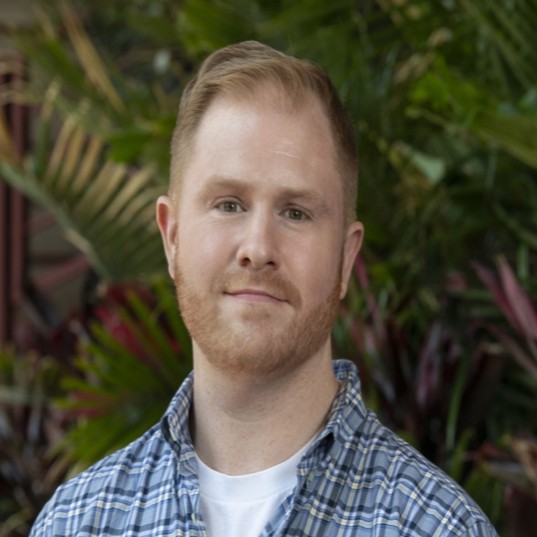
Christopher Donnelly, Ph.D.
Section Head
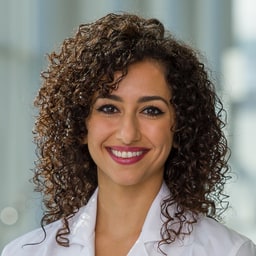
Shaida Khan, D.O.
Clinical Lead
Contact
Debra Elder
Academic Administrator
debra.elder@utsouthwestern.edu
Patient Appointments
214-645-8800
Book Online
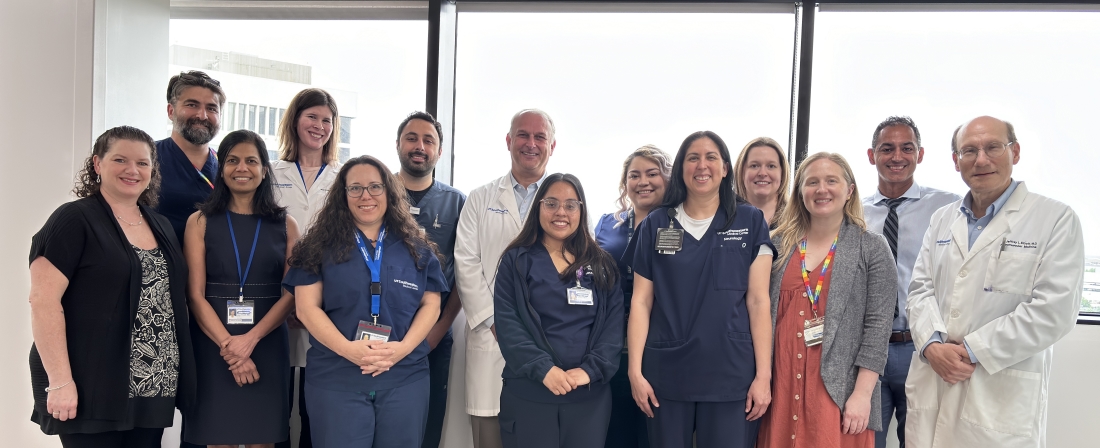
The Neuromuscular Medicine section is one of the leading academic neuromuscular disorders sections in the nation. The section embodies the core missions of the Department of Neurology, including excellence in patient care, promoting education, and advancing our understanding of nerve, muscle, or neuromuscular junction disorders through research.
Our team has nationally and internationally recognized leaders in myasthenia gravis, skeletal muscle channelopathies, autonomic disorders, and myopathies. Our Amyotrophic Lateral Sclerosis (ALS) and muscular dystrophy multidisciplinary clinic is a designated MDA/ALS Care Center Network. We are a GBS/CIDP and CMTA Center of Excellence. The Section has established several subspecialty clinics that provide innovative and exceptional specialty care to patients with various neuromuscular disorders. As education leaders, we organize the annual Carrell-Krusen Neuromuscular Symposium, a widely attended national conference for the last 45+ years.
Faculty
The Neuromuscular Medicine faculty, comprising nine individuals, is dedicated to advancing research, education, and clinical care. Six faculty members are engaged in extramurally funded research targeting multiple disorders: ALS, myasthenia gravis, dysautonomia, facioscapulohumeral muscular dystrophies, inflammatory myopathies, and metabolic myopathies. Faculty lead six subspecialty clinics, enriching the experience of our trainees.
View all faculty Join Our Team
Neuromuscular Medicine Highlights
10,000
Patient visits per year
5
Practice locations
7
Subspecialty Clinics
3
Electrodiagnostic laboratories
9
Faculty
3
Fellowship Tracks
Subspecialty Care
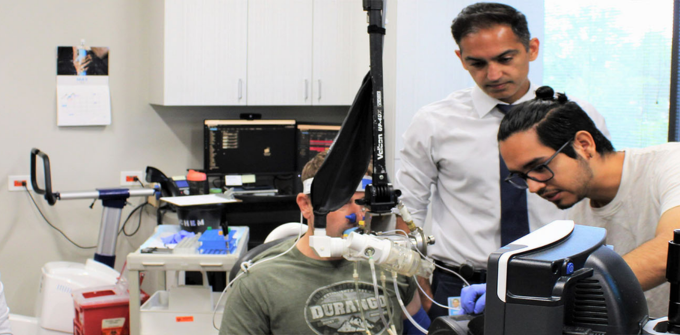
In addition to providing care for patients with a full range of neuromuscular disorders, our faculty lead several subspecialty clinics, including clinics for ALS, CMT, myositis, myasthenia gravis, and neuropalliative. Electrodiagnostic (EMG) laboratories and neuromuscular ultrasound provide additional diagnostic expertise. In addition to the main neuromuscular clinic at UT Southwestern, the Section provides clinical care for neuromuscular patients at other clinical sites including Parkland Health System and the Dallas VA.
Research
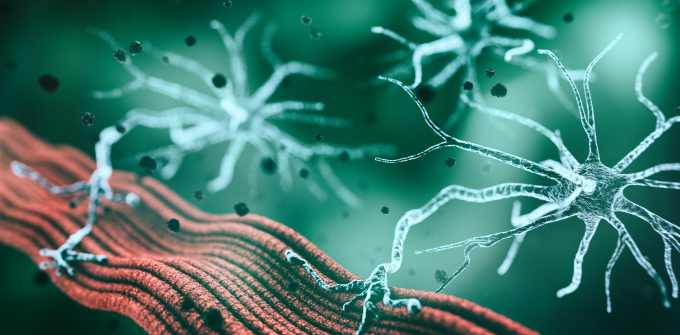
Physicians and scientists within the Neuromuscular Medicine Section center their discoveries on a range of clinical and basic science topics relevant to the neuromuscular field. Research activities include clinical trials, biomarker studies, gene therapy trials, and translational research.
Education & Training
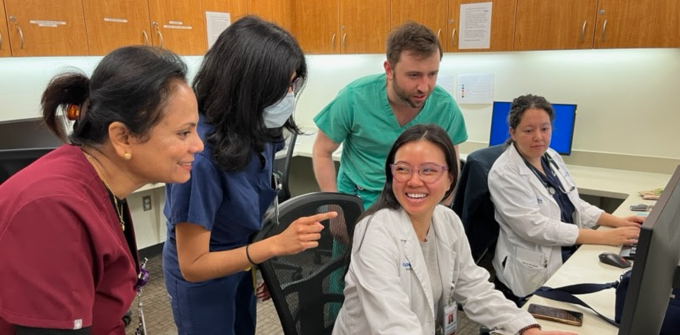
Our neuromuscular medicine fellowship training program is designed to provide intensive clinical exposure in a broad range of settings, with trainees working alongside faculty with extensive knowledge of these disorders. Many of the faculty are national leaders in the field, providing the trainees with profound and nuanced perspectives. The program’s primary goal is to provide an environment where fellows can develop into expert, well-rounded clinicians, scholars, and educators under guided mentorship. In addition to bedside clinical training, neuromuscular fellows have weekly EMG case conferences to fine-tune their electrodiagnostic skills and an interdisciplinary neuropathology conference that provides an opportunity to exchange clinical and scholarly ideas. The neuromuscular section hosts the annual Carrell-Krusen Neuromuscular Symposium, a conference that attracts clinicians and academic neuromuscular experts from around the country to share the latest discoveries in neuromuscular medicine. This provides a unique opportunity for neuromuscular fellows to present their research findings and learn from the work of other national experts. Advanced training opportunities can be curated to the individual’s specific goals, further enabling their growth as clinicians, clinician-educators, or physician-scientists.