
Search
Moving with purpose, pride is in her DNA - CT Plus - UT Southwestern
https://www.utsouthwestern.edu/ctplus/stories/2020/erp20-reodica.html

35 years of Employment at UT Southwestern
Linda Millen: 25 years - CT Plus - UT Southwestern
https://www.utsouthwestern.edu/ctplus/stories/2020/erp20-millen.html

25 years of Employment at UT Southwestern
2020 Faculty Promotions - CT Plus - UT Southwestern
https://www.utsouthwestern.edu/ctplus/stories/2020/september-2020-promotions.html
The following faculty promotions took effect Sept. 1 at UT Southwestern. (Where more than one department is listed, the first is the primary appointment.)
Watson Award - CT Plus - UT Southwestern
https://www.utsouthwestern.edu/ctplus/stories/2020/lce20-watson.html
The award recognizes a UT Southwestern clinician who exemplifies excellence in patient care and is a leader in advancing clinical innovations.
Fellowship - Division of Community Medicine - Department of Family and Community Medicine - UT Southwestern Medical School
https://www.utsouthwestern.edu/departments/family-community-medicine/education-training/fellowship.html
The Community Medicine Fellowship at UT Southwestern Medical Center educates primary care physicians in effectively using principles of public health, epidemiology, and preventive medicine in new and innovative ways.
Kiran J. Kaur, Ph.D.: 25 years - CT Plus - UT Southwestern
https://www.utsouthwestern.edu/ctplus/stories/2020/erp20-kaur.html
25 years of Employment at UT Southwestern
Dr. Carolyn Shanks: Texas College of Emergency Physicians Award - CT Plus - UT Southwestern
https://www.utsouthwestern.edu/ctplus/stories/2021/sa21-shanks.html
At her first job working on a horse farm in Iowa, Dr. Carolyn Shanks developed a strong work ethic. This drive carried her forward in school as well, as she excelled in math and science, leading her to college and eventually medical school. The importance of the work and the fast pace drew her to the specialty of emergency medicine.
Snow Adams: 25 years - CT Plus - UT Southwestern
https://www.utsouthwestern.edu/ctplus/stories/2020/erp20-adams.html
25 years of Employment at UT Southwestern
Regulatory Updates: Sponsored Programs - UT Southwestern, Dallas, Texas
https://www.utsouthwestern.edu/research/spa/news/regulatory.html
Stay informed about sponsor updates, regulations, deadlines, and more.
Graduate student receives UTSW’s first NCI F99/K00 award - CT Plus - UT Southwestern
https://www.utsouthwestern.edu/ctplus/stories/2020/nci-f99-arner.html
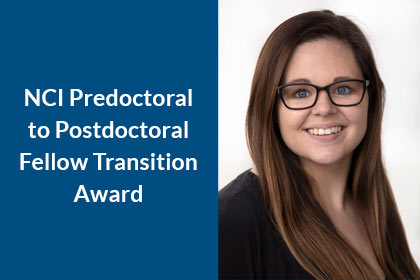
Emily Arner, a fourth-year student in the Cancer Biology Graduate Program and a member of the Brekken lab, is trying to decipher how pancreatic cancer cells adapt to escape the primary tumor, enter the bloodstream, and form secondary tumors, or metastases. Her goal is to find signaling pathways that could be used to treat aggressive metastatic cancers.