Skip to main content About News Giving All Departments Contact Us Site Map
 University of Texas Southwestern Medical School
 
Search       
Print Friendly  
spacer Home Education Research Patient Care Faculty & Administration Resource Careers
Medical School Graduate School of Biomedical Sciences Allied Health Sciences School Residencies & Fellowships Program Directory Students & Alumni Continuing Education
spacer | Home > Education > Graduate School >
UT Southwestern
Graduate School Home

Certificate Programs for Postdoctoral Research Training

APPLY NOW spacer
spacer
spacer
Search for Faculty
by Research Interests
 
 
Search for Faculty
by Name
 

bestGradSchool
 
 rss RSS        rss Podcast
spacer


All postdoctoral scholars begin at UT Southwestern by registering in the Postdoctoral Certificate Program in Research.  Upon completion of the Certificate in Research, a continuing scholar enrolls in one of four additional certificate programs, which best suits his or her career goals: Advanced Research, Advanced Technology, Chemistry, or Educational Techniques

Specific guidelines for each certificate program are listed separately below
.  For each certificate, postdoctoral scholars register for three credit hours in the fall and spring terms and two credit hours in the summer term.  A total of 15 credit hours are to be fulfilled within two years for completion of every certificate. 

Please email your questions to the Postdoctoral Affairs Office


 Postdoctoral Certificate Program in Researchtop

  1. Required Courses
    1. Ethics
      The ethics course for postdoctoral scholars in the responsible conduct of research includes listening to two recorded lectures, engaging in on-line tutorials, and participating in a lab group discussion of case studies that explore aspects of research integrity.  
    2. Career Advancement – choose one to meet the requirement, others may be taken as electives
      1. Web-based Practical Course for Preparing for a Scientific Career
      2. Information Mastery for Postdoctoral Scholars
      3. English language course for selected postdoctoral scholars
    3. Public Speaking - Journal Club/Works-in-Progress (WIP) – The purpose of a journal club or WIP is to keep abreast of recent research advances, to sharpen critical thinking abilities, and to develop public speaking skills. Any existing departmental (multi-lab) journal club/WIP with a published schedule may meet this requirement with approval of the Postdoctoral Affairs Office.   
    4. Individual Development Plan - This course is comprised of writing an Individual Development Plan following guidelines from the Federation of American Societies for Experimental Biology. This planning process, initiated by the postdoctoral scholar, identifies his/her professional and development needs and career objectives. The plan must include feedback from the research mentor. Writing and discussion is done at the convenience of the scholar and mentor with completion verified during the term of registration; there is no class attendance.
  2. Supervised Research - Supervised Research consists of the training you get from your mentor in the laboratory every day and, as such, requires no class attendance. When your research schedule will not allow you to be away from the lab bench, you should register only for Supervised Research

  3. Electives - Elective courses are offered to enhance your training experience, but are not required.  Please register for these courses only if your research schedule allows for full participation and you have completed your required courses.
    1. Application for Funding Award - Write and submit a competitive fellowship or grant application.  Proof of submission must be presented to the Postdoctoral Affairs Office.  
    2. Research Mentoring - Serve as the supervisor for research project conducted by a rotating graduate student, STARS student or teacher, SURF student, Green Fellow or other trainee.  Name of trainee and program shall be reported to the Postdoctoral Affairs Office.  
    3. Journal Club/WIP - Participate in Journal Club or Works-in-Progress in addition to the one term requirement B. above. 
    4. Advanced Topics-Off Campus - Participate in workshops or conferences of your choice in advanced topics offered off campus.  Advance permission is required from your mentor and the Postdoctoral Affairs Office.  Costs associated with such courses are not provided by the graduate school. 
    5. Effective Teachers Series - Attend the Effective Teachers Series.
    6. Advanced Graduate Courses - Participate in course(s) from the Division of Biological Sciences class offerings. 

Please email your questions to the Postdoctoral Affairs Office


Postdoctoral Certificate in Advanced Research top
  1. Required Courses
    1. Poster Presentation
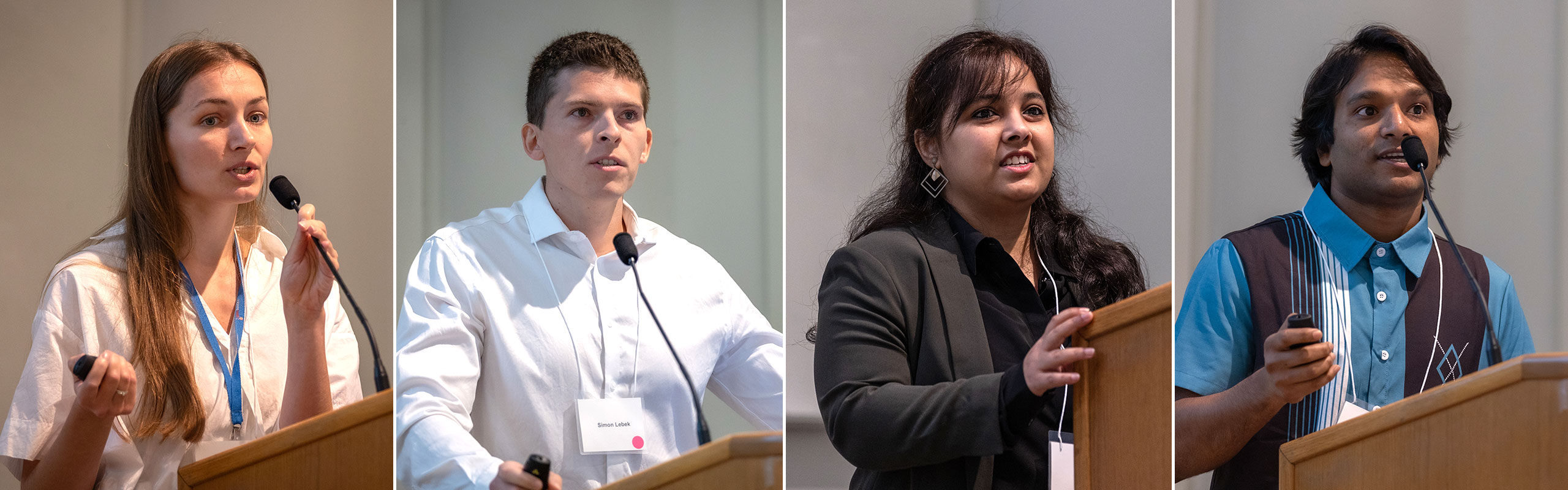
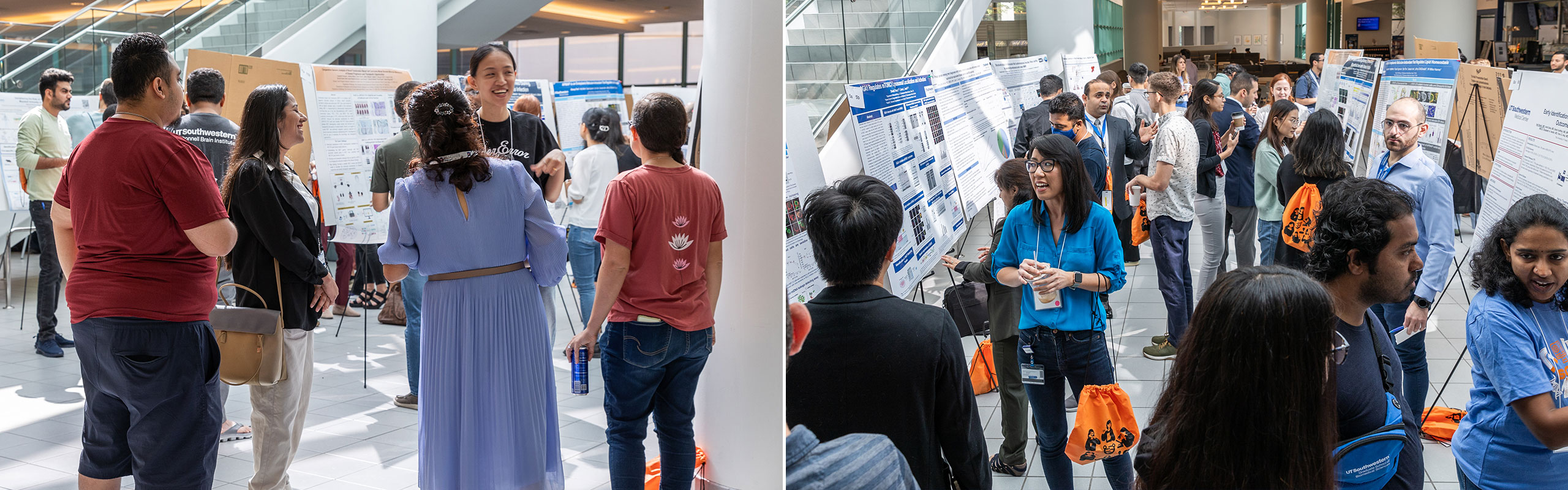
      Produce a poster to describe a research project and exhibit data.  Make a presentation at a local (i.e.  annual UT Southwestern Postdoctoral Poster Session), regional, national or international conference/symposium. 
    2. Public Speaking - Journal Club/Works-in-Progress (WIP) – The purpose of a journal club or WIP is to keep abreast of recent research advances, to sharpen critical thinking abilities, and to develop public speaking skills. Any existing departmental (multi-lab) journal club/WIP with a published schedule may meet this requirement with approval of the Postdoctoral Affairs Office. 
    3. Seminar Series
      Any existing, regularly scheduled institutional, departmental, or program seminar series may meet this requirement with approval of the Postdoctoral Affairs Office.  The purpose is to keep abreast of recent research advances and to observe communication styles. 
    4. Individual Development Plan - This course is comprised of writing an Individual Development Plan following guidelines from the Federation of American Societies for Experimental Biology. This planning process, initiated by the postdoctoral scholar, identifies his/her professional and development needs and career objectives. The plan must include feedback from the research mentor. Writing and discussion is done at the convenience of the scholar and mentor with completion verified during the term of registration; there is no class attendance.

  2. Supervised Research - Supervised Research consists of the training you get from your mentor in the laboratory every day and, as such, requires no class attendance. When your research schedule will not allow you to be away from the lab bench, you should register only for Supervised Research

  3. Electives - Elective courses are offered to enhance your training experience, but are not required.  Please register for these courses only if your research schedule allows for full participation and you have completed your required courses. 
    1. Application for Funding Award - Write and submit a competitive fellowship or grant application.  Proof of submission must be presented to the Postdoctoral Affairs Office of the graduate school. 
    2. Research Mentoring - Serve as the supervisor for research project conducted by a rotating graduate student, STARS student or teacher, SURF student, Green Fellow or other trainee.  Name of trainee and program shall be reported to the Postdoctoral Affairs Office.  Advance permission is required from your research supervisor and the appropriate program. 
    3. Journal Club/WIP - Participate in Journal Club or Works-in-Progress in addition to the one term requirement I.B.  above. 
    4. Advanced Topics-Off Campus - Participate in workshops, conferences or other activities in advanced topics offered off campus.  Advance permission is required from your research supervisor and the Postdoctoral Affairs Office; costs associated with such courses are not provided by the graduate school. 
    5. Effective Teachers Series - Attend the Effective Teacher Series. 
    6. Teaching Experience - Prepare and present a class lecture or lead a discussion group. 
    7. Advanced Graduate Courses - Participate in course(s) from the Division of Biological Sciences class offerings. 

Please email your questions to the Postdoctoral Affairs Office


Postdoctoral Certificate in Advanced Technology top
  1. Required Courses
    1. Advanced Technology Coursework
      Two courses shall be chosen from any of those offered on topics in advanced technology.  Additional courses may be taken as electives.  Examples include, but are not limited to:
      Advances in Germ and Stem Cell Biology
      Optical Microscopy
      Computational Modeling of Signaling Systems
      Basic Principles of NMR
      Magnetic Resonance Spectroscopy
      X-ray Crystallography
      Molecular Biophysics: Spectroscopy
      Genetic Manipulation of the Immune System
      Advanced Synthesis & Catalysis
      Experimental Approaches to Complex Genetic Disease & Gene Therapy

      Experiences in advanced techniques offered off campus may qualify (such as workshops or conferences).  Advance permission from your research supervisor and the Postdoctoral Affairs Office is required.  Costs associated with such courses are not provided by the graduate school. 
    2. Public Speaking - Journal Club/Works-in-Progress (WIP) – The purpose of a journal club or WIP is to keep abreast of recent research advances, to sharpen critical thinking abilities, and to develop public speaking skills. Any existing departmental (multi-lab) journal club/WIP with a published schedule may meet this requirement with approval of the Postdoctoral Affairs Office. 
    3. Seminar Series
      Any existing, regularly scheduled institutional, departmental, or program seminar series may meet this requirement with approval of the Postdoctoral Affairs Office.  The purpose is to keep abreast of recent research advances and to observe communication styles. 
    4. Individual Development Plan - This course is comprised of writing an Individual Development Plan following guidelines from the Federation of American Societies for Experimental Biology. This planning process, initiated by the postdoctoral scholar, identifies his/her professional and development needs and career objectives. The plan must include feedback from the research mentor. Writing and discussion is done at the convenience of the scholar and mentor with completion verified during the term of registration; there is no class attendance.

  2. Supervised Research - Supervised Research consists of the training you get from your mentor in the laboratory every day and, as such, requires no class attendance. When your research schedule will not allow you to be away from the lab bench, you should register only for Supervised Research

  3. Electives - Elective courses are offered to enhance your training experience, but are not required.  Please register for these courses only if your research schedule allows for full participation and you have completed your required courses. 
    1. Application for Funding Award - Write and submit a competitive fellowship or grant application.  Proof of submission must be presented to the Postdoctoral Affairs Office.
    2. Research Mentoring - Serve as the supervisor for research project conducted by a rotating graduate student, STARS student or teacher, SURF student, Green Fellow or other trainee.  Name of trainee and program shall be reported to the Postdoctoral Affairs Office.  Advance permission is required from your research supervisor and the appropriate program. 
    3. Journal Club/WIP - Participate in Journal Club or Works-in-Progress in addition to the one term requirement I.B.  above. 
    4. Advanced Topics-Off Campus - Participate in workshops, conferences or other activities in advanced topics offered off campus.  Advance permission is required from your research supervisor and the Postdoctoral Affairs Office; costs associated with such courses are not provided by the graduate school. 
    5. Effective Teachers Series - Attend the Effective Teacher Series. 
    6. Teaching Experience - Prepare and present a class lecture or lead a discussion group. 
    7. Advanced Graduate Courses - Participate in course(s) from the Division of Biological Sciences class offerings. 

Please email your questions to the Postdoctoral Affairs Office


Postdoctoral Certificate in Chemistrytop
  1. Required Courses
    1. Chemistry Coursework
      Two courses shall be chosen from any of those offered on topics related to chemistry. Additional courses may be taken as electives. Examples include, but are not limited to:
      Chemical Structure and Reactivity I or II
      Chemical Synthesis I or II
      Chemical Neurotransmission
      X-ray Crystallography
      Basic Principles of NMR
      Magnetic Resonance Spectroscopy
      Advanced Synthesis & Catalysis
      Protein Structure and Folding
      Advanced Problems in Reaction Mechanisms
      Molecular Biophysics: Energetics or Spectroscopy

      Experiences in advanced techniques offered off campus may qualify (such as workshops or conferences).  Advance permission required from your research supervisor and the Postdoctoral Affairs Office.  Costs associated with such courses are not provided by the graduate school. 
    2. Public Speaking - Journal Club/Works-in-Progress (WIP) – The purpose of a journal club or WIP is to keep abreast of recent research advances, to sharpen critical thinking abilities, and to develop public speaking skills. Any existing departmental (multi-lab) journal club/WIP with a published schedule may meet this requirement with approval of the Postdoctoral Affairs Office. 
    3. Seminar Series
      Any existing, regularly scheduled institutional, departmental, or program seminar series may meet this requirement with approval of the Postdoctoral Affairs Office.  The purpose is to keep abreast of recent research advances and to observe communication styles. 
    4. Individual Development Plan - This course is comprised of writing an Individual Development Plan following guidelines from the Federation of American Societies for Experimental Biology. This planning process, initiated by the postdoctoral scholar, identifies his/her professional and development needs and career objectives. The plan must include feedback from the research mentor. Writing and discussion is done at the convenience of the scholar and mentor with completion verified during the term of registration; there is no class attendance.

  2. Supervised Research - Supervised Research consists of the training you get from your mentor in the laboratory every day and, as such, requires no class attendance. When your research schedule will not allow you to be away from the lab bench, you should register only for Supervised Research
     
  3. Electives - Elective courses are offered to enhance your training experience, but are not required. Please register for these courses only if your research schedule allows for full participation and you have completed your required courses
    1. Application for Funding Award - Write and submit a competitive fellowship or grant application.  Proof of submission must be presented to the Postdoctoral Affairs Office of the graduate school. 
    2. Research Mentoring - Serve as the supervisor for research project conducted by a rotating graduate student, STARS student or teacher, SURF student, Green Fellow or other trainee.  Name of trainee and program shall be reported to the Postdoctoral Affairs Office.  Advance permission from your research supervisor, the Postdoctoral Affairs Office and the appropriate program are required. 
    3. Journal Club/WIP - Participate in Journal Club or Works-in-Progress in addition to the one term requirement I.B.  above. 
    4. Advanced Topics-Off Campus - Participate in workshops, conferences or other activities in advanced topics offered off campus.  Advance permission is required from your research supervisor and the Postdoctoral Affairs Office; costs associated with such courses are not provided by the graduate school. 
    5. Effective Teachers Series – Attend the Effective Teacher Series. 
    6. Teaching Experience - Prepare and present a class lecture or lead a discussion group. 
    7. Advanced Graduate Courses - Participate in course(s) from the Division of Biological Sciences class offerings.

Please email your questions to the Postdoctoral Affairs Office


Postdoctoral Certificate in Educational Techniquestop
The goal of the Educational Techniques Certificate program is for postdoctoral scholars to learn and apply effective teaching practices.  This program requires a greater time commitment and motivation of the participants compared to other certificate programs.  Once awarded, the certificate may prove beneficial for postdoctoral scholars to document training that better qualifies them for positions of employment in education. 
  1. Required Courses
    1. Effective Teaching Practices
      1. Participate in a course which covers topics such as teaching methods/practices, learning theory, curriculum development, and test writing.  (i.e.  Teaching Mastery for Postdoctoral Trainees or Effective Teacher Series). 
      2. Teaching experience - the postdoctoral trainee shall seek opportunities independently and in consultation with their research supervisor and the Postdoctoral Affairs Office. 
        1. prepare and present a class lecture under the supervision of a faculty member, or
        2. lead a discussion group for a course under the supervision of a faculty member. 
      3. Poster Presentation - Produce a poster to describe a research project and exhibit data.  Make a presentation at a local (for example the annual UT Southwestern Postdoctoral Symposium), regional, national or international conference/symposium. 
    2. Journal Club or Works-in-Progress (WIP)
      Attending any existing department or program journal club/WIP may meet this requirement with approval of the Postdoctoral Affairs Office.  The purpose is to keep abreast of recent research advances, to sharpen critical thinking abilities, and to develop public speaking skills. 
    3. Seminar Series
      Any existing, regularly scheduled institutional, departmental, or program seminar series may meet this requirement with approval of the Postdoctoral Affairs Office.  The purpose is to keep abreast of recent research advances and to observe communication styles.
    4. Individual Development Plan - This course is comprised of writing an Individual Development Plan following guidelines from the Federation of American Societies for Experimental Biology. This planning process, initiated by the postdoctoral scholar, identifies his/her professional and development needs and career objectives. The plan must include feedback from the research mentor. Writing and discussion is done at the convenience of the scholar and mentor with completion verified during the term of registration; there is no class attendance.

  2. Supervised Research - Supervised Research consists of the training you get from your mentor in the laboratory every day and, as such, requires no class attendance. When your research schedule will not allow you to be away from the lab bench, you should register only for Supervised Research. 

  3. Electives - Elective courses are offered to enhance your training experience, but are not required. Please register for these courses only if your research schedule allows for full participation and you have completed your required courses.
    1. Application for Funding Award - Write and submit a competitive fellowship or grant application.  Proof of submission must be presented to the Postdoctoral Affairs Office of the graduate school. 
    2. Research Mentoring - Serve as the supervisor for research project conducted by a rotating graduate student, STARS student or teacher, SURF student, Green Fellow or other trainee.  Name of trainee and program shall be reported to the Postdoctoral Affairs Office.  Advance permission from your research supervisor, the Postdoctoral Affairs Office and the appropriate program are required. 
    3. Journal Club/WIP - Participate in Journal Club or Works-in-Progress in addition to the one term requirement I.B.  above. 
    4. Advanced Topics-Off Campus - Participate in workshops, conferences or other activities in advanced topics offered off campus.  Advance permission is required from your research supervisor and the Postdoctoral Affairs Office; costs associated with such courses are not provided by the graduate school. 
    5. Effective Teachers Series – Attend the Effective Teacher Series. 
    6. Teaching Experience - Prepare and present a class lecture or lead a discussion group in addition to requirement I.A.2.  above. 
    7. Advanced Graduate Courses - Participate in course(s) from the Division of Biological Sciences class offerings.  top

Please email your questions to the Postdoctoral Affairs Office