


New Faculty Research Forum offers glimpse into discoveries shaping the future of medicine

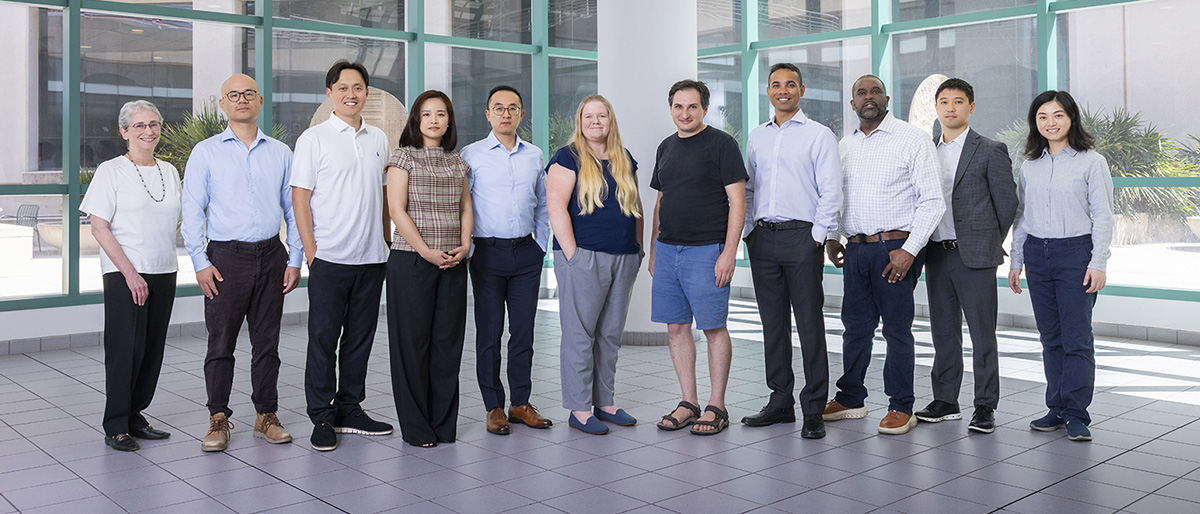
This fall, the 2026 New Faculty Research Forum will provide an illuminating snapshot of the future of basic science at UT Southwestern. The daylong event, scheduled for Nov. 12 at the T. Boone Pickens Medical Education & Conference Center on North Campus, will feature presentations by more than a dozen early-career faculty members from across campus.
“The forum is a wonderful opportunity for new faculty to introduce themselves and their work to the UT Southwestern research community, including other faculty, students, postdocs, and research staff,” said Joan Conaway, Ph.D., Vice Provost and Dean of Basic Research. “It also provides an opportunity for lab-based faculty researchers to get to know their peers and expand their network of colleagues from basic science departments and centers as well as clinical departments.”
UTSW’s New Faculty Research Forum, now in its 21st year, is bigger than ever, boasting more than 200 guests from across campus, including students and staff.
“Few, if any, peer institutions hold an event like this,” said W. Lee Kraus, Ph.D., Assistant Dean for Research Development. “Its longevity reflects the commitment of UT Southwestern to the recruitment and support of the very best young scientists as well as the broad interest of the research community in supporting our new colleagues.”
The 2026 forum’s keynote speaker will be Helen Hobbs, M.D., Professor in the Eugene McDermott Center for Human Growth and Development, an internationally renowned scientist who has shown how differences in genes affect the way the body processes cholesterol and fats – discoveries that help explain why some people develop high cholesterol or liver disease and others do not. Dr. Hobbs, also a Professor of Internal Medicine and Molecular Genetics, helped launch the landmark Dallas Heart Study in 2000. Now known as the Dallas Hearts and Minds Study, the multiethnic, population-based study continues to shape cardiac care while expanding its reach to explore the brain.
Following Dr. Hobbs’ remarks, some of UTSW’s newest Assistant Professors will share information about their latest research. Their work includes disease-in-a-dish models, brain-computer interfacing, intelligent medical devices, platforms for precision medicine, metabolism regulation, gene expression, neural dynamics, seasonal rhythms, and much more.
“This year we have 17 speakers from a diverse array of departments and centers across campus,” said Dr. Kraus, Director of the Cecil H. and Ida Green Center for Reproductive Biology Sciences and Professor of Obstetrics and Gynecology and Pharmacology. “These new scientists will help to set the research focus of UT Southwestern for years to come.”
Learn more about the innovative research of some of the forum presenters below:
How Bacteria Control Gene Expression: Lessons from Genome-Scale Transcription
Xinyun “Sherry” Cao, Ph.D., Assistant Professor of Microbiology, has always been fascinated by how bacteria can survive and adapt to different environments. Her lab studies transcription, the process by which RNA polymerase reads DNA to produce RNA.
“This is the first step of gene expression, and we are interested in understanding how this process helps pathogenic bacteria respond to their environment and survive in the human body,” she said.
“Bacteria use gene regulation to adapt, survive, and cause disease, but we still do not fully understand how this process works in many important bacterial pathogens. By understanding the basic mechanisms of transcription that control bacterial gene expression, we may uncover vulnerabilities that could eventually be used to identify new strategies for targeting harmful bacteria without relying only on traditional antibiotics,” she added.
Beyond Biological Snapshots: Integrated Biosensing and Microphysiological Platforms for Precision Health
Tran N.H. Nguyen, Ph.D., Assistant Professor of Biomedical Engineering and a member of the Harold C. Simmons Comprehensive Cancer Center, combines biosensors with microfluidic and tissue-modeling technologies to measure molecular signals and tissue responses over time.
“Tumors can respond to a treatment and later adapt, while hormone levels and other biomarkers can fluctuate substantially between measurements,” she said. “Following these changes over time may reveal important information that endpoint tests miss. This added dimension of time could help us understand not only whether a treatment works, but also when and how the response changes.”
Dr. Nguyen hopes her work leads to technologies for earlier disease detection, more personalized monitoring, and better testing of therapies in patient-relevant models.
Stem Cell Models of Inherited and Acquired Human Heart Disease
Chengyi Tu, Ph.D., Assistant Professor of Internal Medicine in the Division of Cardiology and of Biomedical Engineering, is integrating stem cell biology and tissue engineering to develop in vitro models of human heart disease.
Though heart disease remains a leading cause of death, the development of new therapies has been relatively slow, and many cardiac conditions still lack FDA-approved treatments, Dr. Tu said. He hopes to address the gap by developing models that enable the study of heart disease in a dish.
“By combining patient-specific induced pluripotent stem cells with tissue engineering, human-based disease models can offer powerful platforms for studying inherited and acquired heart diseases and accelerate the discovery of new therapies,” he said. “My ultimate goal is to translate discoveries from our disease-in-a-dish models into clinically feasible therapies for patients with currently incurable heart diseases, such as Friedreich ataxia-associated cardiomyopathy.”
From Mind to Motion: Creating Intuitive Brain-Machine Interfaces to Restore Sensation and Movement in People with Severe Paralysis
Brain-computer interfacing (BCI) is where Cecile Verbaarschot, Ph.D., Assistant Professor of Neurological Surgery, Biomedical Engineering, and in the Peter O’Donnell Jr. Brain Institute, discovered the heart of her scientific passion.
“By decoding brain activity into external device commands, we can query a person’s thoughts and feelings when we see changes in neurological activity,” she said. “This allows us to investigate how the initiation, planning, and execution of movement relate to the conscious experience of intentions and subsequent sensory consequences.”
That knowledge can be translated into intuitive wearable devices that support sensorimotor function after neurological injury.
“I aim to increase autonomy and social interaction in people living with severe paralysis via the use of a BCI,” she said. “My research is successful if it can effortlessly assist sensorimotor function in the upper limb during activities of daily living.”
Sticky and Squishy Biointerfaces for Extreme Health
Binbin Ying, Ph.D., Assistant Professor of Biomedical Engineering and Internal Medicine in the Division of Digestive and Liver Diseases, is developing medical devices that can function reliably in some of the most difficult areas inside the body.
“The human body is a challenging environment for medical devices – our organs are soft, wet, and constantly moving. I became fascinated with creating technologies that can adapt to the body rather than asking the body to accommodate the device,” said Dr. Ying, also a member of the Simmons Cancer Center.
The Ying Lab is working to develop hydrogel bioadhesives, soft medical robots, and ingestible bioelectronics that can be used for diagnostics and therapeutics within the body’s extreme environments.
“Our goal is to create intelligent medical devices that can stay with the body to detect disease earlier, monitor treatment response, and deliver therapy at the right place and right time – particularly for chronic diseases such as cancer,” he said.
Harnessing Antiviral Immunity to Target Cancer
Tao Zou, M.D., Ph.D., Assistant Professor of Internal Medicine in the Division of Hematology and Oncology and a member of the Simmons Cancer Center, is searching for novel ways to redirect the immune system to fight lung cancer.
“The immune system has different means of deciding what it should and should not attack. We are trying to hijack the ways the immune system makes these decisions to encourage it to attack diverse types of lung cancer,” said Dr. Zou, also a member of the Nancy B. and Jake L. Hamon Center for Therapeutic Oncology Research and the Department of Immunology.
At the basic science level, Dr. Zou hopes to uncover how the immune system can differentiate between self and nonself – the body’s healthy tissues vs. foreign invaders – which can inform our understanding of diverse fields such as infectious disease, autoimmune disease, organ transplantation, and cancer, he said. Dr. Zou said he believes that “at the translational level, we have the opportunity to use our findings to design new immune-based approaches to target cancer.”
Additional new faculty members who will be presenting at the forum and their topics include:
- Leo Buckley, Pharm.D., M.P.H., Assistant Professor of Internal Medicine in the Division of Cardiology and in the Peter O’Donnell Jr. School of Public Health: Decoding Drug Responses to Prevent Heart Failure
- Nils Burger, Ph.D., Assistant Professor of Pharmacology and a member of the Simmons Cancer Center: Proteome-Wide Strategies to Uncover Cysteine-Based Regulation of Metabolism and Mitochondrial Function
- Shixuan Liu, Ph.D., Assistant Professor of Neuroscience and in the O’Donnell Brain Institute and a member of the Simmons Cancer Center: Mechanisms of Seasonal Rhythms
- Anupam Mondal, Ph.D., Assistant Professor of Ophthalmology and an Investigator in the O’Donnell Brain Institute: Identifying the Mechanisms and Modifiers of Retinal Aging and Neurodegenerative Diseases
- George Mountoufaris, Ph.D., Assistant Professor of Physiology and Neuroscience and an Investigator in the O’Donnell Brain Institute: Neural Dynamics in Control: Insights into Persistent Affective States
- Megan Routzong, Ph.D., Assistant Professor of Biomedical Engineering and Obstetrics and Gynecology: Pregnancy-Induced Remodeling of Pelvic Floor Skeletal Muscles
- Keunwoo Ryu, Ph.D., Assistant Professor of Cell Biology and a member of the Simmons Cancer Center: Compartmentalization of Metabolic Pathways as a Regulator of Cellular Metabolism
- Vladimir Seplyarskiy, Ph.D., Assistant Professor in the McDermott Center for Human Growth and Development and the Lyda Hill Department of Bioinformatics: From the Origins of Mutations to Their Effects
- Michael L. Skowyra, Ph.D., Assistant Professor of Biochemistry and Cell Biology: Unraveling the mysteries of peroxisomes in health and disease
- Mason Sweat, Ph.D., Assistant Professor of Internal Medicine in the Division of Cardiology and of Molecular Biology: Molecular Mechanisms of Atrial Arrhythmias
- Yun “Claudia” Wei, Ph.D., Assistant Professor of Pediatrics and a member of the Simmons Cancer Center: Identifying Shared Transcriptional Programs in a Heterogeneous Childhood Cancer: Rhabdomyosarcoma
Endowed Title:
Dr. Burger is a Virginia Murchison Linthicum Scholar in Medical Research.
Dr. Cao is a Southwestern Medical Foundation Scholar in Biomedical Research.
Dr. Conaway holds the Cecil H. Green Distinguished Chair in Cellular and Molecular Biology.
Dr. Hobbs holds the Dallas Heart Ball Chair in Cardiology Research.
Dr. Kraus holds the Cecil H. and Ida Green Distinguished Chair in Reproductive Biology Sciences.
Dr. Liu is a W.W. Caruth, Jr. Scholar in Biomedical Research.
Dr. Mountoufaris is a Louise W. Kahn Scholar in Biomedical Research.
Dr. Ryu is a Southwestern Medical Foundation Scholar in Biomedical Research.
Dr. Seplyarskiy is a Eugene McDermott Scholar in Biomedical Research.
Dr. Skowyra is a Southwestern Medical Foundation Scholar in Biomedical Research.