


Severity of cancer immunotherapy side effects linked to genetics
Findings pinpointing DNA biomarkers may lead to strategies to improve patient treatment

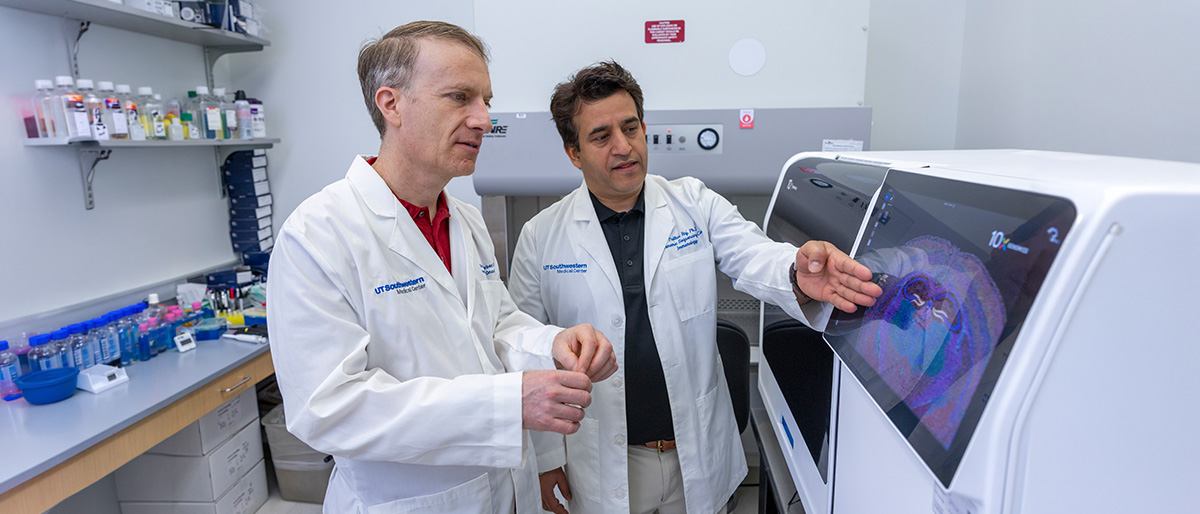
People who develop severe side effects from cancer immunotherapy appear to share certain genetic mutations and immune system features, UT Southwestern researchers report. These findings, published in two recent studies in the Journal for ImmunoTherapy of Cancer, may make it possible to either prevent or better treat these side effects, improving care for patients undergoing lifesaving cancer treatments.
Immune-related adverse effects, or irAEs, can affect many organ systems in the body, said David Gerber, M.D., Professor of Internal Medicine in the Division of Hematology and Oncology and in the Peter O’Donnell Jr. School of Public Health. They can also appear long after treatment has been completed and, rarely, can be fatal. Up to 15% of immunotherapy patients may develop irAEs, and for those treated with combination immunotherapy, the rate can be as high as 50%, he said.
In contrast, traditional chemotherapy has narrowly focused side effects – mostly hair loss, nausea, and reduced blood counts, added Dr. Gerber, who is also co-Director of the Harold C. Simmons Comprehensive Cancer Center’s Office of Education and Training.
“With chemotherapy, we know what will happen and when,” he said. “With immune-related adverse effects, we don’t know who’s going to have problems, what those problems will be, how severe they will be, or when they will occur.”
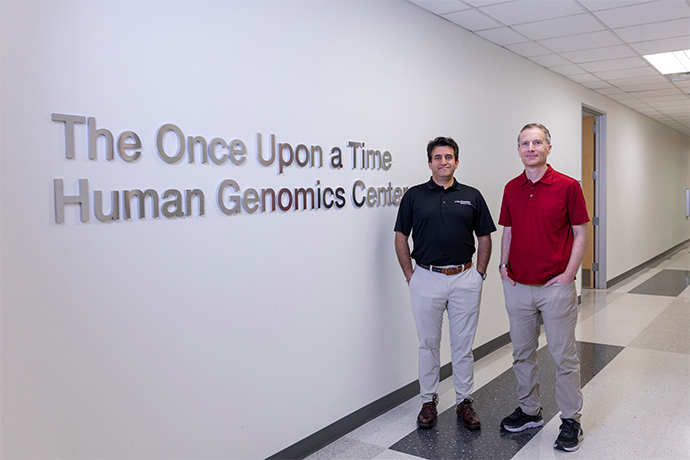
As a clinician, Dr. Gerber sought to understand more about the biology of irAEs, discover whether they could be predicted, and find ways to counteract them. For that work, he assembled a research team of specialists in immunology, pathology, genetics, and other fields. The team analyzed blood samples from patients receiving immune checkpoint inhibitor immunotherapy – drugs that enhance the immune system’s ability to attack cancer. More than 800 patients have participated so far, providing blood samples before, during, and after immunotherapy.
In the first study published in September, researchers examined samples from people who developed irAEs and found they had a natural “proinflammatory, autoimmune-like state,” which included higher levels of certain types of T cells (white blood cells that coordinate the body’s adaptive immunity response), higher levels of autoimmune-related antibodies, and lower levels of natural killer (NK) immune cells. In addition, immune checkpoint inhibitors caused distinct changes to their immune systems, such as increased expression of the inflammatory molecule tumor necrosis factor (TNF) and downregulation of immunosuppressive genes.
The second study, published in October, investigated the genome of almost 400 immunotherapy patients followed over several years for genetic variations that correlated with clinically significant irAEs. For this project, known as a genome-wide association study (GWAS), the researchers looked for mutations at nearly 600,000 locations in the patients’ DNA, then analyzed which mutations were associated with adverse effects.
They found that irAEs correlated with mutations in three genes – VWA8 (von Willebrand factor A domain containing 8, a mitochondrial gene believed to be involved in energy metabolism), OSBPL6 (oxysterol-binding protein-like 6, thought to be involved in cholesterol transport), and ADAMTS9-AS2 (ADAM metallopeptidase with thrombospondin type 1 motif 9 antisense RNA 2, a tumor suppressor).
About one-fourth of the patients carried one or more of these mutations. The researchers also found that various components regulating these patients’ immune systems were significantly stimulated or repressed; for instance, the patients had higher levels of CCL3, a signaling protein that mediates immune responses.
These gene mutations might eventually be useful as biomarkers to predict whether a patient is likely to have severe side effects from immunotherapy, said Prithvi Raj, Ph.D., Associate Professor of Immunology and lead author of the second study.
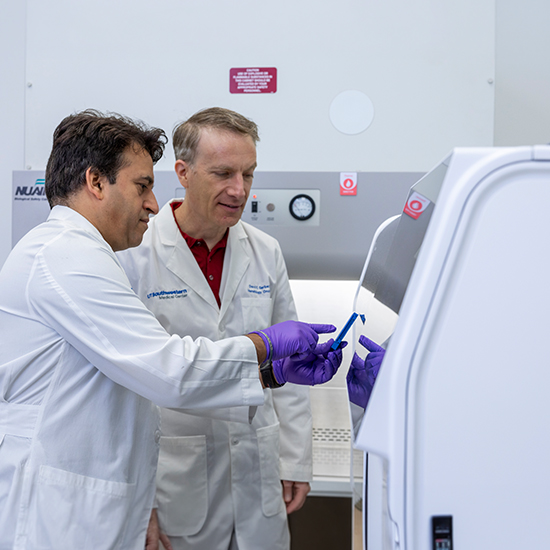
“We’ve identified something interesting, and now we can perform validation of our findings, investigate mechanisms of action, and pursue technology development,” Dr. Raj said.
“Biomarker results might be used to customize patient monitoring,” added Dr. Gerber. “Right now, we only monitor kidney, liver, and thyroid function. If we know that someone is higher risk, we may expand monitoring to other organ systems. The biomarkers also might help with irAE diagnosis, help determine the best treatment of side effects when they occur, or help with selection of the type of immunotherapy given. These are all future directions for research.”
Other UT Southwestern authors included Jialiang Liu, M.P.H., Ph.D., Assistant Professor of Health Data Science and Biostatistics, Mitchell von Itzstein, M.D., Assistant Professor of Internal Medicine, Farjana Fattah, Ph.D., Senior Staff Scientist in the Simmons Cancer Center, Jeffrey SoRelle, M.D., Assistant Professor of Pathology and Pediatrics, David Farrar, Ph.D., Associate Professor of Immunology and Molecular Biology, Chengsong Zhu, Ph.D., Biostatistical Consultant in the Immunology Core, Carlos Arana, M.S., Computational Biologist in the Microbiome Core, and Hong Mu-Mosley, M.D., Ph.D., a Lead Clinical Research Coordinator in the Simmons Cancer Center.
Additional UTSW authors are Jason Park, M.D., Ph.D., Professor of Pathology and in the Eugene McDermott Center for Human Growth and Development, Edward Wakeland, Ph.D., Professor of Immunology, Yang Xie, Ph.D., Professor of Health Data Science and Biostatistics and in the Lyda Hill Department of Bioinformatics, Yang Liu, Ph.D., Research Scientist in the Microbiome Core, Mary Gwin, M.D., Clinical Fellow in Internal Medicine, Suzanne Cole, M.D., Associate Professor of Internal Medicine, Sheena Bhalla, M.D., Assistant Professor of Internal Medicine, Jay Lohrey, M.D., Assistant Professor of Internal Medicine and in the Simmons Cancer Center, David Hsieh, M.D., Associate Professor of Internal Medicine, Angela Moses, Ph.D., Senior Research Associate in Immunology, and Yaming Xue, Ph.D., Research Scientist in Internal Medicine.
Disclosures: Dr. Gerber reports consulting fees from Catalyst Pharmaceuticals; U.S. patents 11,747,345 and 12,498,831; pending patents 17/045,482, 18/504,868, 63/386,387, 63/382,972, and 63/382,257; research funding from AstraZeneca, Karyopharm, Novocure, and Sagimet; participation on advisory boards for AstraZeneca, Daiichi Sankyo, Elevation Oncology, GSK, Janssen Scientific Affairs, Jazz Pharmaceuticals, Regeneron Pharmaceuticals, Sanofi, and Summit Therapeutics; stock shares in Gilead Sciences; and serving as co-founder and Chief Medical Officer of OncoSeer Diagnostics Inc. Dr. SoRelle reports serving as co-founder of Cereus Diagnostics Corp. with a provisional patent application related to lung cancer. Dr. Park reports serving as co-founder and Chief Scientific Officer of OncoSeer Diagnostics Inc.
The studies were funded in part by the National Institute of Allergy and Infectious Diseases (1U01AI156189-01), an American Cancer Society-Melanoma Research Alliance Team Award (MRAT-18-114-01-LIB), a Melanoma Research Alliance-Society for Immunotherapy of Cancer Young Investigator Award (Award ID -619351), a V Foundation Robin Roberts Cancer Survivorship Award (DT2019-007), the University of Texas Lung Cancer Specialized Program of Research Excellence (SPORE) (P50CA070907-21), and the Harold C. Simmons Comprehensive Cancer Center Data Sciences Shared Resource (1P30 CA 142543-03). The funders were not involved in study design, conduct, or reporting.
Endowed Titles:
Dr. Gerber holds the David Bruton, Jr. Professorship in Clinical Cancer Research.
Dr. Park holds the Robin M. Jacoby, Ph.D. Professorship in Biomedical Science.
Dr. Xie holds the Raymond D. and Patsy R. Nasher Distinguished Chair in Cancer Research, in Honor of Eugene P. Frenkel, M.D.