Molecular Biophysics Ph.D. Program
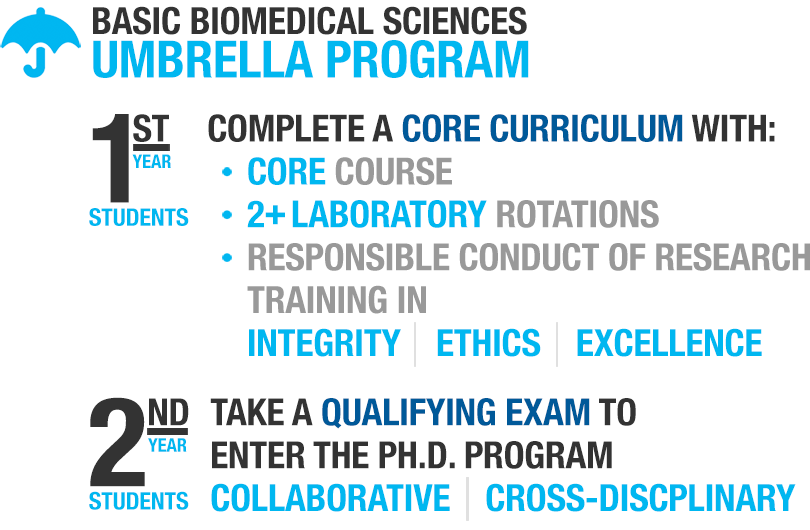
Prospective students interested in joining the program should apply to the Basic Biomedical Sciences Program in the Division of Basic Science.
About the Molecular Biophysics Program

The Molecular Biophysics (MB) Graduate Program offers a vibrant environment for students interested in solving biological problems using interdisciplinary, quantitative approaches. The MB Graduate Program has approximately 40 faculty members who bring diverse backgrounds and interests ranging from mathematics to genetics, physics to neuroscience, chemistry to evolution, and beyond.
Biological areas of study include trans-membrane transport and signaling, cytoskeleton and intracellular organization, gene expression and regulation, protein folding and mis-folding, and more. Computational and systems-level approaches coexist and synergize with structure, biochemistry, and imaging.
A History of Grant Support
Molecular Biophysics trainees successfully compete for national predoctoral and postdoctoral fellowships. The Molecular Biophysics program has a long history as a strong training environment and has been recognized for excellence by the NIH in the form of 25-plus years of T32 training grant support from the NIH.

Going Beyond Lab Research
Our Molecular Biophysics Graduate Program offers a supportive and collaborative environment to help trainees become accomplished scientists. Our curriculum includes:
- Advanced Coursework
Students benefit from rigorous coursework that is updated regularly with feedback from participants. The coursework focuses on the application of principles and techniques of the physical sciences to biomedical research problems.
- Research Presentations and Seminar Series
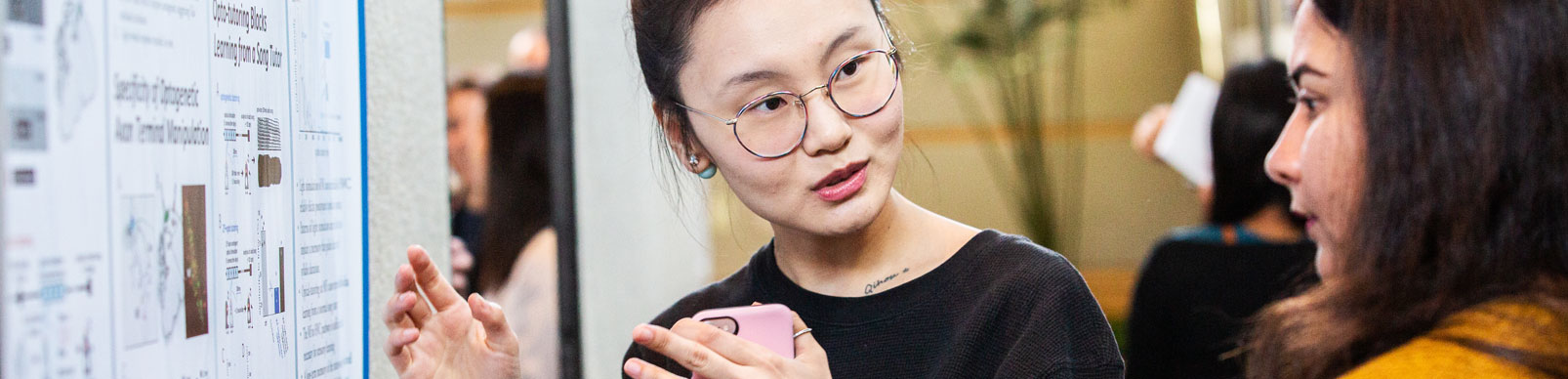
Students build strong presentation skills through annual research presentations to the entire program and regularly have opportunities to host and/or meet with leading scientists from other institutions as part of numerous seminar series.
- Annual Symposium
All members of the Molecular Biophysics Graduate Program, their mentors, and fellow lab members are invited to our annual symposium. The symposium gives students, postdoctoral fellows, and faculty an opportunity to present results of grant-supported research to a broader community, with time allowed for discussion. Through feedback from the larger biophysics community, the presenter and their mentor gain new ideas for future directions. The day is specifically designed to encourage scientific exchange and promote academic development.
State-of-the-Art Instrumentation
After rigorous coursework and laboratory rotations during the first year, students pursue full-time research in a rich training environment that provides access to, and training on, a wide variety of state-of-the-art instrumentation, such as:
- Synchrotron radiation
- Nmr and fluorescence spectrometers
- Cryo-electron and advanced fluorescence microscopes
- High-performance computing
- Analytical ultracentrifugation
- Isothermal titration calorimetry
Instrumentation is housed in individual faculty labs or as part of core facilities like the Structural Biology Core, Macromolecular Biophysics Resource, and Live Cell Imaging Core.
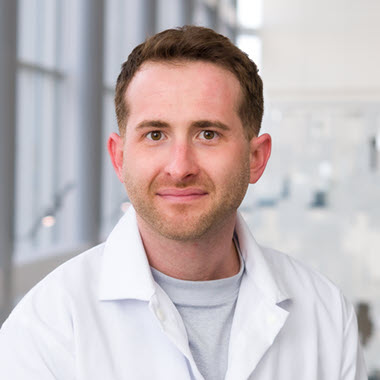
Meet the Program Director
“Our curriculum is rigorous and continually refined in response to student feedback. From their earliest lab rotations onward, students gain hands-on experience with state-of-the-art biophysical tools and benefit from expert mentorship in a highly collaborative research environment”
Lukasz Joachimiak, Ph.D.
Associate Professor
See Dr. Joachimiak's Full Message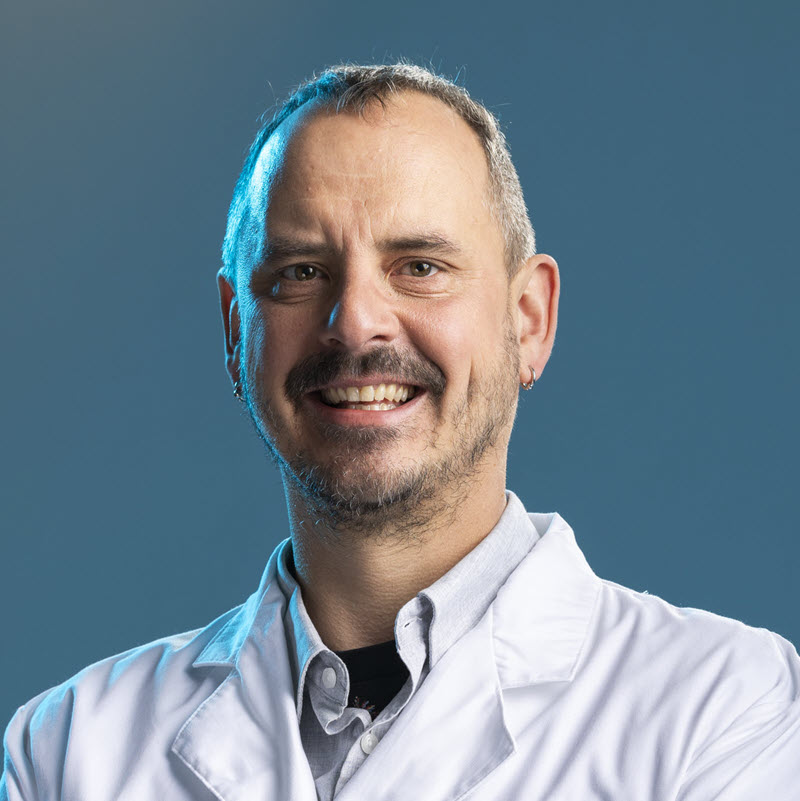
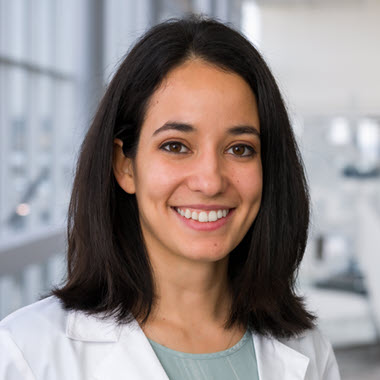
Contact the Graduate School


Arnaldo Diaz Vazquez, Ph.D.
Associate Dean
arnaldo.diazvazquez@utsouthwestern.edu
Phone: 214-648-2527