


Inaugural Research Track Excellence Awards honor innovation and impact

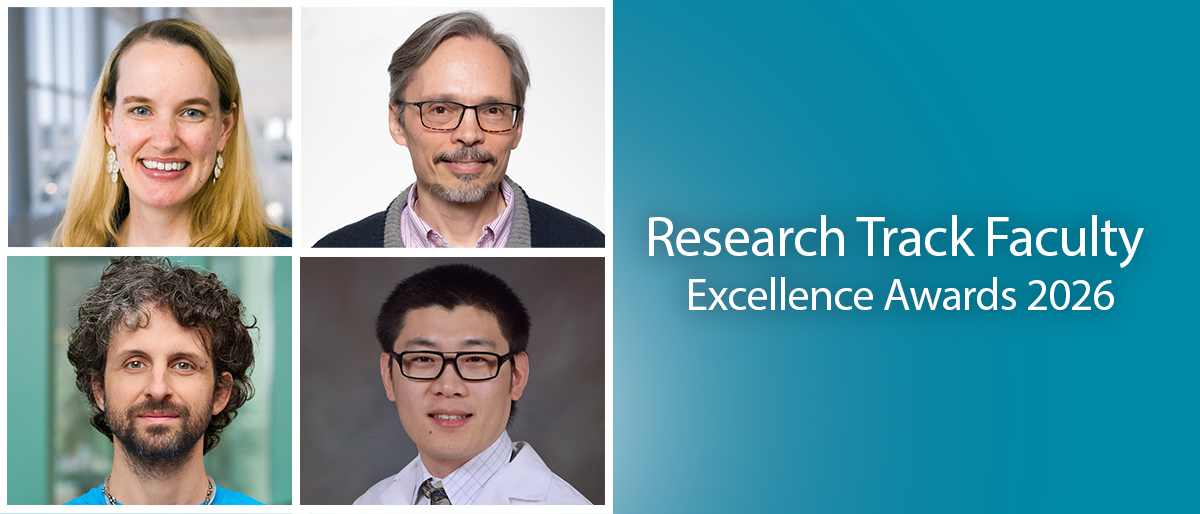
In recognition of their impact on UT Southwestern’s research mission, four faculty members have been honored with the Office of Faculty Development’s inaugural Research Track Faculty Excellence Awards for outstanding mentorship, collaboration, innovation, and early scholarly achievements.
The awards are part of the Research Track Faculty Development program designed by Christina Ahn, Ph.D., Director of Faculty Development, and Alyssa Hasty, Ph.D., Vice Provost and Senior Associate Dean for Faculty Affairs and Career Development, with support from Joan Conaway, Ph.D., Vice Provost and Dean of Basic Science.
“The Research Track Faculty Development Program at UT Southwestern is important because it provides focused coaching, skill building, and community for Research Track faculty,” Dr. Ahn said. “It strengthens their professional growth and supports the essential contributions they make to the institution’s research mission.”
The new awards garnered 89 nominations, which were reviewed by institutional leaders and graduates of the Leadership Emerging in Academic Departments (LEAD) program. Honored at the Annual Research Track Faculty Recognition Lunch in May, each awardee received a plaque and $1,000. Learn more about these impactful researchers below.
Mentoring Award
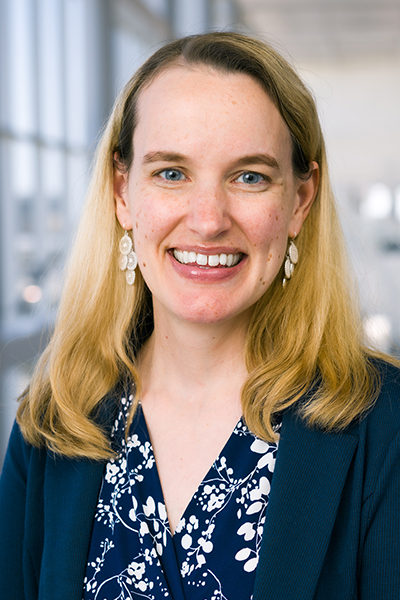
Ariella Hanker, Ph.D., Associate Professor in the Harold C. Simmons Comprehensive Cancer Center and of Internal Medicine, received the award for fostering an inclusive and supportive research environment.
“Working with high school students, undergraduates, graduate students, and postdoctoral fellows reminds me every day why I chose a career in science,” she said. “Their curiosity, creativity, and passion for discovery continually inspire me.”
To help trainees grow beyond the bench, Dr. Hanker encourages them to present their research within UTSW and at national meetings, attend workshops, co-review manuscripts, and contribute to invited commentaries. She works to build a sense of community within the lab by celebrating birthdays, achievements, and important milestones.
After receiving her Ph.D. in genetics and molecular biology from the University of North Carolina at Chapel Hill, Dr. Hanker completed postdoctoral training at Vanderbilt University Medical Center in the laboratory of Carlos Arteaga, M.D., now Director of the Simmons Cancer Center and Associate Dean of Oncology Programs at UT Southwestern. In 2018 she joined UTSW, where her research focuses on understanding why breast cancers become resistant to treatment and identifying new ways to overcome that resistance.
Catalyst for Collaboration Award
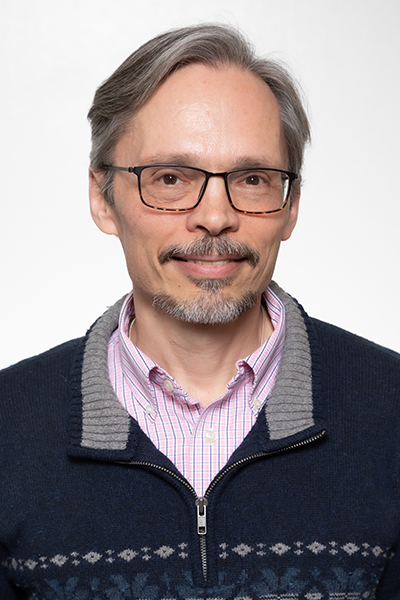
Bruce Posner, Ph.D., Professor of Biochemistry and Director of the High-Throughput Screening Core, was recognized for advancing interdisciplinary partnerships.
Dr. Posner and his team work with scientists to help translate basic research discoveries into novel therapeutic approaches to human disease.
“We do this by helping Principal Investigators discover and develop new therapeutic targets for drug development,” he said. “In addition to helping a Principal Investigator find interesting small molecules, I help connect them to the experts in these disciplines, which often leads to a multidiscipline partnership or team.”
After earning a Ph.D. in biological chemistry from Penn State, Dr. Posner completed a National Institutes of Health-sponsored postdoctoral fellowship in the lab of the late Nobel Laureate Alfred G. Gilman, M.D., Ph.D., at UTSW. He later joined Pfizer as a senior research scientist, where he focused on high throughput screening and preclinical drug discovery, then returned to UTSW in 2009.
Dr. Posner and his team have been involved in projects solving unmet medical needs for cancer, neurodegeneration, autism, diabetes, heart disease, parasitic diseases, pain, and other conditions. They have contributed to more than 260 publications, supported over 190 successful grant applications, and run several screens that have led to valued chemical tools, licensed lead compounds, and one approved cancer-treatment drug – belzutifan.
Innovation Award
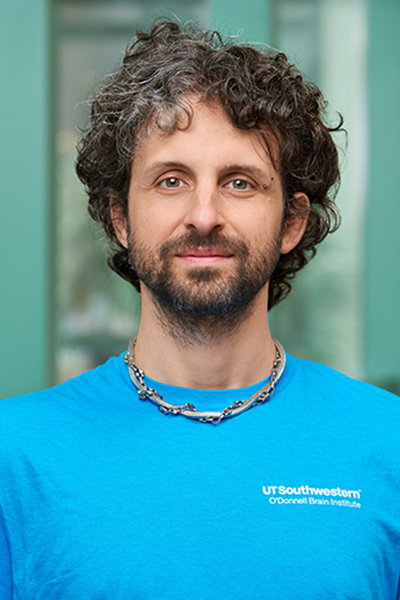
Massimo Trusel, Ph.D., Assistant Professor of Neuroscience and in the Peter O’Donnell Jr. Brain Institute, was honored for creativity and originality in research.
As a Ph.D. student in the Tonini Lab at the Italian Institute of Technology and then as a postdoctoral researcher in the Mameli Lab at the University of Lausanne in Switzerland, Dr. Trusel worked on rodent motor control and motivation. In 2019, he pivoted to studying birdsong, which required adapting to a new animal model.
That’s when he looked at UT Southwestern, the research home of Todd Roberts, Ph.D., Professor of Neuroscience and an esteemed expert in viral tool use for studying song circuits.
“With Dr. Roberts’ generous support and incredible mentorship, we significantly expanded the frontier of what was possible in avian neuroscience,” Dr. Trusel said. “We adapted methods used in rodent research to experimentally control and evoke precise neuronal activity in bird brain circuits, thereby gaining control over song motor program planning and production. Basically, we could play the bird’s vocal brain circuits like a piano, and this led to fundamental discoveries of how the brain organizes learned vocal behavior.”
The team has also developed virus-based tools and integrated them with electrophysiological techniques to systematically interrogate synaptic contacts and build the first map of “who talks to whom” in the song circuits.
“My current research aims at understanding how experience shapes these circuits during early life learning to store memories and refine behavior,” he added.
Early Career Scholar Award
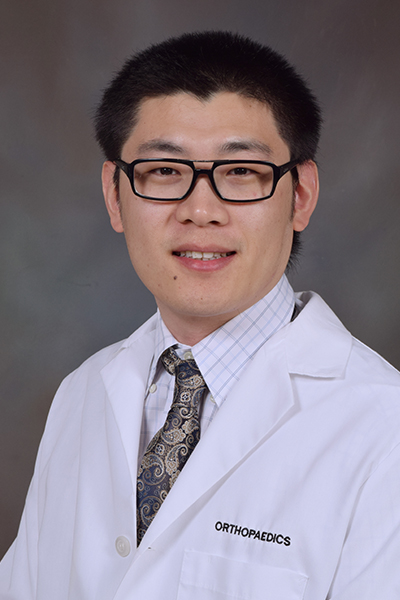
Chi Ma, Ph.D., Associate Professor of Orthopaedic Surgery and Biomedical Engineering, was recognized for emerging contributions with strong potential for future impact.
“Since joining the UT Southwestern faculty in 2019, I have worked to build an independent research program focused on developing regenerative therapies for bone and joint diseases. This award recognizes not only the progress of that work, but also the collaborative environment that has made it possible,” he said. “It reinforces my commitment to developing innovative therapies that improve patients’ lives and advance regenerative medicine.”
The Ma Lab is developing biomaterial-based treatment approaches that help damaged tissues self-repair. Treatments such as biocompatible bone wash solutions, injectable hydrogels, and tissue-engineered scaffolds can promote blood vessel growth, reduce harmful inflammation, and support tissue regeneration, he explained.
His team is currently working to develop new treatments for osteonecrosis, a debilitating disease with approximately 20,000 to 30,000 new cases diagnosed annually in the United States. Without effective treatment, the disease progresses in approximately 80% of patients, leading to bone collapse, secondary osteoarthritis, and the need for total joint replacement.
“Our research goal is to develop treatments that help patients repair and preserve their own bones and joints rather than relying on major surgeries or artificial implants,” he said.
After earning a Ph.D. in polymer chemistry and physics from the University of Chinese Academy of Sciences, Dr. Ma completed postdoctoral training in biomaterials and tissue engineering as well as skeletal development and bone biology at Texas A&M College of Dentistry.
Endowed Titles
Dr. Arteaga holds the Annette Simmons Distinguished University Chair in Breast Cancer Research.
Dr. Conaway holds the Cecil H. Green Distinguished Chair in Cellular and Molecular Biology.
Dr. Hasty holds the George A. and Nancy P. Shutt Professorship in Medical Science.
Dr. Roberts is a Thomas O. Hicks Scholar in Medical Research.