


Future leaders in clinical research share findings of promising work at annual symposium

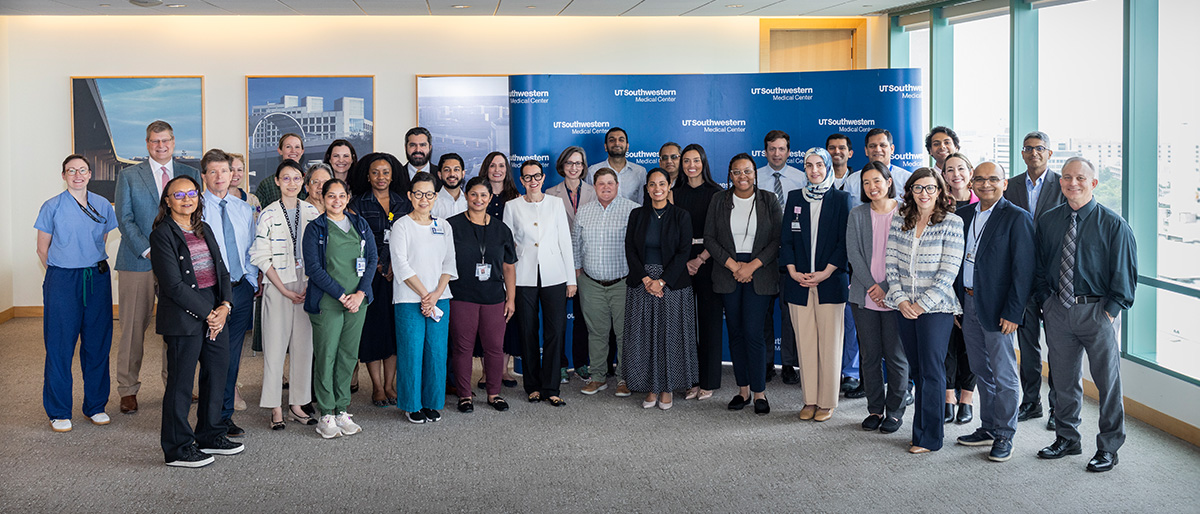
From liver transplants and cancer therapies to heart failure treatments and neonatal care, new research-based approaches to patient care are being forged by UT Southwestern faculty members and medical trainees whose work was highlighted recently at the Future Leaders in Clinical Research Symposium.
Held April 13 at the T. Boone Pickens Biomedical Building, the collaborative and engaging forum featured 12 researchers – early-career physician-scientists, fellows, and medical students – sharing their ideas and investigations that are supported by various scholarship programs funded by UTSW, philanthropic gifts, and National Institutes of Health (NIH) grants.
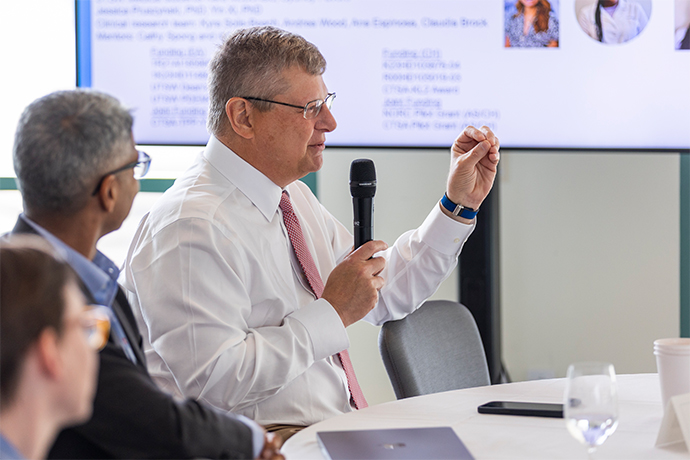
“Looking at the clinical enterprise that we have here at UT Southwestern, what makes us great is the innovation and change that we bring forward,” said Jonathan Efron, M.D., Executive Vice President for Health System Affairs, who welcomed attendees. “The current and future leaders of clinical research, the mentors, and the mentees who we have with us will continue to make the Health System stand out – not just in Texas but across the United States.”
Eric Peterson, M.D., M.P.H., Vice Provost, Senior Associate Dean for Clinical Research and Professor of Internal Medicine, and Heidi Jacobe, M.D., M.S.C.S., Professor of Dermatology and Associate Dean of Clinical Research Development, also emphasized the importance of cultivating independent, original research and driving progress at UTSW.

“We are trying to create a vibrant research workforce by promoting, supporting, retaining, recruiting, and training excellent clinical and translational researchers,” Dr. Jacobe said. “We want to democratize research using all the advanced tools and resources that are available, including artificial intelligence, and expand funding sources so that we can create a community.”
Since 2019, under the leadership of W. P. Andrew Lee, M.D., Executive Vice President for Academic Affairs, Provost, and Dean of the Medical School, UTSW has made a concerted effort to build its clinical research program into a powerhouse equal to its long-respected basic science enterprise. The KL2 Scholar Program and Dean’s Scholar in Clinical Research program, in particular, are moving UTSW closer to that goal by supporting junior faculty in the development of successful clinical and translational research careers.
Below are brief summaries of each presentation. More information about the event can be found on the symposium website.
Infectious complications after CAR T-cell therapy
Elif Yilmaz, M.D., Assistant Professor of Internal Medicine, specializes in indolent and aggressive lymphomas, cellular therapies, and bone marrow transplantation. Her research focuses on the incidence, timing, and risk factors of infectious complications following chimeric antigen receptor (CAR) T-cell therapy, a type of immunotherapy, in patients with relapsed large B-cell lymphoma.
By understanding the patient population’s risk of infections and its impact on morbidity and mortality rates, Dr. Yilmaz is hoping to establish risk-mitigating treatment plans and better patient outcomes.
“CAR T-cell therapy is increasingly used earlier in treatment, leading to a growing population of long-term cancer survivors,” Dr. Yilmaz said. “Late toxicities, particularly infections, remain underrecognized and can drive morbidity and mortality. Understanding and mitigating these risks is essential to safely expand use of CAR T-cell therapy.”
Understanding disease in human pregnancy
Division of Maternal-Fetal Medicine faculty members Emily Adhikari, M.D., Associate Professor of Obstetrics and Gynecology, and Christina Herrera, M.D., M.S.C.I., Assistant Professor of Obstetrics and Gynecology, worked with Ashley Solmonson, Ph.D., Assistant Professor in the Cecil H. and Ida Green Center for Reproductive Biology Sciences and of Obstetrics and Gynecology, to study the longitudinal development and function of the placenta in health and disease.
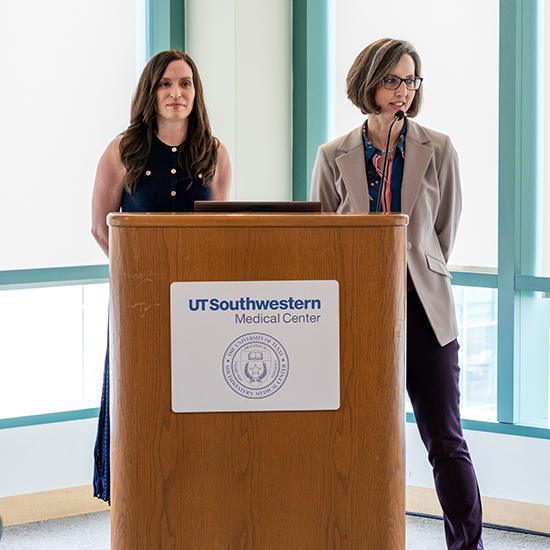
Through Dr. Solmonson’s lab, the team uses basic science methods to approach clinical research. Their work is focused on how the placenta is affected by chronic hypertension, which raises the risks of preeclampsia and impaired fetal growth. Simultaneously, Dr. Solmonson collaborates with Dr. Adhikari to examine how an infection with Treponema pallidum, the bacterium that causes congenital syphilis, affects placental metabolism and causes spontaneous preterm birth.
Both chronic hypertension and congenital syphilis during pregnancy can lead to serious and life-threatening complications. By investigating the pathophysiology, the team’s work could lead to predictive and preventive measures toward better outcomes in the future.
Cellular dysfunction in pelvic organ prolapse
María E. Florián-Rodríguez, M.D., Associate Professor of Obstetrics and Gynecology and a urogynecologist, specializes in treating pelvic floor disorders and is investigating the cellular and molecular mechanisms behind pelvic organ prolapse (POP). Specifically, she is researching whether cellular senescence – an irreversible state where cell division is stopped – contributes to a degradation of extracellular matrix (ECM) and pelvic support. Her research also focuses on the use of drugs that eliminate these nondividing cells.
POP significantly impacts a woman’s quality of life, with nearly 15% of patients requiring surgery, Dr. Florián-Rodríguez said.
“Advancing this research could lead to the first disease-modifying therapies for POP, reduce the surgical burden, and benefit the growing aging female population,” she said.
Framework to estimate treatment effects in PAD
For her research project, internal medicine resident Mercy Ude, M.D., focused on sodium-glucose co-transporter 2 (SGLT2) inhibitors, a class of prescription medications used to treat Type 2 diabetes. Her work suggests SGLT2 inhibitors can help protect patients with peripheral artery disease (PAD) against cardiovascular events, such as heart attacks.
Dr. Ude is currently working to determine if SGLT2 inhibitors can prevent or reduce the rate of limb amputations, a risk associated with PAD and diabetes.
“Peripheral artery disease is extremely common, but unfortunately goes undiagnosed in many patients,” Dr. Ude said. “When patients with PAD have a limb outcome such as amputation, it causes significant disability and is associated with high rates of mortality. Moreover, this disability worsens preexisting barriers to care for our most vulnerable patients.”
Home-based cardiac rehab for older adults with heart failure
Cardiology fellow Vinayak Subramanian, M.D., studied whether older adults living with a common but under-recognized form of heart failure could benefit from a structured exercise program done entirely at home.
Heart failure with preserved ejection fraction, or HFpEF, affects roughly half of all heart failure patients and is especially common in older adults. It often results in severe exercise intolerance, leaving them too exhausted or physically limited to perform everyday activities. Many of these patients are also too frail to attend traditional cardiac rehab, creating a gap in care that has gone largely unaddressed. Dr. Subramanian and colleagues designed a home-based program targeting balance, strength, and endurance, and they found it was both practical and effective for this population. Participants saw meaningful improvements in quality of life and physical function. Importantly, the participants with the most physical limitations at the start of the program had the most to gain.
“Older adults with HFpEF have the highest therapeutic need but are the least likely to be enrolled in clinical trials or offered structured physical rehabilitation,” Dr. Subramanian said. “Testing novel approaches to address the unique needs of this underserved population is essential to improving clinical outcomes and advancing patient-oriented research.”
Reevaluating the prognosis of Bell’s palsy
Bell’s palsy is a condition that causes an acute flaccid paralysis of usually one side of the face. While most patients are told they can expect a full recovery, the research of incoming fourth-year medical student Christine Johansen, M.S., suggests this is an inaccurate prognosis in a majority of cases and that outcomes are often worse.
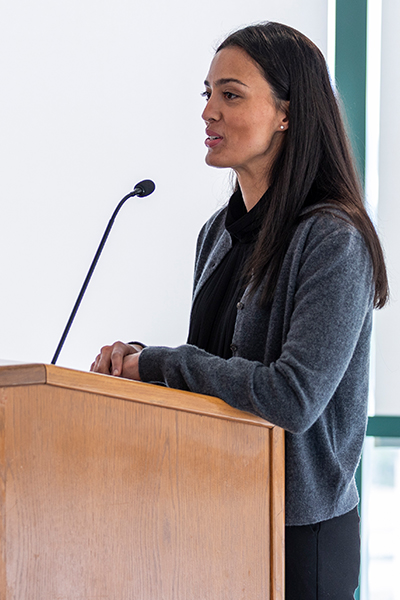
“Our goal was to rigorously define Bell’s palsy and recovery, follow patients for years rather than months, and use a validated, objective grading tool to measure facial function in order to get an accurate picture of long-term prognosis,” said Ms. Johansen, who works with Shai Rozen, M.D., Professor and Vice Chair of Research in the Department of Plastic Surgery. “Our findings underscore that these patients need to be referred earlier to specialists who can offer chemodenervation, selective neurectomy, and other targeted treatments and redefine the way we counsel patients on prognosis,” she said.
Quality of life index for cutaneous lupus patients
Incoming fourth-year medical student Vraj Shah analyzed the Cutaneous Lupus Erythematosus (CLE) Quality of Life Index, a patient-reported analysis that measures the social, emotional, mental, and physical well-being of cutaneous lupus patients. CLE is a chronic autoimmune skin disorder that can permanently alter the skin’s sensitivity to sunlight as well as change its pigment and texture.
“The goal of the study was to evaluate whether the index is a valid instrument that accurately captures quality-of-life impacts from CLE and whether it is an instrument responsive to changes in disease and treatment over time,” said Mr. Shah, who is currently pursuing clinical and translational research in the lab of Benjamin Chong, M.D., M.S.C.S., Professor of Dermatology and Associate Dean for Medical Student Research.
By refining this tool, physicians will improve their understanding of how this diagnosis holistically influences patient outcomes.
“One of the first things we learn in medical school is to treat the patient, not the disease,” Mr. Shah said. “This area of clinical research is vital to help us better understand how our patients feel and the impacts of diseases that we cannot see through routine care.”
Survivorship after liver transplantation
Liver transplantation is a lifesaving procedure that effectively treats those with end-stage liver disease and liver cancer. Still, patients face a multitude of challenges, even in recovery.
Sarah Lieber, M.D., M.S.C.R., Assistant Professor of Internal Medicine in the Division of Digestive and Liver Diseases, is studying the lived experiences of “transplant survivorship” and investigating the physical, mental, and social needs of how these patients evolve post-transplant.
“While our surgical techniques have improved such that median post-transplant survival now exceeds beyond 10 years, we need to shift our care to think about survivorship and long-term outcomes for these patients,” Dr. Lieber said.
Biomarkers of feeding intolerance in preterm infants
Eric Ortigoza, M.D., M.S.C.R., Associate Professor of Pediatrics, is studying whether electrogastrography (EGG), a noninvasive method that measures electrical activity in the stomach, could be used as an objective biomarker of feeding intolerance in preterm infants.
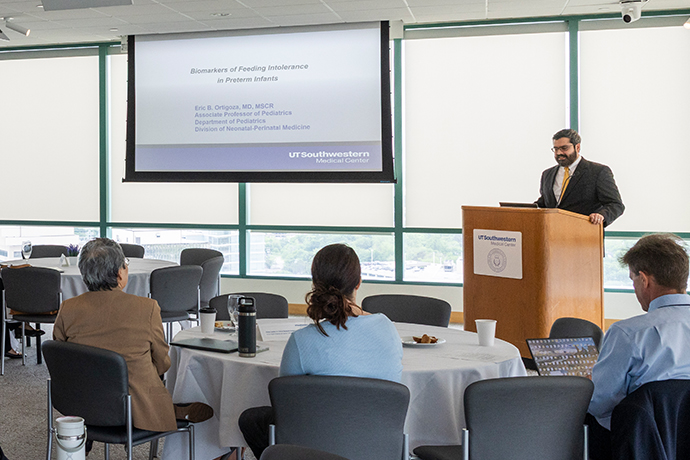
“Clinically, feeding intolerance is difficult to interpret because symptoms are nonspecific,” Dr. Ortigoza explained. “An objective physiologic marker like EGG could help clinicians distinguish benign immaturity from true pathology, potentially reducing unnecessary interruptions in feeding and improving nutritional outcomes.”
Using GLP-1s and neuromodulation to treat drug addiction
Manish Jha, M.D., Associate Professor of Psychiatry and an Investigator in the Peter O’Donnell Jr. Brain Institute, is exploring the use of glucagon-like peptide 1 receptor agonists (GLP-1 RAs) and neuromodulation techniques as potential therapies for individuals with methamphetamine use disorder.
Previous studies have indicated that semaglutide, a GLP-1 RA drug, has been effective in treating alcohol use disorder. Applying the same principle, Dr. Jha hypothesized GLP-1 RAs could help reduce methamphetamine cravings and use. Simultaneously, Dr. Jha is also investigating the use of brain stimulation as another option for substance use disorders. His findings may shift our understanding of addiction and approaches to help individuals attain recovery.
“Currently there are no treatments that are approved by the U.S. Food and Drug Administration for the treatment of methamphetamine use disorder, which is associated with morbidity across multiple domains of life and mortality,” Dr. Jha said. “There is a large unmet public health need as more than 1.5 million adults in the United States suffer from methamphetamine use disorder.”
Endowed Titles:
Dr. Chong holds the Anita C. Gilliam, M.D., Ph.D. Professorship in Dermatology.
Dr. Florián-Rodríguez is a Dedman Family Scholar in Clinical Care.
Dr. Jacobe holds the James N. Gilliam, M.D. Chair in Dermatology.
Dr. Jha is an O’Donnell Clinical Neuroscience Scholar.
Dr. Lee holds the Atticus James Gill, M.D. Chair in Medical Science.
Dr. Peterson holds the Adelyn and Edmund M. Hoffman Distinguished Chair in Medical Science.