


Mentoring Award

This award celebrates clinicians who demonstrate exceptional commitment and effectiveness as mentors to healthcare providers.
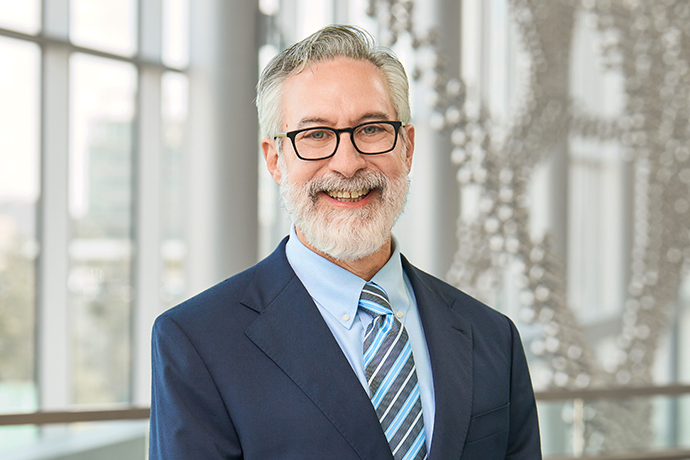
Adam M. Brenner, M.D.
Vice Chair of Education, Department of Psychiatry
Professor of Psychiatry
Director, Adult Psychiatry Residency Training Program
For Dr. Adam M. Brenner, “Never worry alone” is more than just his favorite mental health motto. It’s a deeply held belief that has shaped his approach to mentoring trainees for nearly two decades at UT Southwestern.
Dr. Brenner, a Distinguished Teaching Professor, has built a supportive culture of learning where residents, fellows, and faculty feel seen, challenged, and empowered to grow.
“What distinguishes Dr. Brenner is his ability to recognize the unique strengths and aspirations of each mentee while creating opportunities for them to thrive,” said a nominator and former mentee. “He invests deeply in the success of others.”
An active member of the American Psychiatric Association (APA), American Association of Directors of Psychiatric Residency Training (AADPRT), and Association for Academic Psychiatry (AAP), he regularly nominates colleagues and residents for national leadership fellowships and awards. As the long-standing Editor-in-Chief of the journal Academic Psychiatry, he also has helped advise numerous residents and faculty on publishing their first papers and serving in editorial positions.
“Dr. Brenner recognized my interest in school psychiatry and provided exceptional mentorship on an independent research project that culminated in a peer-reviewed publication,” noted the mentee. “His encouragement and investment in my development were instrumental in fostering my early academic career. Through his guidance and advocacy, I was able to pursue leadership opportunities at both the state and national levels. He consistently challenged me while providing the support and perspective I needed to succeed.”
Dr. Brenner regularly redirects textbook chapter opportunities to junior faculty, helping them build scholarly credentials. He also helped launch an Advanced Practice Provider Psychiatry Fellowship with Parkland Health and William P. Clements Jr. University Hospital, extending his mentorship beyond physician training.
In addition, he created several training tracks and helped residents turn their own ideas into real training programs, including initiatives focused on rural and public mental health, women’s mental health, and interdisciplinary psychiatric training.
Woven through all his endeavors is a deep sense of compassion.
“I had heard about Dr. Brenner’s commitment to resident education even before I started at UT Southwestern, but my own experience showed me that his reputation was well deserved,” commented another mentee. “As the only international medical graduate in my residency class, I was unfamiliar with the U.S. hospital system and residency structure. Dr. Brenner recognized where I needed support while also encouraging the strengths I already had, which made a tremendous difference in my training. And when I was expecting my baby during my second year of residency, instead of immediately discussing leave requirements or policies, his first question was, ‘How much time do you need?’ That simple question reflected how much he genuinely cared about his trainees as people.”
Dr. Brenner’s impact has been recognized both nationally and at UT Southwestern. He was named Vice Chair of the Psychiatry Review Committee at the Accreditation Council for Graduate Medical Education, he received AAP’s Roberts Award for inspirational mentorship, and he presented the Jonathan F. Borus, M.D. Award Lecture at Brigham and Women’s Hospital. In addition, his learners have awarded him six Outstanding Teacher of the Year honors at UT Southwestern.
Dr. Brenner’s clinical experience treating patients with anxiety and depressive disorders informs his teaching philosophy.
“Our patients often have concerns that are hard to talk about, sometimes because of their sadness, shame, or anger,” he said upon receiving a Regents’ Outstanding Teaching Award from the UT System. “With this in mind, I often focus on teaching students and residents how to help patients tell them what they are most concerned about. Sharing their most difficult concerns can be crucial in both comforting the patient and also in forming a real partnership in managing an illness together.”
Dr. Brenner is a graduate of Emory University, magna cum laude, in philosophy. He attended Harvard Medical School and then completed his psychiatry residency at McLean Hospital.
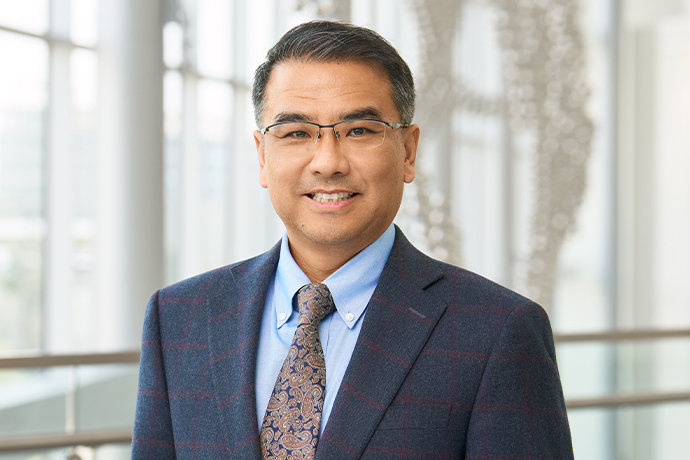
Andrew Y. Zhang, M.D.
Vice Chair of Education, Department of Plastic Surgery
Professor of Plastic Surgery and Orthopaedic Surgery
Director, Department of Plastic Surgery Residency Program
When Dr. Andrew Y. Zhang became Director of UT Southwestern’s Plastic Surgery Residency Program, he inherited a strong and storied surgical residency. Over the past nine years, he has built on that foundation by fostering a collaborative environment where residents are empowered to seek excellence, embrace challenges, learn from mistakes, and develop skills that extend well beyond the operating room. His efforts have also helped sustain UTSW’s standing among the country’s premier plastic surgery training programs.
“We want our residents to feel like they are part of a supportive family,” said Dr. Zhang, whose clinical specialties include hand surgery and reconstructive microsurgery. “It is essential to stress to them that they can be driven and work hard but also be healthy and happy – these things do not need to be in conflict.”
Dr. Zhang graduated summa cum laude from Claremont McKenna College in Southern California before attending Stanford University School of Medicine. He remained at Stanford for residency training in plastic surgery and fellowship training in hand surgery. Effective mentorship played a critical role in his early academic success and inspired his commitment to academic medicine, where he could offer the same guidance and support to future surgeons.
“The true measure of a mentor is reflected in the success of those they have guided,” noted his nominator. “Every year, Dr. Zhang graduates outstanding plastic surgeons who carry forward the values he has instilled – technical excellence, humility, compassion, teamwork, and lifelong learning. His legacy will be measured not only by the residents he has trained but also by the countless patients they will serve throughout their careers.”
But colleagues say these accomplishments tell only part of the story, for Dr. Zhang truly practices what he preaches.
“Few faculty members embody the principles of mentorship more completely than Dr. Zhang. His calm demeanor, unwavering integrity, and genuine concern for every trainee fosters a culture in which residents thrive,” his nominator continued. “He interacts with every resident throughout all six years of training at Parkland Memorial Hospital, allowing him to mentor everyone longitudinally rather than through isolated encounters.”
As teacher, adviser, advocate, and role model, Dr. Zhang’s mentorship is also defined by his extraordinary accessibility. Residents know they can seek guidance at any time on surgical cases, program improvements, career decisions, and life challenges. Resident evaluations consistently praise him as “patient,” “approachable,” and “humble.” Others have called him “the cornerstone of our program,” “the best program director in the country,” and – perhaps most importantly – “the reason I grew so much as a surgeon.”
Leading a residency program requires navigating constant change, from new opportunities to unexpected challenges. Dr. Zhang approaches that responsibility with a commitment to open-mindedness and transparency: welcoming feedback, explaining the reasoning behind decisions, and remaining willing to reconsider established approaches when changes would better serve residents and the program’s mission.
Several of his innovative initiatives have distinguished UTSW’s program nationally. These include a leadership skills training curriculum that helps residents navigate challenges at work and home, a highly effective night float call system to balance clinical demands and personal life, and a comprehensive “business of plastic surgery” curriculum equipping residents for modern practice. Recently, he implemented a new educational curriculum supporting In-Service Examination preparation, and the result was measurable improvements in resident performance.
And much like the residency program he directs, Dr. Zhang has continued to evolve.
“Through the ups and downs of being a program director, I have come to embrace the change and personal growth that come with the responsibility,” he said. “Just as I expect continual self-improvement from our residents, I must hold myself to the same standard. That means remaining steadfast in our mission while being open to new ideas and changes that will keep us at the forefront of plastic surgery education.”