


Innovation Hub helps researchers take discoveries into the real world

Dermatologist Tamia Harris-Tryon, M.D., Ph.D., is developing an ointment to treat infections caused by Staphylococcus aureus bacteria, potentially dangerous pathogens that affect millions of people each year.
Andrew Jamieson, Ph.D., has devised an artificial intelligence (AI) system that can quickly evaluate and grade medical student performance on simulated patient encounters, using video, audio, and data.
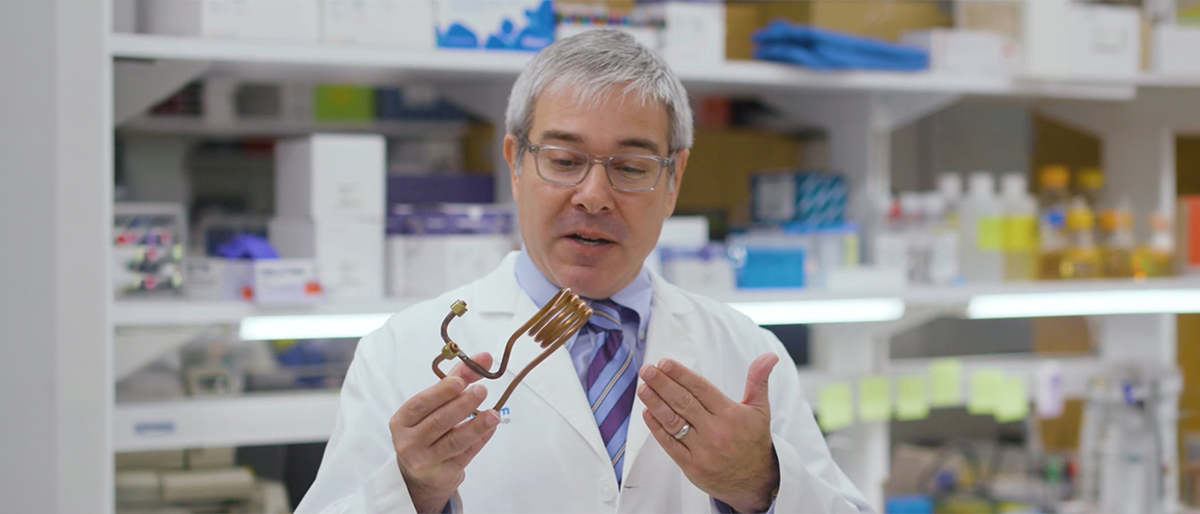
David Greenberg, M.D., is adapting the same technology that heats food on induction cooktops to burn away infectious biofilm that grows on prosthetic joints.
These are just a few UT Southwestern innovators who want to take their discoveries and inventions out of the laboratory and into the real world. But the process of getting a novel medical product to market, where it can help as many people as possible, is long and arduous, requiring financial backers, legal help, and business savvy that most scientists and physicians simply don’t have.
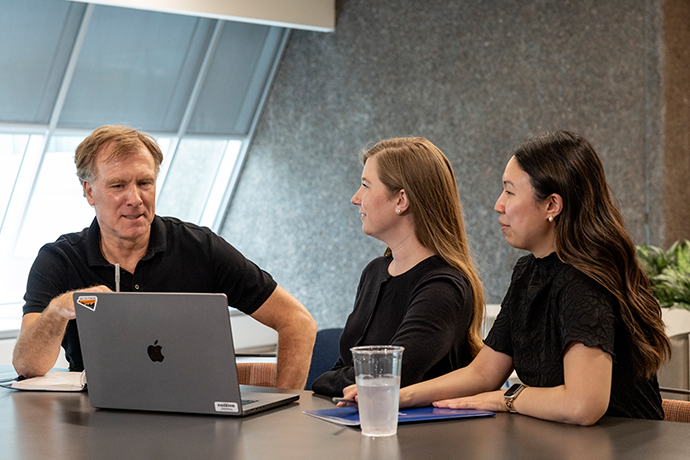
Now a new initiative at UT Southwestern called the Innovation Hub has launched to help bridge the gap between potential breakthroughs and viable solutions for patients, accelerating the commercialization of UTSW’s best ideas.
Developed last year following the arrival of UT Southwestern’s first Chief Innovation Officer, Daniel Hommes, M.D., Ph.D., the Innovation Hub is already advancing more than 70 projects that show real potential, including novel drugs to treat cancer and neurodegenerative diseases; AI-powered solutions to help doctors prescribe the right antibiotic or clear overcrowding in the emergency department; and new technologies to improve brain imaging or cancer surgery.
With the advent of AI, Dr. Hommes said, the world of innovation is moving at warp speed, increasing the sense of urgency needed to capitalize on breakthroughs and inventions.
“Doctors have great ideas, but they do not always know how to translate them into products that fit into the marketplace,” he said. “The Innovation Hub will take the best ideas, train scientists to be entrepreneurs, and go to the business community to find partners for early-stage companies. In the process, we have the opportunity to build on the efforts of many in the community who have been working for years to build a biotech ecosystem in Dallas.”
UT Southwestern President Daniel K. Podolsky, M.D., said the Innovation Hub allows the University to leverage decades of leadership in biomedical research.
“Innovative research is part of the DNA at UT Southwestern, and moving discoveries from the laboratory to the bedside exemplifies the unique strengths of an academic medical center,” he said. “The Innovation Hub will accelerate the development of our best ideas into products and services that will improve the lives of patients and contribute added momentum to the development of an entrepreneurial biotech and related sector here in Dallas and North Texas.”
For Dr. Harris-Tryon, who has dedicated her career to making discoveries that can help patients, the journey is personally fulfilling.
“This is the dream,” she said. “It was really exciting to uncover a small molecule that inhibits bacteria. So I’m grateful that the institution has the framework in place to help us turn that discovery into a therapeutic.”
Busting through barriers
Dr. Hommes understands the challenges of launching a new company out of an academic medical center. A native of the Netherlands who was Chair and Professor of Gastroenterology at the University of Leiden before coming to the U.S. to serve as Professor of Medicine at UCLA, he spent several years in the private sector as an entrepreneur and health care executive.
While at UCLA, he had an idea to use technology to help his patients with chronic diseases such as inflammatory bowel disease (IBD) better connect with their physicians and manage their health. He founded DEARhealth Inc., which employs artificial intelligence to create care pathways to improve outcomes and reduce costs, leading the company as Chief Executive Officer. More recently, he served as Chief Medical Officer for InterVenn Biosciences in South San Francisco, California, a biotech company that develops glycoproteomic-based diagnostics – sugar-based proteins that can help detect disease biomarkers.
His experience taught him about the barriers to success and the lack of practical resources in many academic medical centers to help physicians turn their best ideas into real solutions for patients.
“There is an inertia in academics, and there are not always the proper instruments to navigate the entrepreneurial pathway,” he said. “I’ve always been an innovator who had to figure out how to overcome those barriers.”
Since arriving at UTSW last May, Dr. Hommes has built an experienced business development team, led by Kaitlynn Moser, Assistant Vice President for Innovation Programs and Partnerships. Ms. Moser spent nine years at the Mayo Clinic before moving to InterVenn, serving as Senior Vice President of Clinical Operations and Product and working with Dr. Hommes.
The team spent several months meeting with researchers from many of the more than 500 labs on campus and creating an inventory of potential projects. Each has been placed on a “discovery track,” which lays out the many steps needed to validate the innovation’s efficacy and provide the data needed by potential investors before they decide whether to put money behind it.
To assist in this process, the Hub has built a sophisticated and original online portal called DIMS (Discovery Information Management System), with help from Dr. Jamieson’s team in the Lyda Hill Department of Bioinformatics. It provides detailed information on each project, including background on investigators, data from experiments and trials, and discovery track progress. DIMS is designed to provide transparency internally for researchers and externally for potential investors, who will be given the opportunity to register and get a window into potential investments at UTSW. The site also uses AI to search for possible public funding sources for each project.
In January, the Hub took its show on the road, attending the J.P. Morgan Healthcare Conference in San Francisco, the country’s biggest annual gathering of industry leaders, biotech companies, and investors. It was the first time UT Southwestern had a presence at the conference, and the goal was to position UTSW as a “a discovery engine with a lot of credibility,” Dr. Hommes said.
“We met with about 25 firms, mostly venture capital and pharmaceutical companies, and the response was very positive,” he noted.
In addition, the team is reaching out to the Dallas investment community to raise awareness about biotech opportunities in their backyard. UT Southwestern can also provide seed funding to get projects started.
Legacy of innovation
Over the years, more than 110 startups have been launched based on discoveries made at UT Southwestern. Success stories have included Peloton Therapeutics, which developed a kidney cancer drug based on UTSW research and was acquired by Merck for more than $1 billion, and Exonics Therapeutics, which created a gene editing therapy for Duchenne muscular dystrophy and was purchased by Vertex Pharmaceuticals for more than $245 million. UTSW’s Office for Technology Development has helped scientists secure nearly 500 U.S. patents and over 900 licenses. Last year alone, UT Southwestern obtained 45 patents and executed 44 licenses and options.
In recent months, the Office for Technology Development has been integrated with the Innovation Hub. Dr. Hommes said this allows the Hub to take a more strategic approach to business creation and partnerships with investors or pharmaceutical companies while “Tech Dev” continues to help with patents, licenses, and other intellectual property issues. The goal is to de-risk, or develop the assets far enough, so a fair valuation can be made before the discoveries are licensed to private industry.
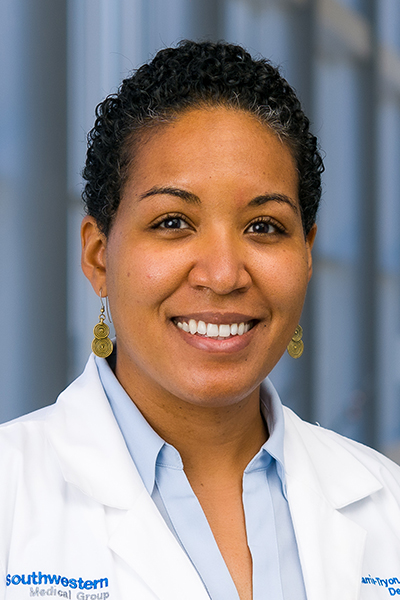
The Office has been a great partner for Dr. Harris-Tryon, Associate Professor and Vice Chair for Basic Research in the Department of Dermatology, whose research revealing a connection between hormones such as testosterone and bacterial virulence led to the discovery of a therapeutic pathway to treat Staph infections. An Innovation Award from Technology Development helped fund further development of the product. Her liaison in Technology Development helped her file for a patent and kept her informed of market developments in the field. In January 2025, she formed a company called Mirofend.
More recently, the Hub has introduced her to potential investors and laid out a discovery track for the steps she still needs to take to get to market. She is also moving forward with a second idea, in collaboration with Tran Nguyen, Ph.D., Assistant Professor of Biomedical Engineering, and Jeffrey McDonald, Ph.D., Professor in the Center for Human Nutrition: a patch that captures hormone signals from the skin, providing information for personalized medical decisions related to stress, menopause, and aging.
“I think what the Innovation Hub has really changed is that I have a much better understanding of how long this path is,” Dr. Harris-Tryon said. “The milestones that I need to hit weren’t as clear to me before the Innovation Hub existed.”
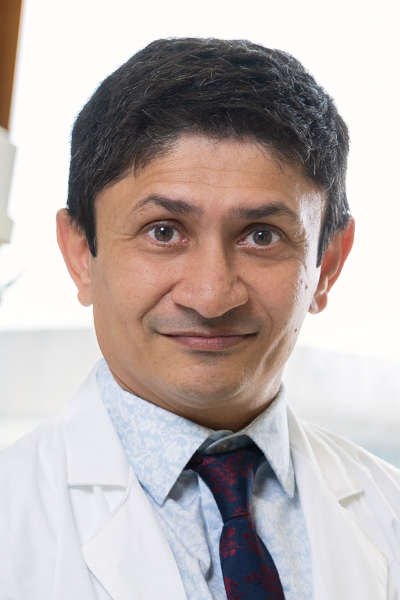
Nephrologist Vishal Patel, M.D., Professor of Internal Medicine, began working with Technology Development more than a decade ago after his lab discovered a microRNA that could be a drug target to treat autosomal dominant polycystic kidney disease (ADPKD).
UT Southwestern first entered into an agreement with Regulus Therapeutics to help fund the research, which led to the development of a drug called farabursen. Patents were filed, and Regulus later licensed the product.
Last year, positive phase 1b trial results led the Swiss pharmaceutical giant Novartis to acquire Regulus for as much as $1.7 billion, including more than $800 million up front. A phase 3 trial will begin this year.
In recent months, Dr. Patel and the Innovation Hub team have been proactive in leveraging the momentum of this clinical success to deepen institutional ties with the pharmaceutical industry. The Hub is currently working to establish a broader, collaborative framework designed to move beyond traditional single-asset licensing. This approach aims to accelerate the development of promising technologies and streamline the formation of future ventures dedicated to advancing these scientific activities commercially.
“They are reimagining the way UT Southwestern would spin out companies moving forward,” Dr. Patel said. “What has really impressed me is the fact that they have emerging and established relationships with private investors and also Big Pharma executives who could be strategic partners. If we’re truly going to be successful, we need these contacts.”
‘Window of opportunity’
Dr. Jamieson, Assistant Professor of Bioinformatics, has been weighing his options. His AI system for grading medical students is currently being used at UT Southwestern, and several universities have expressed interest in the platform. But how to respond?
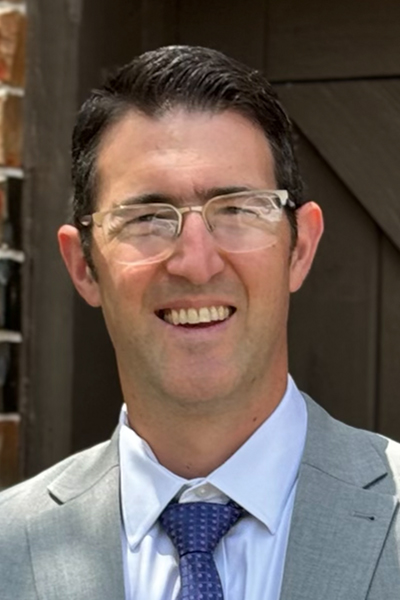
Last year, he found two business partners – a former Google executive and a Dallas financier – and formed a company to market the platform and provide customer service on implementation. They’re in licensing discussions with UT Southwestern. But Dr. Jamieson is growing anxious with each passing day that competitors will catch up with their technology. Recently, the project received a UT-REAL Health AI Pilot Award, which will fund its expansion to five other UT System medical schools.
“This is absolutely going to transform medical education and can be applied in the clinic as well,” Dr. Jamieson said. “We’ve built something incredibly compelling. We want to make this turnkey, so everyone can use this. We have a window of opportunity.”
Dr. Hommes said he understands the urgency.
“Technology is always advancing, so it’s important that we move as quickly as possible,” he said. “But we must also conduct due diligence to ensure that we get the best value for our innovations.”
Everyone agrees there is no shortage of opportunities. Dr. Greenberg, Professor of Internal Medicine and a Distinguished Teaching Professor, said the abundance of remarkable science underway at UTSW attracted him to the institution in 2010 and continues to impress him today.
He launched Solenic Medical with Rajiv Chopra, Ph.D., a former Associate Professor of Radiology at UT Southwestern, to market the alternating magnetic fields technology to remove infections on metallic prosthetics. Last year, the company treated its first patient in a clinical trial and in October announced that the Food and Drug Administration authorized compassionate use of the technology for another patient.
Now Dr. Greenberg and his team are trying to develop new antibiotics to treat resistant infections. With funding from private foundations and the National Institutes of Health, the researchers have made discoveries and filed patents to narrow down the compounds that show promise. But the next phase will require more capital; developing and testing could cost as much as $700 million. He is hoping the Innovation Hub can find an external partner to help launch the commercialization journey.
“If we’re trying to position ourselves as the next Boston or San Francisco or San Diego, as a national leader in biotech, the Rolodex piece is really important,” Dr. Greenberg said. “There is so much untapped potential even at the metroplex level in nurturing investments in the biotech space. I hope that the Innovation Hub will serve as a lighthouse of all the opportunities that our community could be interested in.
“I feel very confident that the Hub will drive more innovations out of this university.”
Endowed Titles:
Dr. Harris-Tryon holds the Thomas L. Shields, M.D. Professorship in Dermatology.
Dr. Patel holds the Yin Quan-Yuen Distinguished Professorship in Nephrology.
Dr. Podolsky holds the Philip O’Bryan Montgomery, Jr., M.D. Distinguished Presidential Chair in Academic Administration, and the Charles Cameron Sprague Distinguished Chair in Biomedical Science.