Skip to main content About News Giving All Departments Contact Us Site Map
 University of Texas Southwestern Medical School
 
Search       
Print Friendly  
spacer Home Education Research Patient Care Faculty & Administration Resource Careers
Medical School Graduate School of Biomedical Sciences Allied Health Sciences School Residencies & Fellowships Program Directory Students & Alumni Continuing Education
spacer | Home > Education > Graduate School >
UT Southwestern
Graduate School Home

Immunology Graduate Program

APPLY NOW spacer
spacer
spacer
Search for Faculty
by Research Interests
 
 
Search for Faculty
by Name
 

bestGradSchool
 
 rss RSS        rss Podcast
spacer


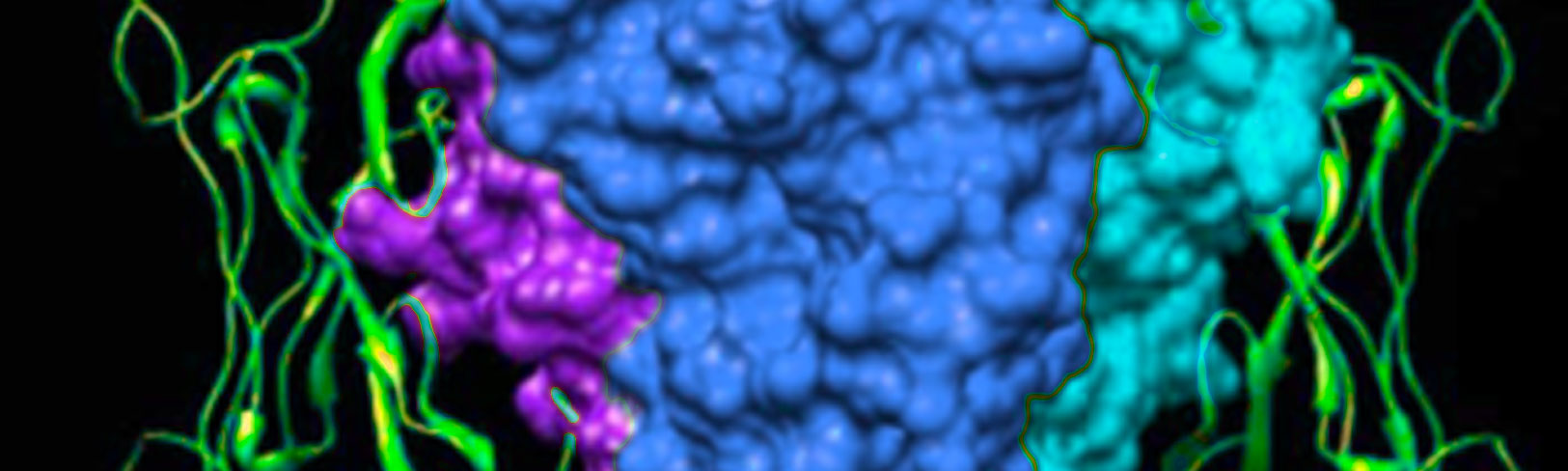
 Adhesion and extravasation of T lymphocytes in the CD44-initiated T cell extravasation pathway at a site of inflammation. Graphics by Mark Smith, Dept. of Pathology.OverviewThe field of immunology provides excellent opportunities for graduate training in the concepts and techniques of contemporary biomedical science. A faculty of 46 drawn from both basic science and clinical departments of the medical school offers research training opportunities in a wide range of topics including molecular immunology, cellular immunology, transplantation, immunogenetics, immunology of infectious diseases, tumor immunology and clinical immunology. Students receive a broad-based education in the strategies and techniques of immunological research that prepares them well for a wide spectrum of career opportunities.

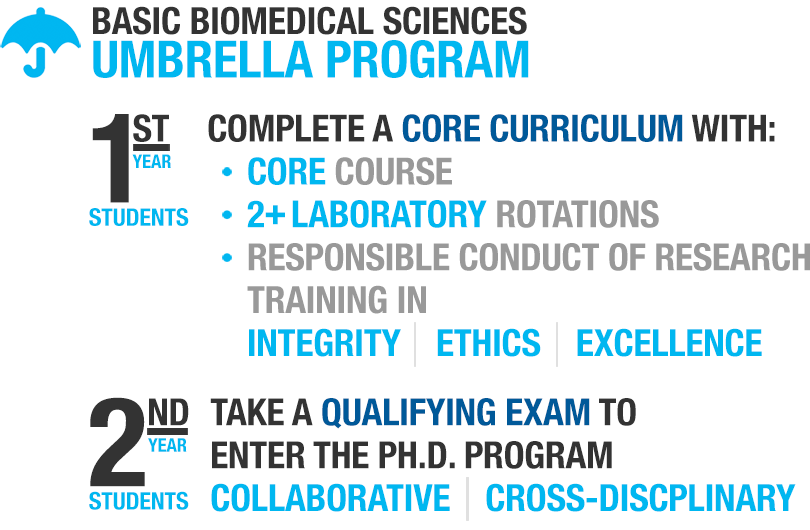
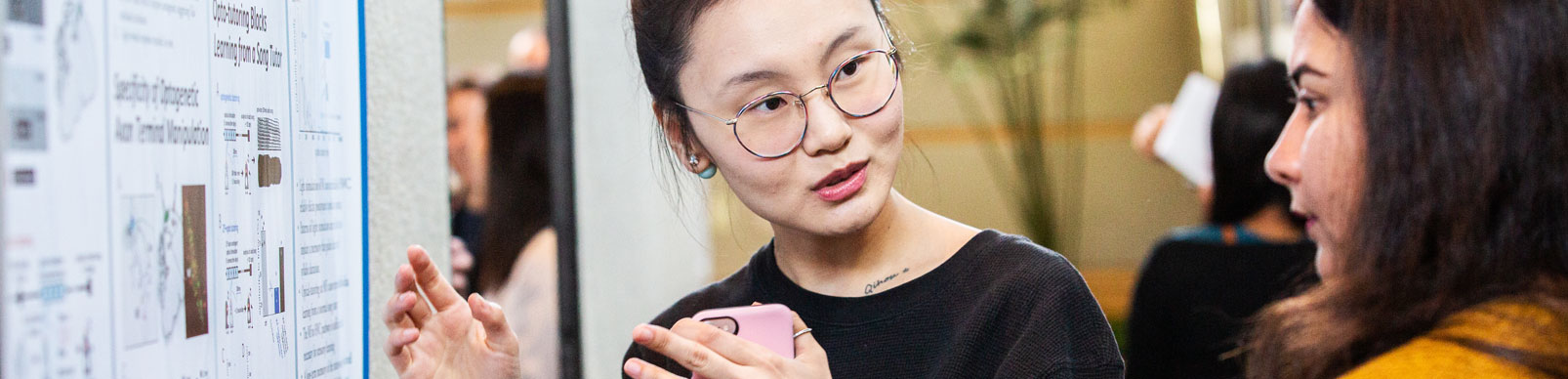
Upon successful completion of the Core Course, common to all of the programs of the Division of Basic Science, students select a research mentor and begin their dissertation research. Program faculty offer advanced course work in the area of ontogeny and development, cell activation and regulation, immunogenetics and transplantation and immunodeficiency and infectious diseases. Participation in selected journal clubs, seminars and elective courses offered within the Division provides an array of additional educational opportunities. Additionally, students present their research 1-2 times per year in a Works In Progress seminar.

For more information on the Immunology Graduate Program please contact Harmony Hilton, Program Assistant, or refer to the Southwestern Graduate School of Biomedical Sciences Catalog.


Degree Plan

Course Descriptions

Works in Progress Schedule

Immunology Lecture Series Seminar 


Immunology Faculty

Program Chair:  Lora Hooper
Vice Chair: Iwona Stroynowski

Kiyoshi Ariizumi -- Molecular mechanisms for the pathogenesis of skin diseases.

Michael Bennett -- Immunogenetics and immunobiology of marrow-cell grafts; differentiation and function of NK cells; graft-versus-host reactions; natural immunity to infection; tumor immunology.

Zhijian (James) Chen -- Ubiquitin-proteasome pathway; NF-kappaß signaling; innate immunity; T cell receptor signaling.

Peter Chen -- Epigenetic gene regulation in an immune privileged environment; ocular
immunology; tumor immunosurveillance.

Laurie S. Davis -- T-cell activation; autoimmunity; cytokine regulation.

Todd Eagar -- Regulation of T cell activation and differentiation, Therapeutic control of autoimmune disease.

Pila Estess -- Molecular immunology; structure/function relationships in lymphocyte cell-surface antigens, including CD44 and lymphocyte homing receptors; role of these molecules in autoimmune diseases and inflammation; molecular pathology.

J. David Farrar -- Molecular immunology; signal transduction; regulation of T-cell differentiation and cytokine gene expression.

James Forman -- T-cell recognition of major histocompatibility complex molecules; nonclassical class I molecules; NK cells.

Michelle Joubert Gill -- Pathogenesis and immunobiology of infectious disease; human dendritic cells in respiratory syncytial viral infections; the host mucosal immune response to respiratory viral infections in children; dendritic cells in the pathogenesis of asthma.

William T. Garrard -- Regulation of V(D)J recombination of antibody genes; chromosome structure; control of gene expression; chromosome replication, condensation and segregation at mitosis; nuclear organization.

Rebecca S. Gruchalla -- Immunopathology of antibiotic drug allergy, specifically sulfonamide drug allergy.

Eric J. Hansen -- Microbial pathogenesis and the immune response; use of recombinant DNA methods in vaccine development.

Lora Hooper -- Commensal host-microbial interactions; mucosal immunology, antimicrobial proteins.

Nitin J. Karandikar -- The role of CD4 and CD8 T cells in the pathogenesis and regulation of multiple sclerosis; mechanisms of therapeutic immunomodulation of MS; B7/CD28:CTLA-4-mediated costimulation in autoimmune demyelination; molecular characterization of T cells mediating GVH versus GVL effects in patients with leukemia; effector CTL responses in viral infections.

David R. Karp -- Function of class II molecules of the major histocompatibility complex, including antigen presentation and its role in autoimmune disease; role of complement receptors in B-cell activation and presentation of soluble antigens.

Christopher Y. H. Lu -- Transplant tolerance; regulation of macrophage function; ontogeny of macrophage function and its implications for self/nonself discrimination and autoimmunity; mechanisms of renal allograft rejection.

Bonnie Miller -- Mechanisms of opioid immunomodulatory effects.

Chandra Mohan -- The immunopathology and immunogenetics of lupus; immunological tolerance; autoimmunity.

Nancy Monson -- The role of B cells in the pathogensis of multiple sclerosis.

Jerry Y. Niederkorn -- Immune privilege of the anterior chamber of the eye; immune surveillance of intraocular tumors; immune modulation of cancer metastases; immunobiology of corneal transplants; immunology of parasitic diseases.

Chandrashekhar Pasare -- Toll-like receptors and control of adaptive immunity: Dendritic cell biology

Anne B. Satterthwaite -- Genetic analysis of signal-transduction pathways regulating B lymphocyte development and function.

Richard H. Scheuermann -- Regulation of immunoglobulin gene expression; regulation of lymphocyte growth, development and apoptosis; lymphocyte receptor signal transduction; technology development; novel approaches to cancer therapy.

Mark H. Siegelman -- The molecular biology of cell-surface molecules governing adhesion to and transmigration through vascular endothelium.

Olaf Stuve -- Prion protein (PrP) as a disease modifier in autoimmune diseases of the central nervous system.

Nancy E. Street -- Activation and differentiation of murine T-helper cells; the role of T-helper cells in tumor dormancy and infectious disease.

Iwona Stroynowski -- Structure and function of immunologically relevant molecules; antigen presentation in the immune system.

Joel D. Taurog -- Biology of HLA and disease.

Dwain L. Thiele -- Mechanisms of cytotoxic lymphocyte function and activation; transplantation immunology.

James A. Thomas -- Signal transduction in innate immunity.

Jonathan W. Uhr -- Cancer immunology and genetics.

Nicolai S. C. van Oers -- Regulation of antigen-receptor signal-transduction systems.

Ellen S. Vitetta -- The development, genetic engineering , and  testing of immunotoxins, antibodies, and vaccines in animals and humans. We also study the immunology of  tumor dormancy, Gulf War Syndrome and multidrug resistance in tumors.

Edward K. (Ward) Wakeland -- The molecular biology of genes regulating immune responses and autoimmunity.

E. Sally Ward -- Genetic manipulation and structure/function studies of antibodies and T-cell receptors; T-cell mediated autoimmunity.

Jonathan C. Weissler -- Regulation of cytotoxic lymphocytes in human lung; accessory cell function in human lung.

Christoph Wuelfing, Ph.D. -- T-cell activation using video microscopy; costimulation and cell biology of T-cell activation.

Felix Yarovinsky -- Toll-like receptor signaling, dendritic cells, and host-pathogen interactions

Dorothy C. Yuan -- Molecular regulation of immunoglobulin synthesis; interactions between B and T lymphocytes and NK cell.

Chengcheng (Alec) Zhang - Mechanisms by which the cell fates of adult stem cells are regulated, and the interaction of adult stem cells and their in vivo microenvironment; ex vivo expansion of HSCs for cell therapy and gene therapy; the interplay between stem cells and cancer.