Computational Biology
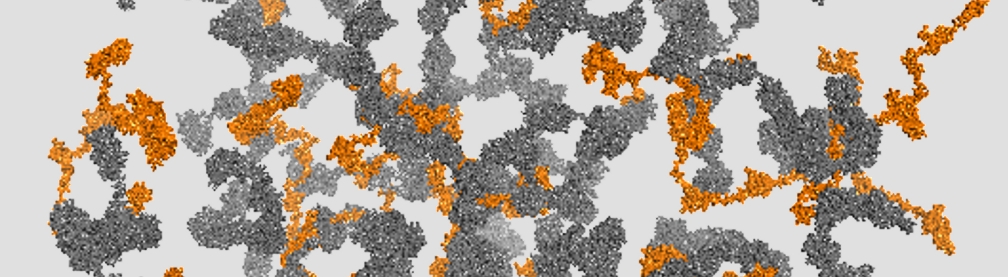
The Computational Biology curriculum is designed to help students learn how to leverage mathematical and computational approaches to understand biological and chemical processes.
Degree Plan
Research Topics
Mathematical and computational concepts, methods, and algorithms are being applied to all areas of basic and clinical life sciences, which results in a variety of research topics. Examples include:
- Biophysics and Structural Biology – Protein structure and function prediction; analysis of biological sequences and 3D structures; macromolecular interactions and biological networks; molecular evolution
- Chemical Biology – Analysis of small organic molecules; design of materials and drugs; chemical dynamics
- Computational Neuroscience - Modeling neural circuits to study the neural basis of cognition in normal states and disease; developing novel statistical methods to analyze large-scale neural data
- Genetics and Genomics – Analysis of DNA/RNA sequences; genome association to cellular and organismal function; statistical genetics
- Imaging – Computer vision and pattern recognition applied to medical imaging and microscopy data, statistical and mathematical modeling of the spatiotemporal organization of image events from molecular to macroscopic scales
- Medical Informatics – Machine learning of patterns in multivariate clinical databases, predictive modeling of clinical outcomes by variable association
- Systems Biology – Computational reconstruction and analysis of biological networks; modeling of complex, nonlinear systems; spatiotemporal integration of chemical and mechanical processes across scales
Director

Associate Professor
Faculty
Associate Professor
Research Interests: Genomic, genetic, and molecular approaches to autism spectrum disorders
Technical Expertise: Genetic linkage and mapping, whole exome and genome sequence analysis
Assistant Professor
Research Interests: Computational protein science, evolutionary genomics, machine learning, structural biology
Assistant Professor
Research Interests: Autonomous Microscopy, Molecular Multiplexing, Optical Probe Development, and Content Rich Histopathology

Assistant Professor
Research Interests: Brain-computer, interface, cognitive control, metacognition, motor control
Professor
Research Interests: Statistical methods, clinical trials, epidemiology, health economics

Assistant Professor
Research Interests:Large language models, AI, spatial biology, image analysis, machine learning

Associate Professor
Research Interests: Molecular recognition in protein folding, chaperone structural biology, and neurodegeneration
Technical Expertise: Biochemistry, biophysics, structural biology, chemical biology and protein modeling

Assistant Professor
Research Interests: Development of novel computational algorithms/models/pipelines for big, heterogeneous biological and medical data
Associate Professor
Research Interests: Optimization in conformational and network space.
Technical Expertise: Statistical mechanics, protein folding, non-equilibrium physics
Assistant Professor
Research Interests: Mechanisms of protein folding, misfolding, and aggregation; Studying amyloid assembly and their heterotypic interactions with other cellular components, with a particular focus on neurodegenerative diseases, such as Alzheimer's and Parkinson's disease; Development of anti-amyloid inhibitors as novel therapeutics; Functional amyloids in organisms
Associate Professor
Research Interests: Developing state-of-the-art machine learning approaches to extract radiological imaging and imaging-genomic biomarkers and to engender personalized prognostics in neuroscience and oncological applications
Technical Expertise: Advanced image analysis, neuroimaging, MRI, MEG/EEG, PET/SPECT

Assistant Professor
Research Interests: Statistical causal inference, Computational analysis of live-cell imaging, Computational modeling of sub-cellular protein-protein interactions from live-cell video data Image-based modeling of information flow within biological neural networks/p>

Assistant Professor
Research Interests: Understanding tissue organization via machine learning; intra-tumor heterogeneity; computational image analysis and spatial statistics
Technical Expertise: Machine learning (both classical and deep). Image analysis specifically for microscopy

Professor
Research Interests: Integrating structure, kinetics, and computation to understand the molecular determinants and regulatory mechanisms of microtubule dynamics

Assistant Professor
Research Interests: Biostatistics, statistical genomics, multi-omics
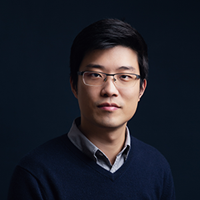
Professor
Research Interests: Antibiotic resistance and sensitivity; single molecule biophysics; synthetic biology
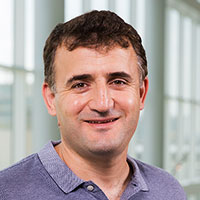
Professor
Research Interests: Immunogenomics, Tumor genomics, Bioinformatics, Biostatistics, and Machine learning
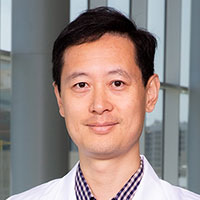
Professor
Research Interests: Improving treatments for cancer by applying computer science and statistical methodologies to analyzing high-throughput biological data. New models and tools are currently in development to assist the investigation of disease mechanisms and their related diagnostic innovations.

Professor
Research Interests: Biostatistics, bioinformatics, statistical genomics, clinical trial design, and biomarker studies
Technical Expertise: Developing and applying statistical and computational approaches to decipher genetic and genomic problems, in particular, human complex traits.
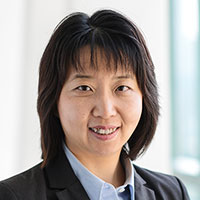
Professor
Research Interests: Statistical genetics, genetic epidemiology, bioinformatics, gene mapping for complex traits
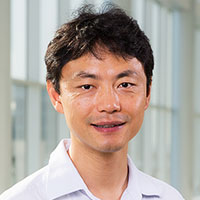
Assistant Professor
Research Interests: Epigenomics, single-cell data analysis, machine learning and deep learning algorithm development
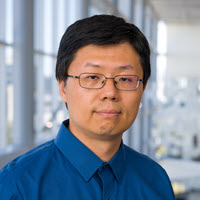
Associate Professor
Research Interests: Statistical genetics, forward genetics screening, statistical computation, next-generation sequencing, genetic association studies
Technical Expertise: Statistical genetics, microbiome, statistical computation, bioinformatics, deep learning
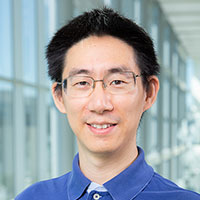
Assistant Professor
Research Interests: Computational Neuroscience
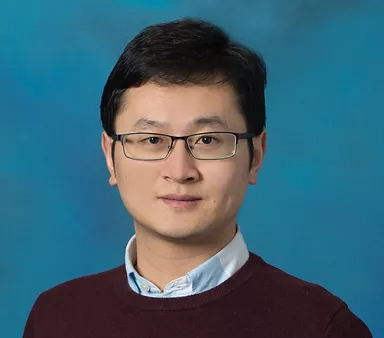
Associate Members
These faculty members do not accept graduate students. They participate in teaching, co-mentoring, exam and dissertation committees, and all other program responsibilities.
Professor
Research Interests: Development of methods to study heteroplasmy and the somatic evolution of cancers.
Associate Professor
Research Interests: Statistics, statistical genetics, genetic epidemiology, genome-wide association studies

Assistant Professor
Research Interests: Machine learning in ophthalmology, ophthalmic image processing and visualization, ocular disease early detection and progression monitoring, optical coherence tomography, retinal layer segmentation