Master of Prosthetics-Orthotics
About the Program
UT Southwestern has been a leader in prosthetics-orthotics education since 1982. Today, our Master of Prosthetics-Orthotics Program gives students world-class training in one of health care’s most fascinating and rewarding professions.
Our Master of Prosthetics-Orthotics Program is a full-time, post-baccalaureate curriculum that begins once a year in May and ends 19 months later in December.
At the end of 19 months, successful students receive a Master of Prosthetics-Orthotics degree and go directly into residency training. This is currently 12 months for prosthetics and 12 months for orthotics. After completing their residencies, graduates are eligible to sit for prosthetics-orthotics certification exams administered by the American Board for Certification in Orthotics, Prosthetics, and Pedorthics.
UT Southwestern Advantage
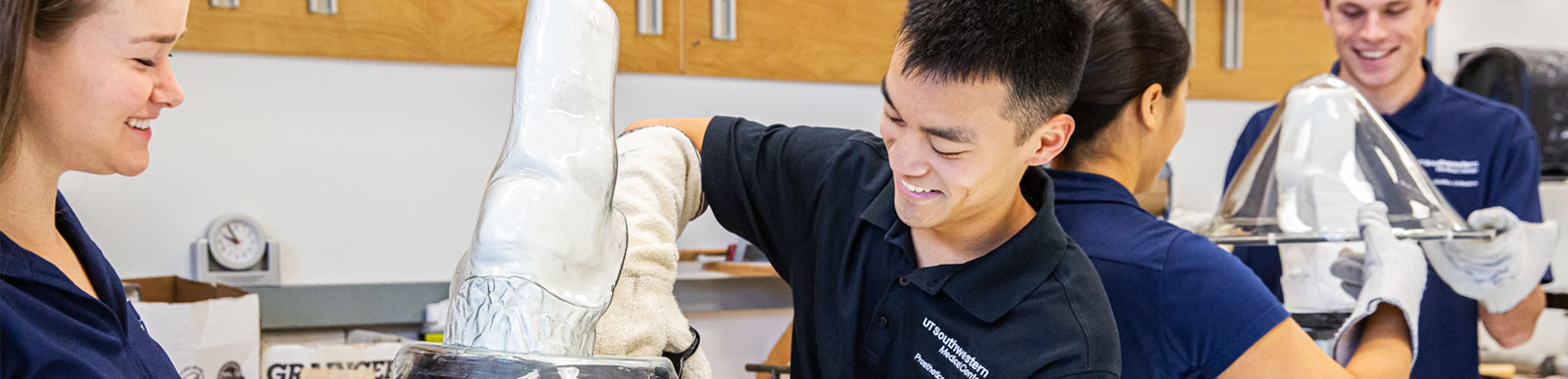
As you review potential prosthetics-orthotics programs, keep these unique UT Southwestern Medical Center advantages in mind:
Clinical Experience
- We’re affiliated with Dallas’ top hospitals – ranked among the best in the nation: Children's Health℠, Dallas Veterans Affairs Medical Center, Parkland Health & Hospital System, Scottish Rite for Children, William P. Clements Jr. University Hospital, and Zale Lipshy Pavilion – William P. Clements University Hospital.
- We operate an integrated patient care clinic where faculty members treat patients and remain current with clinical trends. Their experience translates into unique learning opportunities in the classroom and the most up-to-date clinical education available.
Cost
Our tuition and fee rates are among the most reasonable in the country.
Location
- Our location on a large medical center campus offers outstanding opportunities in our hospitals, clinics, and academic community.
- We’re situated near the heart of Dallas, a thriving center for health care, business, education, and the arts.
Well-Rounded Education
- Our program blends academic, clinical, and research experiences for a comprehensive, well-rounded education.
- Our faculty members encourage curiosity and creative thinking as students explore current concepts and discover creative solutions for difficult clinical problems.
- Our pathology-based approach to patient management teaches how common problems affect both orthotic and prosthetic patients.
- UT Southwestern students have achieved consistent excellence on national board exams, earning 100% first-time pass rates across multiple exams for six consecutive years.
- 100% first-time pass rate on the ABC Prosthetic Written Simulation Exam every year from 2019–2024.
- 100% first-time pass rate on the ABC Orthotic Clinical Patient Management Exam for five of the last six years (≥94% every year).
- 100% first-time pass rate on the ABC Prosthetic Clinical Patient Management Exam in four of the last six years (≥92% every year).
- 100% first-time pass rate on the ABC Orthotic Written Simulation Exam in four of the last six years (≥91% every year).
- 100% first-time pass rate on the ABC Combined O&P Written Exam for five consecutive years (2019–2023).
- Our 2024 graduating class achieved a 100% residency placement rate.
Focus of Curriculum
The focus of our curriculum is to make you an excellent clinician with an appreciation for research and the value of evidence-based practice.
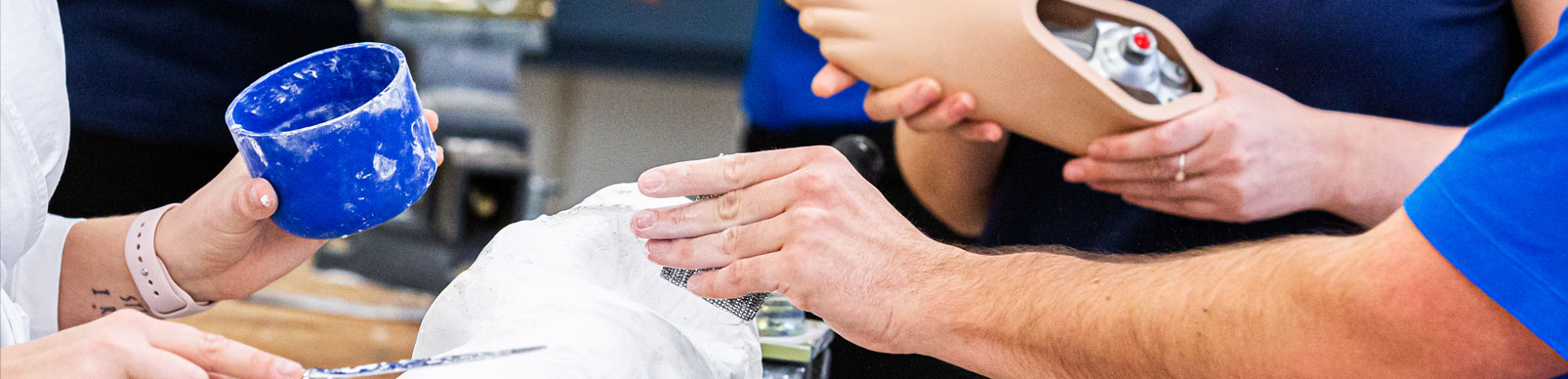
We’ve strengthened and resequenced our proven curriculum to provide students with a clinically relevant, evidence-based educational experience. You’ll share courses with other health professions students, just as you’ll share patient care responsibilities once you begin your career.
As a part of your studies, you’ll also engage in:
- Research projects
- Community service
- Clinical experiences on campus and in local clinics
- A one-month, off-campus clinical experience
What You Will Learn
Graduates will be prepared to function as active members of the health care team, collaborating with other health care professionals to rehabilitate people with chronic disabling illnesses, injuries, or birth defects.
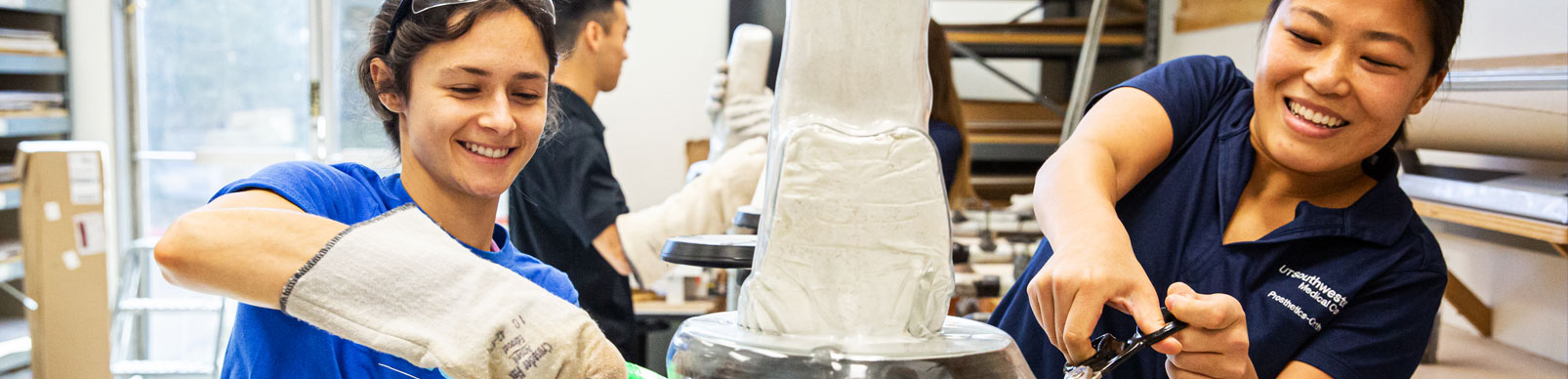
Specifically, successful graduates will have the necessary skills to:
- Assess physical and functional deficits using a variety of evaluation procedures and measurements to determine the nature and extent of the patient’s needs.
- Plan a treatment approach based on an analysis of individual patient needs, in collaboration with other health care professionals.
- Fabricate and fit the prosthesis or orthosis that best meets the patient’s needs; evaluate the effectiveness of the fit and function, and make appropriate adjustments when indicated.
- Educate the patient and the family and assist other professionals to understand the purpose and use of the prosthesis or orthosis
- Pursue research and development in the field of prosthetics-orthotics.
- Contribute by reporting findings at professional meetings, and publishing articles in professional publications
About the Field of Prosthetics-Orthotics
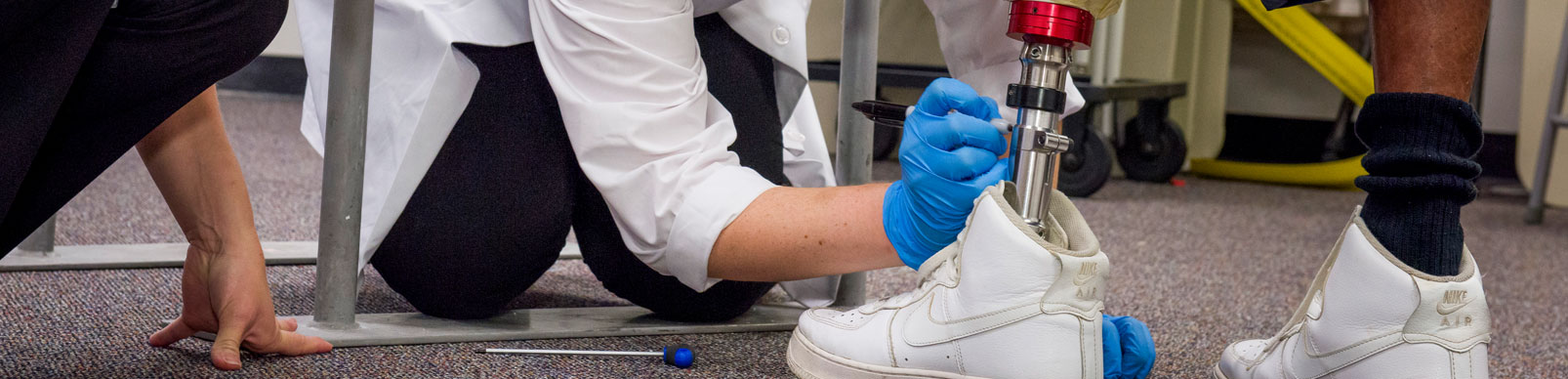
Each year thousands of people lose vital motor functions due to trauma or disease. When a limb is lost, physicians prescribe a prosthesis to take its place. Created and fitted by prosthetists, these artificial limbs are sophisticated tools for daily living that enable patients to walk, grasp, and function more fully.
When injury or disease causes disability, orthotists design and fit orthoses that protect, strengthen, and support existing extremities. By increasing the stability of the back, neck, arms, legs, and other parts of the body, these innovative appliances help patients balance, walk, and move more easily and comfortably.
Prosthetics and orthotics professionals help amputees, patients with musculoskeletal disabilities, and those with injuries regain self-confidence and an improved quality of life.
Accreditation
To ensure that graduates are eligible for certification and licensure, the Master of Prosthetics-Orthotics Program has earned accreditation from the Commission on Accreditation of Allied Health Education Programs upon the recommendation of the National Commission on Prosthetic and Orthotic Education. If you have a question about accreditation, please contact CAAHEP directly.
Commission on Accreditation of Allied Health Education Programs
1361 Park St.
Clearwater, FL 33756
Phone: 727-210-2350
Meet the Program Director
Associate Professor