Physician Profile

Profile Details


McKnight, Steven Ph.D.

Professor

Biographical Information :

Name: McKnight, Steven Ph.D.
Title: Professor
Endowed Title: Distinguished Chair in Basic Biomedical Research Sam G. Winstead and F. Andrew Bell Distinguished Chair in Biochemistry
Primary Appointment: Biochemistry
Affiliations: No Centers/Clinics
Degree Programs: Biological Chemistry
Integrative Biology
Schools: Graduate School of Biomedical Sciences
Southwestern Medical School
Department Title: Department of Biochemistry
Lab Title: McKnight Lab
Email: McKnight Steven Ph.D.

Research Information:

Research Interest

circadian rhythm
gene regulation
intracellular signaling
neurogenesis
metabolic rhythms

Faculty Research Bio

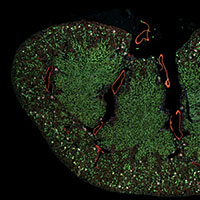
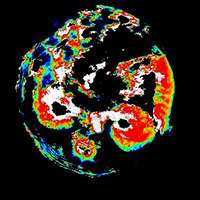
The McKnight lab studies biological regulation with special interest in connections between the metabolic state of cells and their physiological output as dictated by changes in gene expression, intracellular signaling, cell division and neuronal activity. It is our hypothesis that cells can exist in a continum of metabolic states varying from energy charged to energy depleted, and that this charge state is intimately interconnected with regulatory pathways that dictate what what cells actually do. We seek to identify regulatory proteins involved in the control of gene expression, or the control of intracellular signaling, that can directly bind to metabolites that fluctuate in abundance as a function of energy charge state. For example, if a cell has exhauseted its supply of ATP, and suffers a higher than normal ratio of AMP to ATP - how is this information processed to circumscribe the biological or physiological activity of that cell. Likewise, if a cell has exhausted its supply of reducing equivalents in the form of NADH or NADPH, and therefore has reduced ratios of NADH to NAD - and NADPH to NADP - how might these changes be interpreted by the cell to regulate its physiological output. It is our hypothesis that the metabolic state of a cell changes as a function of the circadian cycle, as well as the sleep:wake cycle. We further believe that the metabolic state of neurons withing the central nervous system is ultimately involved in controlling the birth of new neurons in a region of the mouse brain called the dentate gyrus. In a more limited sense, the McKnight lab has discovered two transcription factors - designated neuronal PAS domain 1 (NPAS1) and NPAS3 that reciprocally regulate adult neurogenesis in the adult mouse brain. Mice lacking the NPAS1 transcription factor produce more neurons than normal, whereas mice lacking the NPAS3 transcription factor produce fewer neurons than normal. Through an understanding of the balance of these opposing transcription factors we have come to view adult neurogenesis in the dentate gyrus as a "signpost" of brain activity. Neurogenesis is robust in the brain tissue of mice that are active and healthy. By contrast, the level of adult neurogenesis is substantially reduced in animals deprived of an enriched environment. By use of this neurogenesis "signpost" we have conducted a drug screen to search for small synthetic compounds that are capable of stimulating adult neurogenesis. Among 1,000 drugs screened to date, 8 have been found to be capable of stimulating adult neurogenesis. Current efforts are devoted to the discovery of the modes of action of the 8 pro-neurogenic chemicals discovered in the screen.

Address

UT Southwestern Medical Center at Dallas
5323 Harry Hines Blvd
Dallas, Texas 75390

Contact:

214-648-3342

Recent Publications

Chen, Odstrcil, Tu and McKnight , " Restriction of DNA Replication to the Reductive Phase of the Metabolic Cycle Protects Genome Integrity. "Science ,316:1916-1919. ,2007

Tu and McKnight , " Metabolic Cycles as an Underlying Basis of Biological Oscillations "Nature Reviews of Molecular and Cell Biology ,7:696-701 ,2006

Tu, Kudlicki, Rowicka and McKnight , " Logic of the Yeast Metabolic Cycle: Temporal Compartmentalization of Cellular Processes. ",Unknown

Pieper, Wu, Han, Estill, Dang, Wu, Reece-Fincanon, Dudley, Richardson, Brat and McKnight , " The Neuronal PAS Domain Protein 3 Transcription Factor Controls FGF-mediated Adult Hippocampal Neurogenesis in Mice. "PNAS ,102:14,052-14,057 ,2005

Erbel-Sieler, Dudley, Zhou, Wu, Estill, Han, Diaz-Arrastia, Brunskill, Potter and McKnight , " Behavioral and Regulatory Abnormalities in Mice Deficient in the NPAS1 and NPAS3 Transcription Factors "PNAS ,101:13,648-13,653 ,2004

Significant Publications

Harland, R.M., Weintraub, H., and McKnight, S.L. , " Transcription of DNA Injected into Xenopus Oocytes is Influenced by Template Topology "Nature ,301:38-43 ,1982

McKnight, S.L. and Kingsbury, R. , " Transcriptional Control Signals of a Eukaryotic Protein-Coding Gene "Science ,217:316-325 ,1982

Umek, R.M., Friedman, A. and McKnight, S.L. , " CCAAT/Enhancer Binding Protein: A Component of a Different Switch "Science ,251:288-292 ,1991

Landschulz, W.H., Johnson, P.F., and McKnight, S.L. , " The Leucine Zipper: A Hypothetical Structure Common to a New Class of DNA Binding Proteins "Science ,240:1759-1764 ,1988

Hou, J., Henzel, W.H., Ho, T.C., Brasseur, M., and McKnight, S.L. , " An Interleukin-4-Induced Transcription Factor: IL-4 Stat. "Science ,265:1701-1706 ,1994


Personal Information:

Faculty Personal Bio

Steve McKnight received his batchelors degree in biology from the University of Texas in 1974 and his PhD degree in biology from the University of Virginia in 1977. He conducted postdoctoral research at the Carnegie Institution of Washington under the mentorship of Donald Brown and was appointed as a staff member of that institution in 1983. He was appointed as an Howard Hughes Medical Institute investigator in 1988. His research focus at the Carnegie Institution was on gene regulation. He used molecular biological methods to define the regulatory DNA sequences constituting the promoter of the herpes simplex virus thymidine kinase gene, then employed biochemical methods to purify gene specific transcription factors including members of the C/EBP and GABP families of transcription factors. In 1991 McKnight left academia to co-found Tularik, a San Francisco-based biotechnology company devoted to the discovery of ethical drugs acting to treat disease state via the regulation of gene expression. In 1995 McKnight moved from Tularik to UT Southwestern Medical Center and in 1996 he was appointed as chairman of the Department of Biochemistry. Over the past 11 years McKnight has directed an active research laboratory and has guided the Department of Biochemistry to substantial growth in the disciplines of chemistry, biochemistry and biophysics. McKnight is a member of the National Academy of Sciences, the Institute of Medicine and the American Academy of Arts and Sciences.

Medical School

University Of Virginia Main Campus (1977)

Fellowship

University of Virginia,Biology (1975-1976)
Carnegie Institute of Washington,Molecular Biology (1977-1980)

Honors

DeWitt Stetten Lecture (1987)
Eli Lilly Award (1989)
Newcomb Cleveland Award (1989)
Monsanto Award (1991)
John Enders Lecture (1993)

Language

English