Internal Medicine
An Enduring Commitment to Excellence
Spanning 15 divisions and four centers, the Department of Internal Medicine
is renowned for providing excellent education, research, and patient care.
Faculty
Our faculty are leaders in education, research, and patient care, advancing knowledge while training future clinicians and delivering high-quality, patient-centered care across disciplines and improving patient outcomes.
Education
Our education programs provide students, residents, and fellows learning and training opportunities in internal medicine and its subspecialties, preparing them for excellence in clinical practice and research.
Research
Our basic science and clinical research is conducted with the goal of bringing the latest medical breakthroughs from the bench to the bedside. Our multidisciplinary approach to research fosters an ideal environment for discovery.
Patient Care
Across multiple health systems and partner institutions, our physicians and researchers work together to evaluate patients and perform complex procedures, delivering compassionate, multidisciplinary care.
Message from the Chair
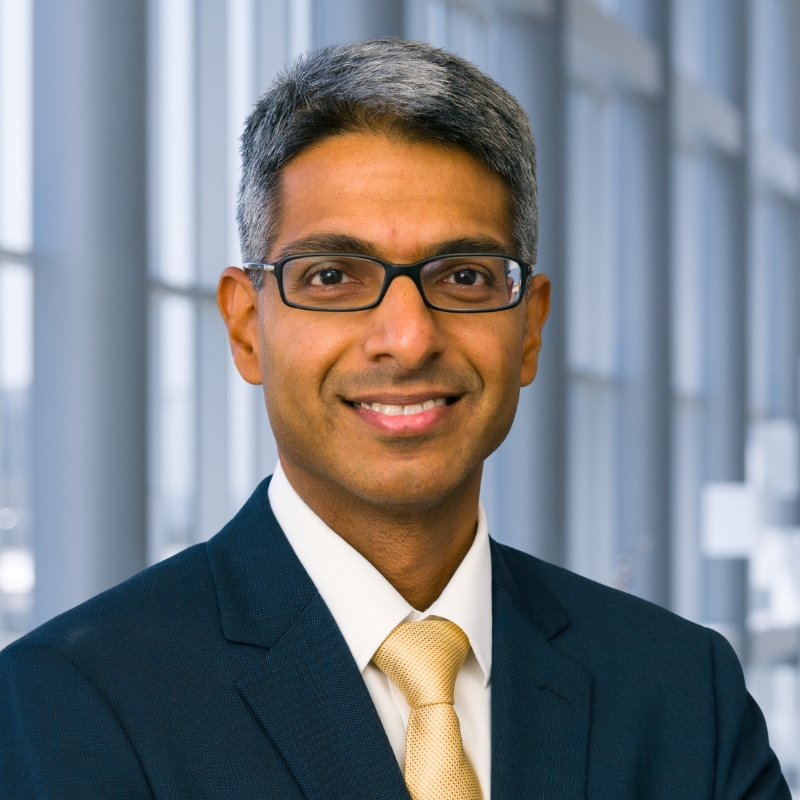
Chair, Department of Internal Medicine
Donald W. Seldin Distinguished Chair in Internal Medicine
Ruth W. and Milton P. Levy, Sr. Chair in Molecular Nephrology
Welcome to the Department of Internal Medicine at UT Southwestern.
Founded on a tradition of scientific inquiry that has culminated in multiple Nobel Prizes, today's Department of Internal Medicine at UT Southwestern is driven by a culture of creativity, collaboration, integrity, and excellence. Our physicians, researchers, and educators are united by a common purpose: to improve lives. To achieve this, we conduct groundbreaking research, we deliver nationally heralded care throughout North Texas, and we host one of the largest Internal Medicine training programs in the country.
Excellence in each of these domains is not an endpoint, but our ongoing commitment. Progress in medicine is rarely the work of a single discipline or perspective. It emerges from thoughtful partnership, grounded in mutual respect and guided by a shared sense of integrity. When we bring these principles to our work, we are able to achieve more than any one of us could alone.
I invite you to learn more about our people and our programs. In doing so, you will see how this collective effort translates into meaningful advances in medicine and, ultimately, into transformative outcomes for the patients and communities we serve.
Mission
To fulfill our mission of building a healthier future for us all, we educate medical students, residents, and postdoctoral fellows to the highest professional standards, prepare clinicians to deliver patient-centered, high-value, cost-conscious care, and advance discovery by answering fundamental questions in the mechanisms, prevention, and treatment of disease across the basic sciences and healthcare delivery.
By the Numbers
As of 2026, the department had 1,122 faculty members: 839 with primary appointments, 118 more from other departments who held secondary appointments, and 165 with adjunct appointments. The primary and secondary faculty includes:


3
Nobel Prize winners

7
Members of the National Academy of Sciences

9
Members of the National Academy of Medicine

4
Members of the American Academy of Arts and Sciences

41
Members of the American Society for Clinical Investigation

28
Members of the Association of American Physicians
These exceptional faculty lead UT Southwestern Medical Center's Internal Medicine programs to produce graduates who balance the core responsibilities of medicine: selfless dedication, competence, and compassion. As with the rest of UT Southwestern, Internal Medicine is pursuing the future of medicine, today.
Spotlight on Internal Medicine Grand Rounds
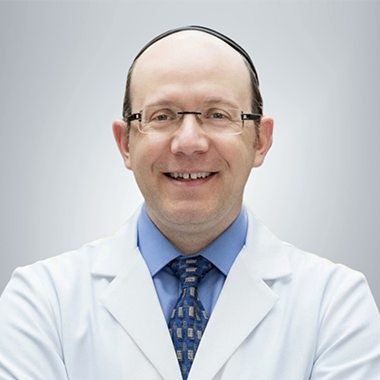
Join us as Dr. Neima Briggs, an Assistant Professor in the Division of Infectious Diseases and Geographic Medicine, presents Internal Medicine Grand Rounds on Friday, Sept. 25, at 8 a.m. in D1.502.
Dr. Briggs’ research examines how the immune system responds to parasitic infections and how those findings can be translated into new approaches for prevention, diagnosis, and treatment. His laboratory studies host-pathogen interactions, with a focus on T- and B-cell responses that influence protection and susceptibility during chronic infections. He has contributed to the development of vaccine candidates for parasitic diseases, including mRNA-based approaches, and to the identification of diagnostic biomarkers. His work also advances rapid pathogen detection technologies and other translational applications in infectious diseases.