


UT Southwestern performs first kidney-pancreas transplant since program relaunch

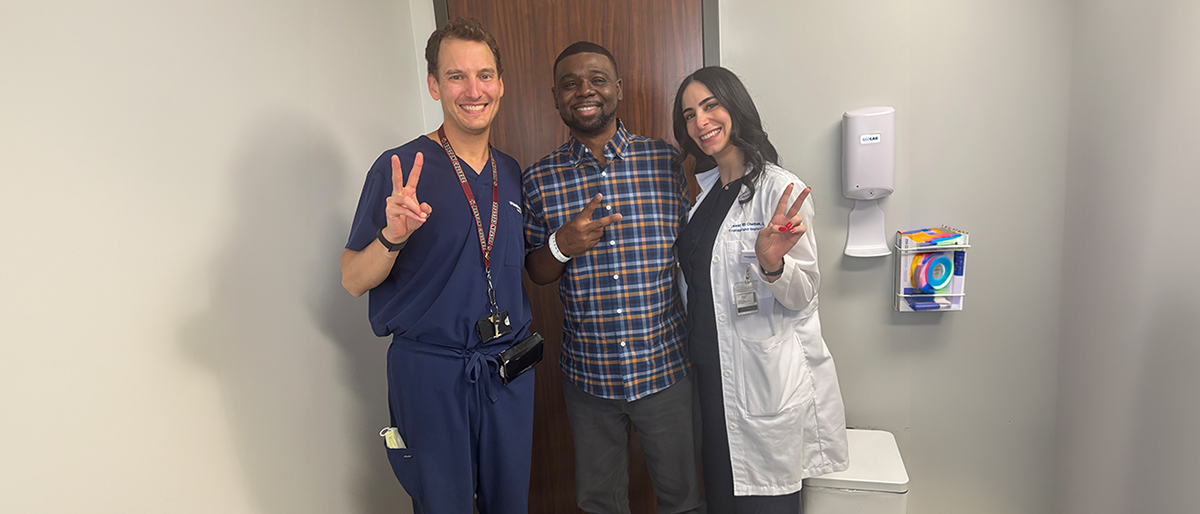
UT Southwestern reached another milestone in transplant care recently, performing its first kidney-pancreas transplant since the Pancreas Transplant Program was reestablished in 2025. The procedure reflects the strength of a multidisciplinary team working in close coordination to deliver highly specialized care for patients with advanced diabetes and its complications.
The transplant was organized by two expert physicians – Alissar El Chediak, M.D., Assistant Professor of Internal Medicine, and Christopher Nauser, M.D., Assistant Professor of Surgery – whose collaboration bridged comprehensive medical management and surgical precision.
Working alongside anesthesiologists, nurses, and transplant coordinators, the team carefully implanted a healthy donor pancreas, connecting it to the patient’s blood supply and digestive system to restore natural insulin production. They then transplanted a new kidney and attached it to nearby blood vessels, with the ureter connected to the bladder. This level of coordination is essential in kidney-pancreas transplantation, where success depends not only on surgical expertise but also on meticulous pre- and postoperative care.
“The procedure went very well, and the patient is having a textbook great outcome, thanks to a team effort,” Dr. Nauser said.
Restoring health and hope
For patients with severe Type 1 or Type 2 diabetes, especially those whose disease cannot be controlled with insulin therapy alone, pancreas transplantation can be life-changing. The pancreas plays a critical role in regulating blood sugar by producing insulin, which the body can no longer do effectively in advanced diabetes. A successful transplant can restore that function, freeing patients from insulin injections and constant glucose monitoring, while reducing or reversing complications like nerve injury, heart disease, and vision loss.
Beyond improving daily life, pancreas transplantation represents a powerful tool in preventing long-term organ damage and extending survival for carefully selected patients. For those living with poorly controlled diabetes, the procedure offers not just relief from the burden of disease management, but the possibility of a more stable, healthier future. In many cases, particularly when paired with a kidney transplant, the surgery can address both diabetes and its most serious complications at once, restoring critical organ function and dramatically improving quality of life.
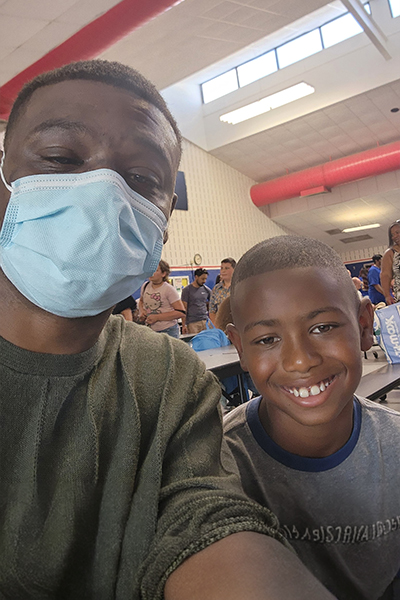
And that has been the case for Justin Tuck, the patient who received the first kidney-pancreas transplant since the program’s reboot. Mr. Tuck, 43, originally from Mineola, Texas, but now living in Tyler with his wife, Artheria, and son, Justin Jr., was diagnosed with Type 2 diabetes in his mid-20s.
“I knew I was urinating a lot and losing weight, but I didn’t think anything of it until I had a physical for my job and was told my blood sugar was 600,” he said.
He was originally able to control his diabetes with a Metformin pill, but that progressed to insulin injections, on which he became increasingly dependent for many years. Eventually his kidneys began to fail, and he had to go on dialysis.
His doctor referred him to UT Southwesten’s Kidney Transplant Program, but given his diabetes, it was recommended that Mr. Tuck be evaluated for a kidney-pancreas transplant with the newly relaunched program instead. After waiting six months, he was told he matched with a donor kidney and pancreas.
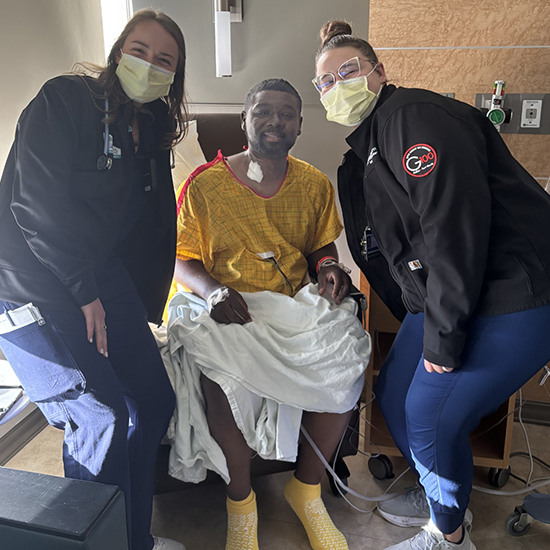
The surgery in June was a success, and Mr. Tuck was up and walking right away. He even returned to working remotely a week later. He now is enjoying a full life without the need for insulin or dialysis.
“This was a true blessing, and I feel like I have a whole new life,” he said. “I’m getting back to where I was before everything happened with my health.”
And he credits UT Southwestern’s caring staff with his success.
“The doctors and the whole team were amazing,” he said.
“They were all so personable, constantly checking on us,” Mrs. Tuck added. “You get to know them well, and they really made us feel like family.”
Bringing back transplant care
Kidney-pancreas transplants are not new to UT Southwestern. From 2007 to 2008, UTSW performed five kidney-pancreas transplants, but those efforts were subsequently put on hold to focus on the liver and kidney programs, which had also started at that time.
“My goal when I was recruited in 2018 was to resume kidney-pancreas transplants, but I knew this effort would take time as we focused on first expanding abdominal transplant at William P. Clements Jr. University Hospital, Parkland Health, and Children’s Medical Center Dallas, and starting new programs in living donor liver transplant, split liver transplant, and transplant oncology,” said Parsia Vagefi, M.D., Executive Clinical Director, Solid Organ Transplant, Executive Vice Chair of Strategy and Finance (Surgery), and Interim Chair of Surgery. “With the recruitment of Dr. El Chediak and subsequently Dr. Nauser, we saw a great window of opportunity to restart the program.”
With the relaunched program comes the opportunity to help even more patients, a goal at the core of UT Southwestern’s mission.
“In terms of taking care of a patient with diabetes and subsequent kidney failure, the gold standard of care is to get them a new kidney and pancreas transplant,” said Dr. El Chediak. “We believe it’s the right of every patient to be informed and to have access to that kind of therapy. Our goal is to have people get evaluated, learn about this treatment option, and then decide if it’s a right fit for them.”
“This is a reliable treatment option that can be very beneficial for the right patient, and we’re working to give it more visibility by raising awareness among patients and providers in the community,” added Dr. Nauser.
The future of care, today
As UT Southwestern continues to expand its transplant capabilities, the relaunched Pancreas Transplant Program underscores a broader commitment to advancing complex, lifesaving care. Each procedure represents not only technical achievement but also renewed hope for longer lives, better health, and futures less defined by chronic disease.
“This achievement is another example of the UT Southwestern team providing access to transplants for patients in need through a team-based multidisciplinary approach,” said Dr. Vagefi. “Specifically, with the complexity of combined kidney-pancreas transplants, and as the largest transplant program in North Texas performing multiorgan transplants, this achievement is in line with our record of delivering the highest quality of complex care.”
Endowed Title:
Dr. Vagefi holds the Ernest Poulos, M.D., Distinguished Chair in Surgery.