


A milestone in transplant care
UTSW reaches 1,000 heart and 2,000 kidney transplants

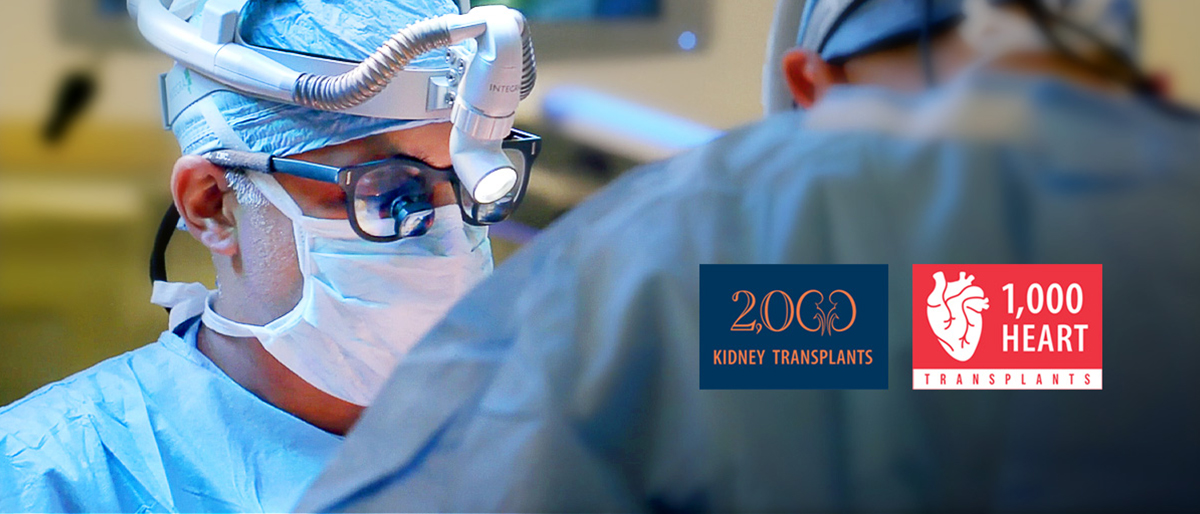
UT Southwestern is one of only 15 transplant programs in the U.S. – and the only one in North Texas – to have performed more than 1,000 transplants in each of four organs: heart, lung, kidney, and liver. That impressive milestone, which was achieved earlier this year, underscores the lifesaving impact of the Medical Center’s Transplant Program for patients and families across North Texas.
Nationwide, more than 103,000 people are waiting for an organ; another name is added every eight minutes, according to the Health Resources and Services Administration. An average of 13 people die daily before a donor organ becomes available. Those sobering realities are among the many reasons why UTSW’s transplant teams continue to push forward in advancing care, expanding access, and giving patients and families much-needed hope.
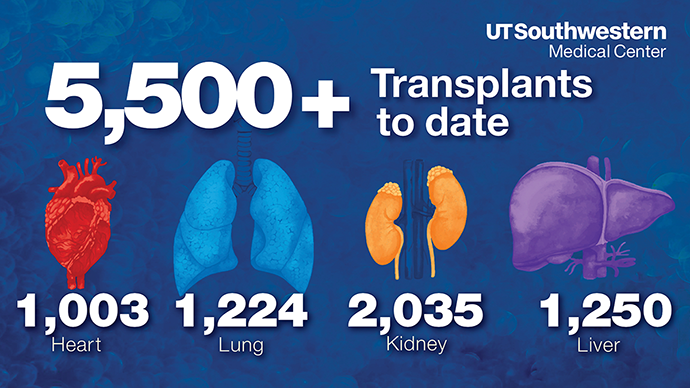
In fact, over the past few decades, UT Southwestern’s Transplant Program has become one of the busiest and most respected in the country, reaching milestone after milestone. In 2023, the program surpassed its 1,500th kidney transplant and its 1,000th lung. In 2024, the liver program reached its 1,000th transplant.
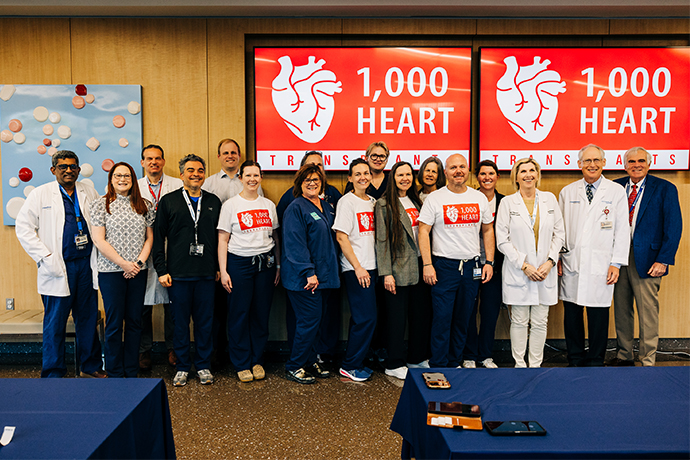
This year, the kidney program completed its 2,000th transplant in February, and the heart program performed its 1,000th transplant in March, marking the accomplishment with a well-deserved celebration.
“We are incredibly proud to reach these milestones, but what matters most is what they represent – thousands of patients given a second chance at life,” said Parsia Vagefi, M.D., Executive Clinical Director of the Solid Organ Transplant Service Line and Professor and Executive Vice Chair of Strategy and Finance in the Department of Surgery. “Each transplant reflects the extraordinary coordination of our teams, the trust of our patients and their families, and the generosity of donors who make this work possible. As we look ahead, our focus remains on expanding access, advancing innovation and education, and continuing to raise the standard of care for every patient we serve.”
What makes those numbers even more striking is how quickly the program has grown. UTSW performed its first heart transplant in June 1988 – less than four decades ago – followed by its first lung transplant in 1990. The first liver and kidney transplants came in 2007. The program continues to thrive, with 458 solid organ transplants completed in 2025.
But behind every statistic is a person waiting for a second chance. With demand far outpacing supply, UTSW’s ability to evaluate, transplant, and follow patients through recovery is more critical than ever.
Kidney, heart transplant patients gain new leases on life
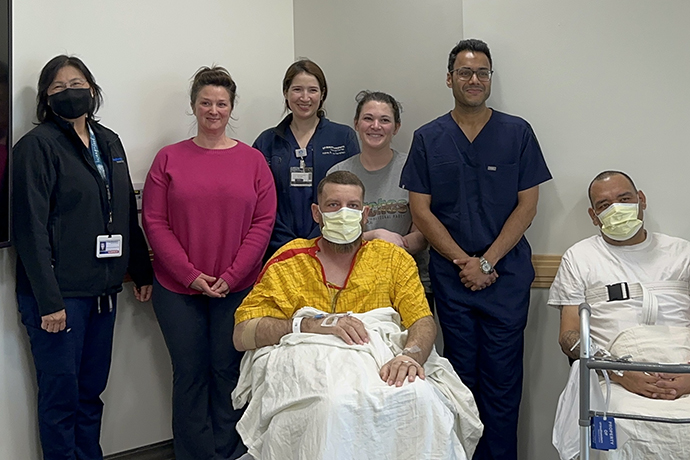
Cody Smith had been approved to receive a kidney from his wife, Rebecca Smith, until testing revealed they were incompatible. As Mr. Smith waited for another option, Hannah Harris, a nondirected living donor, stepped forward, and her generosity set a remarkable sequence in motion. She was a match for Mr. Smith, making him UTSW’s 2,000th kidney transplant recipient.
Then through a paired exchange – in which a person is willing to donate a kidney to an intended recipient’s behalf – Mrs. Smith donated hers to Gerald Sanchez, a patient waiting on the donor list. This series of selfless decisions not only changed Mr. Smith’s life but also created a ripple effect that transformed multiple lives, underscoring the power of living donation and collaboration.
This incredible achievement comes amid continued excellence for UTSW’s Transplant Program, including the highest kidney offer acceptance rate in North Texas. UTSW is ranked among the top 10 programs nationally, according to the Scientific Registry of Transplant Recipients (SRTR). The program also leads the region with the highest three-year kidney patient survival rate (95.5%) and maintains one of the shortest hospital lengths of stay in the country – three days post-transplant compared with five days nationally.
“Congratulations to our incredible kidney transplant program on reaching the remarkable milestone of 2,000 transplants,” said Jigesh Shah, D.O., Assistant Professor of Surgery and Surgical Director of the Kidney Transplantation Program. “This achievement is a testament to the unwavering dedication, skill, and teamwork of every member of our multidisciplinary team and continued support from hospital leadership. Together, we have transformed countless lives and set a standard of excellence we can all be proud of.”
Cassandra Lopez is UTSW’s 1,000th heart transplant patient. She is the oldest of seven children and a mother of two daughters, 10 and 9. She has done very well and is continuing to recover at home.
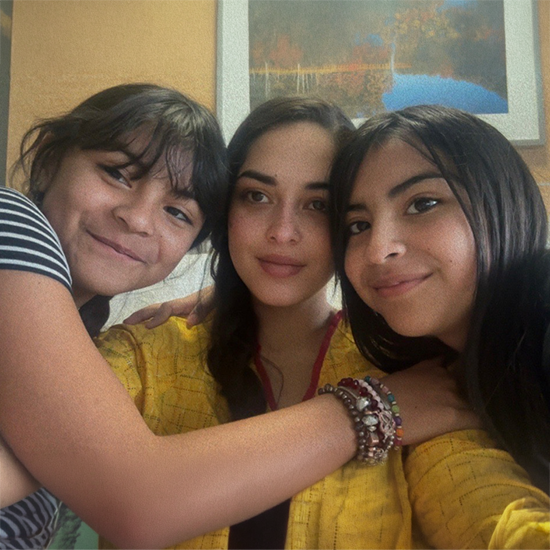
“I’m so grateful for this second-chance opportunity,” Ms. Lopez said. “I want to recognize all of the surgeons who have gone above and beyond for me as well as for other patients that are going through the same situation. I admire your hard work and dedication, your sleepless nights, and long days of surgery, and for not giving up and always being a support system for your patients.”
The heart transplant program has the highest one- and three-year patient survival rates in DFW (95.1% and 84.9%). All surgeries take place at UT Southwestern, which U.S. News and World Report ranks the No. 1 hospital in DFW.
“We would like to congratulate the entire heart transplant team on achieving the extraordinary milestone of 1,000 heart transplants,” said Nicholas Hendren, M.D., Interim Section Chief of Heart Failure, Mechanical Circulatory Support, and Heart Transplantation and Assistant Professor of Internal Medicine, and Matthias Peltz, M.D., Surgical Director of Cardiac Transplantation and Mechanical Circulatory Support and Professor of Cardiovascular & Thoracic Surgery, in a joint statement. “This remarkable accomplishment is a testament to everyone’s unwavering dedication, clinical excellence, and compassionate commitment to saving lives. Each transplant represents hope restored, families reunited, and lives transformed – and our collective efforts have made that possible a thousand times over.”
Endowed Titles
Dr. Peltz holds the Sarah M. and Charles E. Seay Distinguished Chair in Thoracic Surgery.
Dr. Vagefi holds the Ernest Poulos, M.D. Distinguished Chair in Surgery.