


Space research helps patients on Earth with low blood pressure condition

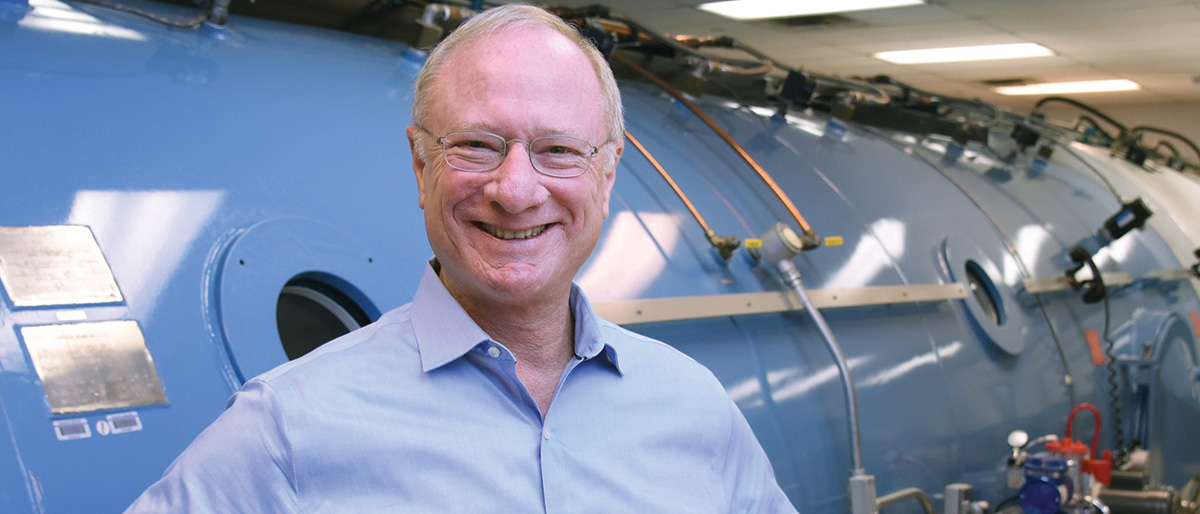
Ever stand up too quickly and see stars? Fainting from low blood pressure can be dangerous for astronauts as well as for patients. Now, UT Southwestern researchers report heart-related space research that helps us to understand this problem of low blood pressure.
The study, published in Circulation, is the first to examine this condition – called orthostatic intolerance – during daily activities when the astronauts returned home. The researchers found that exercise regimens during spaceflight, followed by saline injections after landing, were sufficient to prevent the condition from occurring.
Cardiologist Dr. Benjamin Levine, who led the study, has worked in space research for three decades. Dr. Levine is Professor of Internal Medicine at UT Southwestern and Director of the Institute for Exercise and Environmental Medicine, a collaboration between UT Southwestern and Texas Health Presbyterian Hospital Dallas.
Doing an hour or more of daily exercise was sufficient to prevent loss of heart muscle, and when it was combined with receiving hydration on their return, the condition was prevented entirely,
Dr. Levine said. We expected to see up to two-thirds of the space crew faint. Instead, no one fainted.
To read a full version of this story, view it in the UT Southwestern Newsroom.
Dr. Levine holds the Distinguished Professorship in Exercise Sciences.