


Williams receives SSIB Hoebel Prize for research creativity

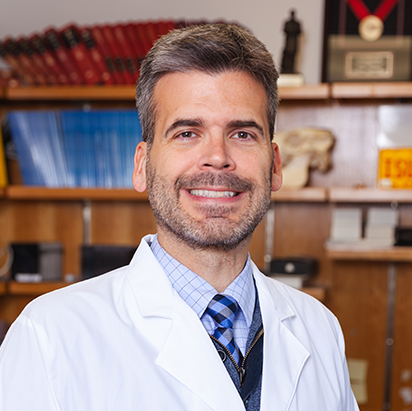
Stay curious, keep learning, take chances on difficult questions, and don’t get too discouraged by setbacks. That’s the advice Kevin Williams, Ph.D., Associate Professor of Internal Medicine, would give his younger self.
“Experiments fail, papers get rejected, grants get rejected, and that is part of the process. What matters is learning from those experiences, staying persistent, and continuing to move forward,” he said. “Careers do not have to follow a perfectly straight line. A lot of what people may call luck is really being ready to recognize and take advantage of opportunities when they appear.”
In honor of that persistence and innovation, the Society for the Study of Ingestive Behavior (SSIB) will award Dr. Williams the 2026 Hoebel Prize for Creativity for his exceptional creativity, excellence, and impact in ingestive behavior research. The award includes a plaque, a $750 honorarium, and an invitation to speak at the international scientific organization’s annual meeting in August in Philadelphia.
“To receive an award associated with Dr. Bart Hoebel’s legacy is especially meaningful. His work helped shape how we think about the brain control of feeding, motivation, and reward,” Dr. Williams said. “For me, this recognition also reflects the incredible trainees, collaborators, and mentors who have contributed to the work over the years.”
The Williams Lab studies how the brain controls eating, body weight, and blood glucose control.
“We are especially interested in identifying the specific brain cells and the connections in the brain that tell us when to eat, when to stop eating, and how the body adapts to things like exercise or weight-loss therapies,” said Dr. Williams, who is also a member of the Center for Hypothalamic Research. “The broader goal is to understand how these systems go wrong in obesity and diabetes and use that knowledge to help guide better treatments.”
Dr. Williams and his team have identified specific populations of neurons that respond to hormones like leptin and insulin, lifestyle factors such as diet and exercise, and some previous and current commonly used treatments for those living with obesity and diabetes including topiramate, serotonin 2C receptor agonists, and GLP-1 receptor agonists.
“This field sits at the intersection of neuroscience, physiology, and behavior, so the science is both fascinating at a basic level and directly relevant to major health problems. The complexity of how the brain and body communicate around feeding and metabolism is what continues to draw me in,” he said.
Among the most exciting advances, researchers can now move beyond broad brain regions and identify the exact cell types and connections that regulate feeding and metabolic health.
“That gives us a much clearer view of mechanisms, so discoveries in this space can be both fundamentally interesting and highly relevant to human disease,” Dr. Williams explained. “The next step is to keep building a more complete map of these brain circuits that control appetite, satiety, and metabolic adaptation. We are also very interested in how these circuits respond to lifestyle and therapeutic interventions. By understanding those pathways, we may help develop more targeted treatments for obesity and diabetes.”
After earning a bachelor’s degree in biology from UT Dallas, Dr. Williams completed his doctorate in neuroscience at Tulane University, followed by postdoctoral fellowship training in hypothalamic research at UT Southwestern. He joined the UTSW faculty in 2009.