


President’s Lecture Series: Solving a cellular merger mystery

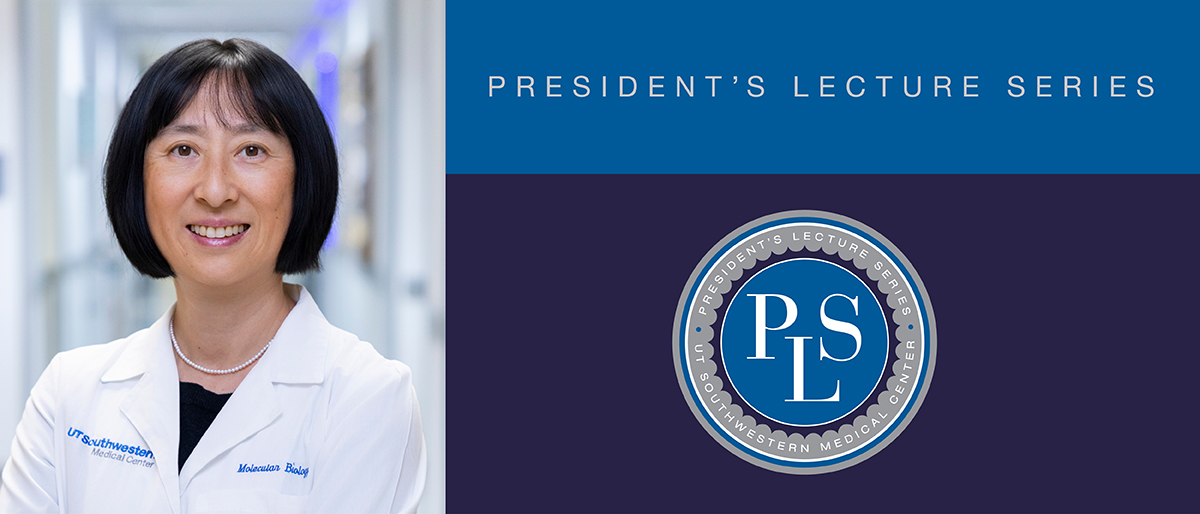
Cell-cell fusion – a biological process in which two or more cells merge into one – is necessary both for life itself and continued good health. For example, sperm and egg fuse at conception; the outer lining of the placenta is one giant cell created from the fusion of billions of cells; and muscle fibers form from the fusion of hundreds or thousands of precursor cells called myoblasts.
While the products of these fusion events were known to scientists for decades, exactly how cells fuse had largely remained a mystery. Over the course of her career, Elizabeth Chen, Ph.D., Professor of Molecular Biology and Cell Biology, has sought answers to the myriad scientific questions about cell fusion, helping to elucidate the molecular mechanisms behind this process across multiple model systems as well as how it can go awry in several diseases.
“As long as you’re studying an interesting biological problem, you can make discoveries that nobody else in the world has ever seen before,” she said. “It’s that thrill of discovery that continues to bring me and my trainees into the lab every day.”
Dr. Chen will detail her research Feb. 26 as the first speaker of the 2026 President’s Lecture Series. The 4 p.m. lecture, titled “How Two Cells Become One,” will take place in the Tom and Lula Gooch Auditorium. A livestream also will be available.
As a child, Dr. Chen spent considerable time outside, marveling at the natural phenomena she saw around her in her hometown of Changchun, China. A top student, she earned her undergraduate degree in biochemistry from Peking University. To deepen her understanding of biology, she pursued a master’s degree in chemistry and biochemistry from the University of California, Los Angeles, discovering a love for developmental biology in the process. She continued in this field for her doctoral degree at the Stanford University School of Medicine, where she studied the mechanisms behind sex dimorphism in fruit flies using the genetics of this powerful model system.
Near the end of her doctoral program, Dr. Chen decided to focus on something new in her postdoctoral fellowship. Driven by the near-complete lack of knowledge about cell fusion, she looked for opportunities to study this process. Her search led her to Eric Olson, Ph.D., Chair of Molecular Biology at UT Southwestern. Members of the Olson Lab investigate muscle development but had never studied cell fusion, a critical step during muscle differentiation.
Although Dr. Olson’s lab mainly used mice as a model system, he enthusiastically supported Dr. Chen’s idea to set up a fruit fly genetic screen to search for genes involved in the fusion of myoblasts. After two years of screening, she discovered a dozen genes that laid the foundation for her future career.
When her postdoctoral fellowship ended, Dr. Chen accepted a faculty position at Johns Hopkins University, where she continued studying cell fusion. There, she discovered that fusion is an asymmetrical process in which one cell invades a neighboring fusion partner with fingerlike projections, overturning the field’s accepted dogma that fusion is symmetrical. Her lab also discovered how the neighboring cell actively pushes back against the projections to bring the two cell membranes closer at the site of fusion, which they named the fusogenic synapse.
In 2016, Dr. Chen returned to UTSW as a Professor. Over the past decade, she has elucidated how the invading cells make projections at the fusogenic synapse by strengthening their actin cytoskeleton using a protein called dynamin. She and her colleagues have subsequently uncovered the choreographic steps in generating the projections. Her work has also shown that the same cellular mechanisms underlie cell fusion in vertebrates as in fruit flies, detailing fusion processes in zebrafish and mice with plans to follow up soon in human myoblasts.
“Studies in my lab are mainly curiosity driven. But they also inevitably have disease connections, because defects in myoblast fusion and other cell fusion events would result in conditions such as congenital myopathy, infertility, and osteopetrosis,” Dr. Chen said. “Our hope is that eventually, we will not only understand the mechanisms of cell fusion, but also provide new therapeutic options for these conditions.”
Endowed Titles
Dr. Olson holds the Pogue Distinguished Chair in Research on Cardiac Birth Defects, The Robert A. Welch Distinguished Chair in Science, and the Annie and Willie Nelson Professorship in Stem Cell Research.