Personal stories woven into thought-provoking art
From paper boats to a Native American hero, subjects of top awards at employee art show make a statement

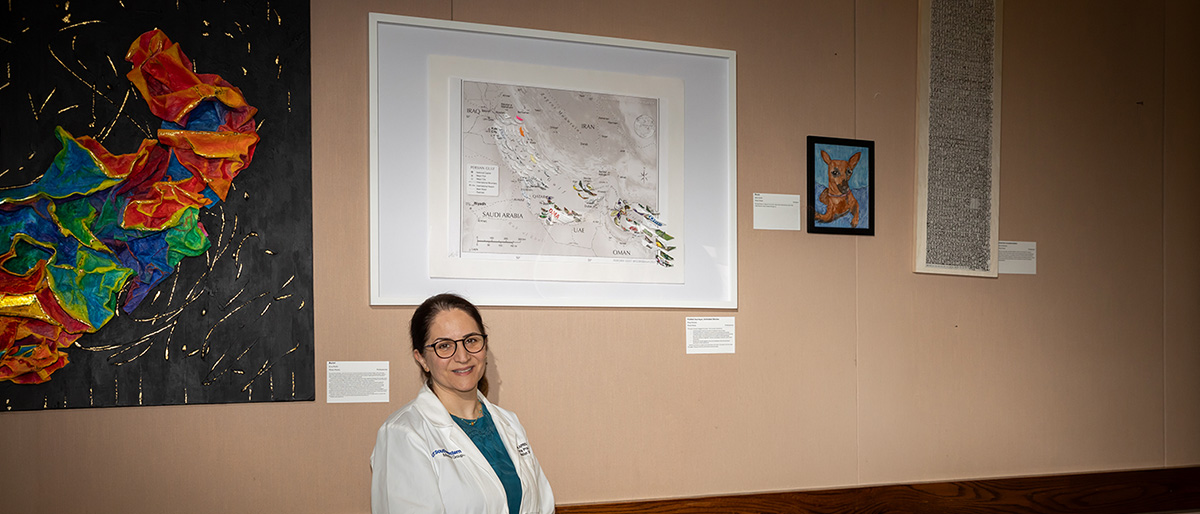
Two deeply personal stories inspired the winning entries in this year’s On My Own Time (OMOT) employee art show.
For Kathlyn “Brooke” Wilson, PT, D.P.T., her grandfather’s poignant tales of Native American history in Texas and Oklahoma led to her People’s Choice Award-winning fiber art. For Shaghayegh “Shay” Rezaie, M.S.N., APRN, FNP-C, ONC, the Best of Show recipient, a collage of paper boats portrayed her conflicted feelings about living in the United States as an Iranian immigrant.
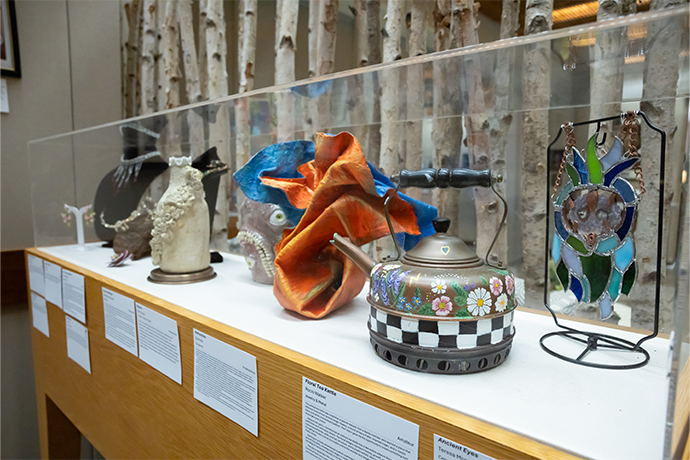
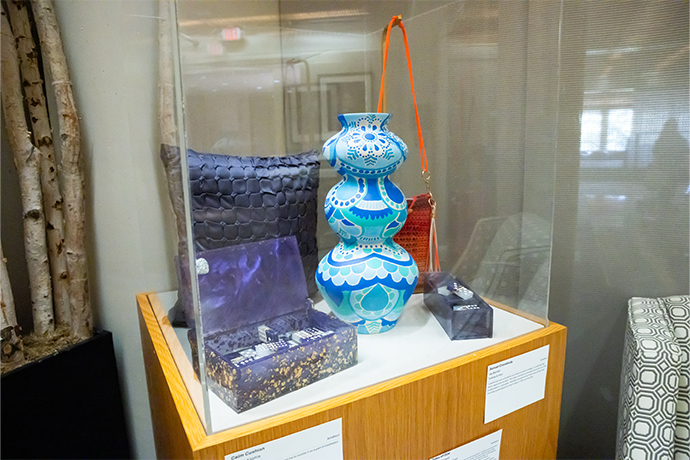
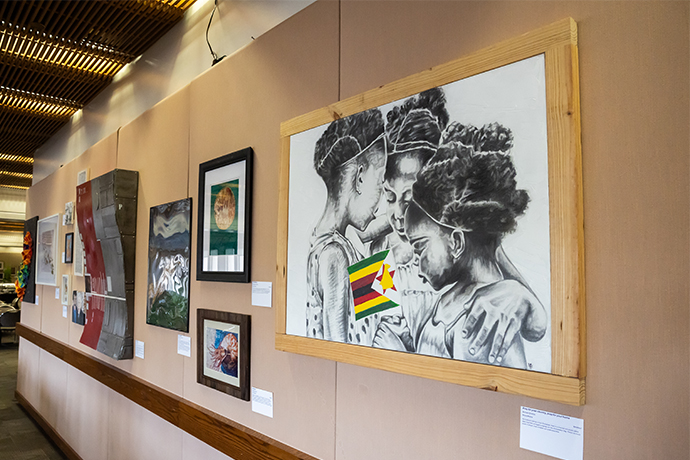
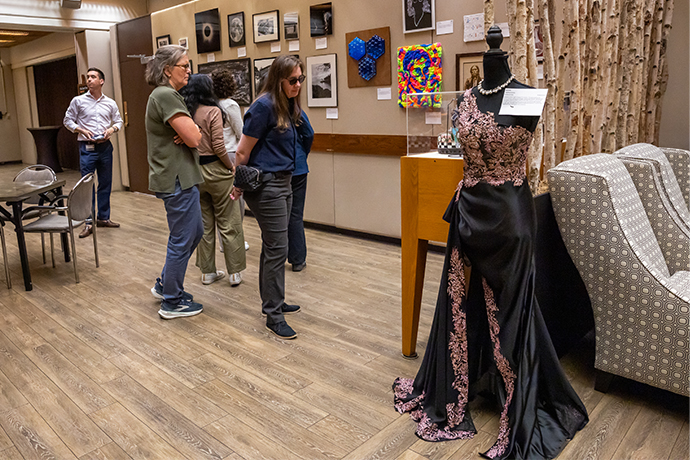
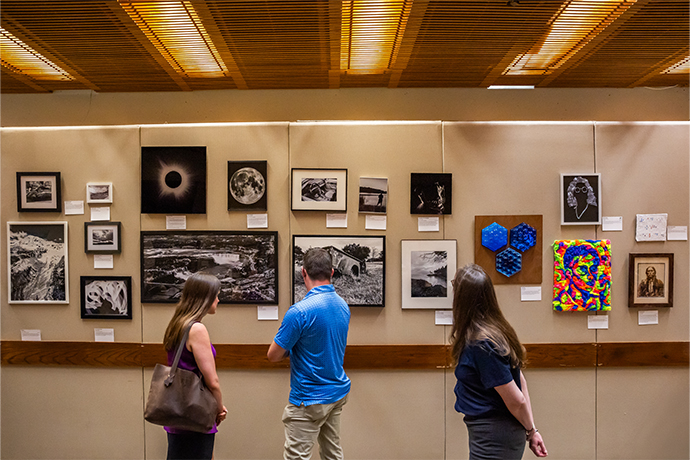
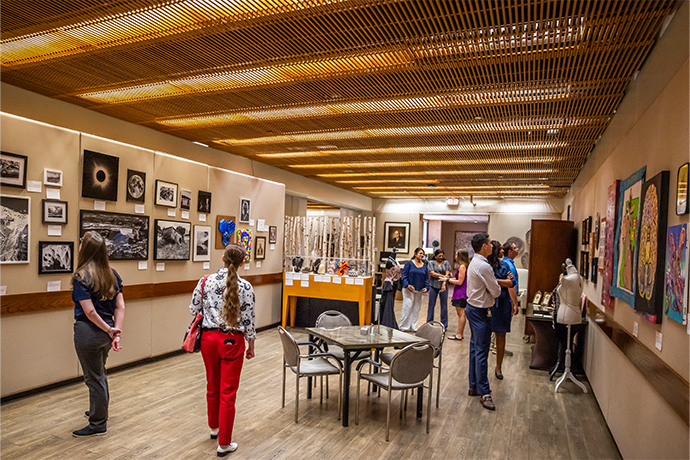
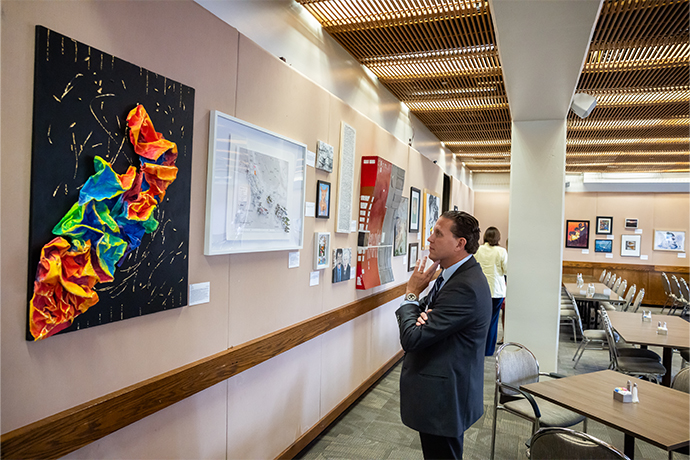
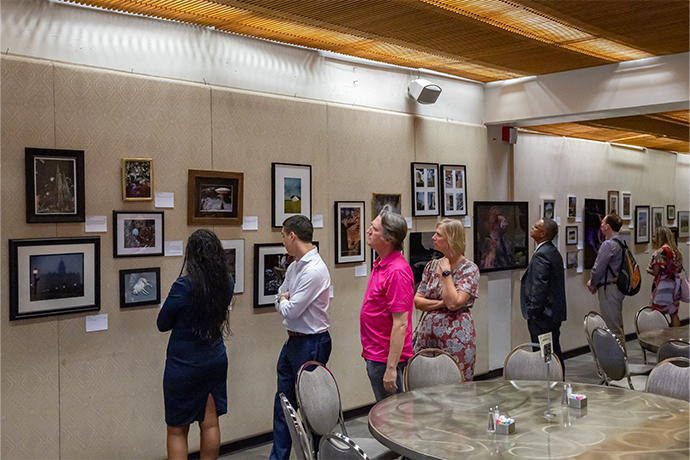
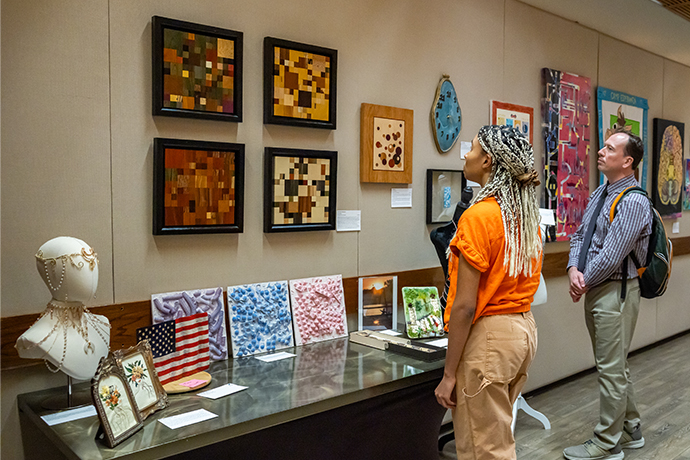
The winning works were selected from nearly 150 entries – a new record for UT Southwestern, which for 25 years has participated in the annual program held by the Business Council for the Arts (BCA). Subjects for the visual art entries by UTSW employees and students ran the gamut – from a sad frog to ripened pears.
“The level of engagement in this year’s On My Own Time program is unprecedented, and the quality of the submissions continues to impress – not just me, but the entire BCA team that works with over 20 companies across Dallas that host the program,” said Courtney Crothers, UTSW Art Curator and Director of the Office of Campus Life. “It’s wonderful that so many employees and students enjoy sharing their talents with their colleagues.”
Award recipients and those who received honorable mentions were recognized Sept. 9 at a reception hosted by UT Southwestern. First place pieces were displayed in a regional art exhibition through Oct. 5 at NorthPark Center.
Best of Show
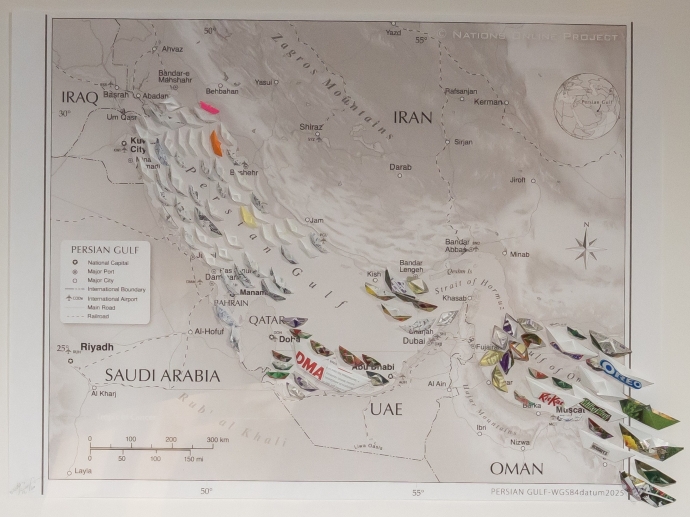
Ms. Rezaie, an Advanced Nurse Practitioner in Radiation Oncology, used tiny pieces of paper scattered across a map of the Persian Gulf to create Folded journeys, unfolded stories. Inside the origami boats, she wrote about fear, worry, and frustration.
“I had no idea if my brothers were alive,” said Ms. Rezaie, who grew up during the Iran-Iraq War and immigrated to the United States at age 26. “So I started writing down my feelings on paper and making them into hundreds of boats. This was my quiet way of mourning a very private matter.”
Although she pursued a nursing career, art always held a special place in Ms. Rezaie’s heart. She often shares her love of art with patients, co-workers, and others.
“A lot of people don’t pay attention to what’s on the walls here,” she said. “But I appreciate how much UT Southwestern values art.”
The daughter of an artist, she has experimented with different media such as clay, and her artwork has been recognized multiple times in previous OMOT competitions. In 2024, her mixed media work titled Butterflies in My Heart won the People’s Choice Award.
Making the origami boats helped her cope with the stress of being separated from her family and friends, who she eventually confirmed were alive.
“It was never intended to be political,” she said. “It was my personal journey.”
People’s Choice Award
A childhood filled with arrowhead hunting, long walks, and frequent truck rides with her beloved grandfather inspired Dr. Wilson, Assistant Professor of Physical Therapy in the School of Health Professions.
“Native American history was really important to him: He loved it and loved teaching about it,” she said.
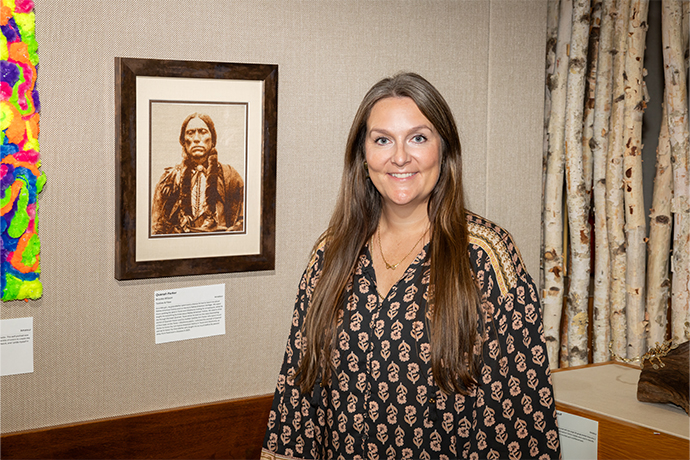
Her grandfather, who was a citizen of the Cherokee Nation and lived down the street from her in Whitesboro, Texas, frequently shared stories about their heritage. Driving through the Oklahoma plains, he often told her about Quanah Parker, the last chief of the Comanche Nation, who led the Plains Indians’ transition to reservation life.
“He was an amazing leader,” Dr. Wilson said. “That’s one of the reasons I wanted to stitch him.” Her cross-stitch winning work honors both her Native American history and her grandfather.
Crafting the fiber art portrait, called Quanah Parker, took months of focused work, using 12 shades of brown thread to create the sepia effect.
“It was relaxing to make,” she said. “It was kind of like meditation.”
Dr. Wilson said she is sure her grandfather, who died from Parkinson’s disease in 2025, would have been pleased with her portrait. “I think he might be speechless, but very proud,” she said.
Photo Gallery