


UTSW students receive MLK community service scholarships for outstanding volunteerism

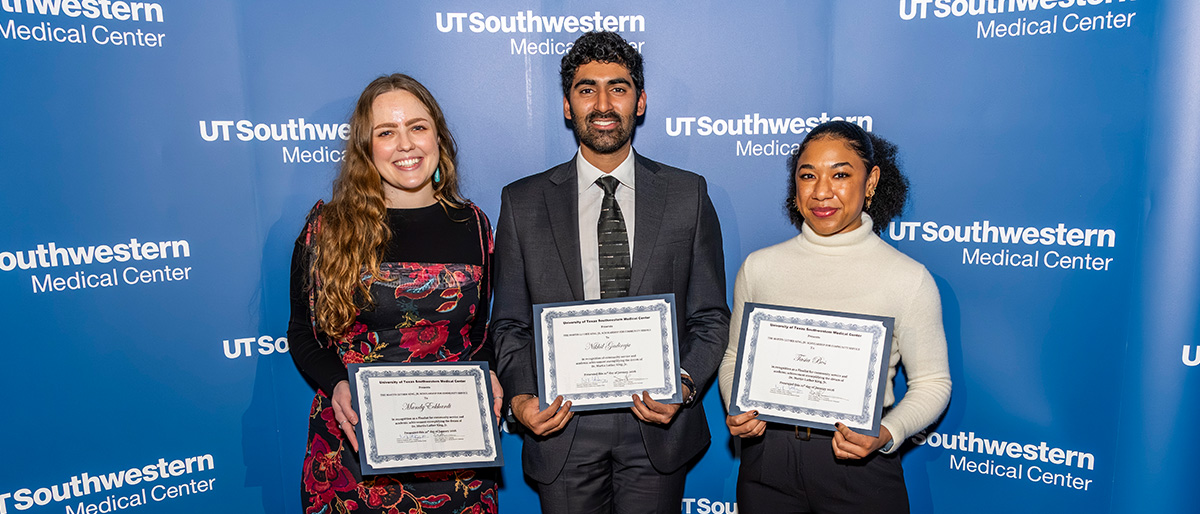
Each year, UT Southwestern recognizes students whose service and leadership reflect the transformative legacy of the Rev. Martin Luther King Jr. The recipients of this year’s MLK community service scholarships embody the highest ideals of compassion and equity, launching innovative projects and championing accessible health care for all. Their stories illuminate how vision and action can reshape communities and redefine meaningful service.
This year, medical student Nikhil Gadiraju was honored with the $5,000 Martin Luther King Jr. Scholarship for Community Service, while graduate students Tasia Bos and Mandy Eckhardt received $500 awards for their inspiring contributions.
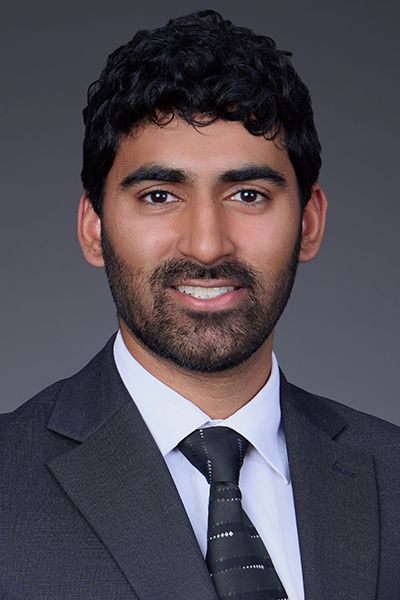
Scholarship Recipient
Nikhil Gadiraju
Second-year medical student
Mr. Gadiraju serves as founding President of the Agape Ophthalmology Clinic, a student-run free clinic offering basic eye care, screenings, and assistance accessing specialty ophthalmology services for disadvantaged patients. Alongside fellow students and physician volunteers, he has helped shape it into a program that hosts monthly clinics providing comprehensive eye care and community outreach events across Dallas and offers opportunities for students to engage directly with patients and community members in an ophthalmologic setting.
“Being selected for this scholarship is a profound honor and a meaningful affirmation of the work our clinic team has invested in expanding vision care for underserved communities in Dallas,” he said. “It reinforces my belief that health care justice means creating systems that ensure every patient can access the care they deserve.”
Through work at the clinic, Mr. Gadiraju gained a deeper understanding of how structural inequities influence vision health. He’s learned that caring for marginalized communities requires listening, adapting, and being courageous enough to view health care as a moral responsibility.
“This recognition strengthens my resolve to improve access to compassionate, high-quality eye care in the communities that need it most,” he said.
After graduating from UT Southwestern Medical School, Mr. Gadiraju hopes to achieve his long-term goal of becoming an ophthalmologist to address vision health disparities.
“I aspire to be a physician who leads with empathy and uses medicine as a force for justice,” he said. “Dr. King once said, ‘Life’s most persistent and urgent question is: What are you doing for others?’ My answer is that I am working to ensure vision care is never a privilege, but a right – one patient, one clinic, and one community at a time.”
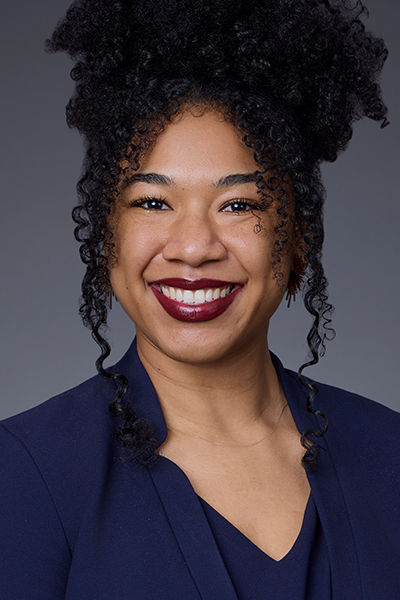
Finalist
Tasia Bos
Fifth-year graduate student
At UT Southwestern, Mrs. Bos has helped support the scientific community through leadership, focusing on advocacy, mentorship, and building a supportive student community. She proudly served in UTSW’s Graduate Student Organization in various roles, including President and Volunteer Chair, through which she organized volunteer and social events, advocated for peers, and facilitated communication between students and University offices. As Outreach Officer for The Association of African American Scientists at UTSW, she organized a graduate school application workshop and mentored more than 20 applicants.
Beyond campus, Mrs. Bos founded STEM Club, a monthly science program hosted at a public library for students ages 5 to 11 and their families. At meetings, attendees learn about STEM (science, technology, engineering, and math) topics, perform hands-on experiments, and interact with researcher speakers. She hopes to continue building bridges between the scientific community and the public to ensure that both progress and move forward together.
“Being selected for this scholarship is deeply meaningful to me, and I feel both grateful and humbled by this recognition,” she said. “It encourages me to continue supporting my peers and engaging the public through service, education, and meaningful connections.”
Through Mrs. Bos’ experiences, she’s learned the importance of leadership grounded in empathy and community – values she plans to stay true to throughout her scientific career. A Ph.D. candidate in the Molecular Biophysics Graduate Program, she aspires to become a principal investigator and lead her own independent research group.
“I hope to continue contributing to science not only through research, but also by strengthening the communities that support it,” she said. “My goal is to become a scientist who values discovery alongside mentorship, advocacy, and public engagement, helping to build trust between the scientific community and the public.”
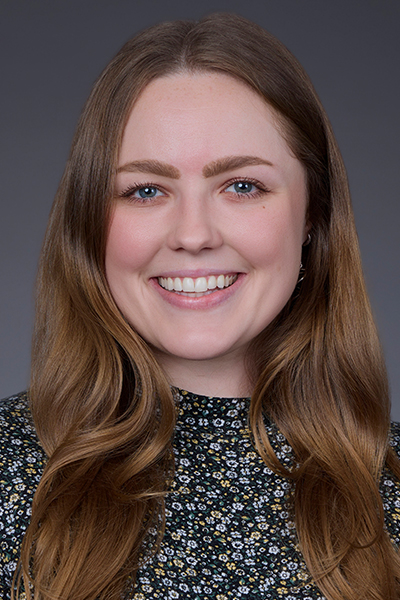
Finalist
Mandy Eckhardt
Fifth-year graduate student
Raised in a small East Texas town, Ms. Eckhardt discovered STEM opportunities were limited in her community. Recognizing this disparity, she dedicated herself to outreach projects, creating and developing hands-on activities for rural students to learn and experience excitement for science closer to home.
“It’s a special privilege to be chosen for this scholarship, as rural students are often overlooked and underprepared in pursuing STEM careers,” she said. “We are not any less talented, intelligent, or hardworking than our counterparts, but obstacles such as limited opportunities, little exposure to role models and mentors, and underfunded schools prevent many bright, promising individuals from establishing themselves in STEM fields.”
During her time at UT Southwestern, Ms. Eckhardt has volunteered with various campus initiatives, including the Health Professions Recruitment and Exposure Program (HPREP) and Science Teacher Access to Resources at Southwestern (STARS). She also participates in Girls Recognizing Our Worth (GROW), a program for fourth and fifth grade girls that offers science activities in rural areas across northeast Texas, through which she’s developed educational STEM lessons for students.
A Genetics, Development and Disease (GDD) Program graduate student, Ms. Eckhardt plans to pursue a career as a scientist in the biotechnology field. With her passion for science, she hopes to continue expanding STEM accessibility to rural communities.
“The MLK scholarship not only validates both my and others’ lived experiences as rural students, but it represents one step toward bridging the academic disparities faced by small-town students,” she said. “My goal is to develop a career focused on helping rural students across the country discover their passions for science and provide them with tools to pursue them.”