


New research program investigates how memories are disrupted and impact brain disease

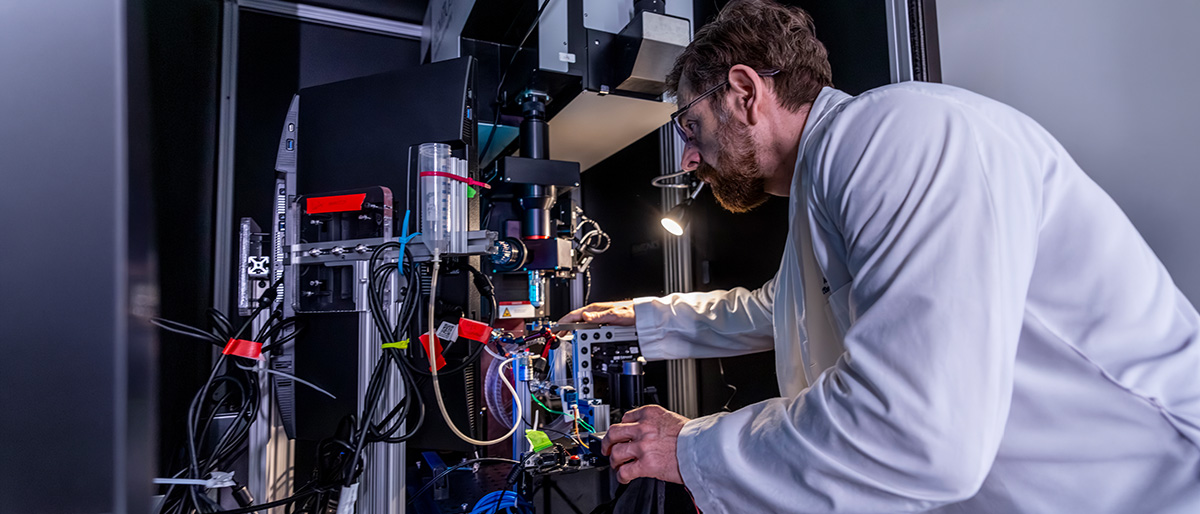
Researchers in the newly launched Program in Memory Longevity (PML) are working to gain insight into some of the most formidable brain conditions people face today – from aging to Alzheimer’s disease.
Headed by Attila Losonczy, M.D., Ph.D., a pioneer in cellular and circuit neuroscience, the program in the Peter O’Donnell Jr. Brain Institute at UT Southwestern will delve into how memories are formed, stored, and disrupted by age and disease. For Dr. Losonczy, who has spent his career studying how the brain encodes, consolidates, and retrieves memories, the challenge lies in better understanding autobiographical memories tied to personally meaningful experiences.
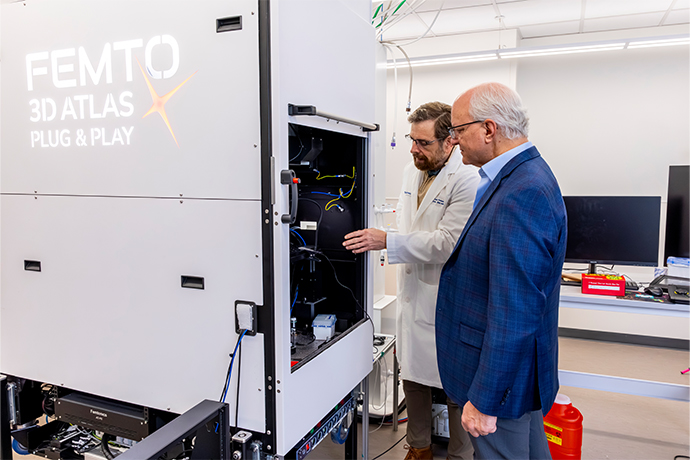
“We want to know what makes a memory long-lasting,” said Dr. Losonczy, Professor of Neuroscience in the O’Donnell Brain Institute (OBI). “How is it that we remember some things over a lifetime?”
While scientists have learned much about the role of the hippocampus in memory, many fundamental questions remain.
Dr. Losonczy’s area of expertise – cellular and circuit neuroscience – focuses on how interconnected neurons process information to produce complex functions such as memory. His team is investigating the neural dynamics underlying learning and memory in the mouse hippocampus. By combining cutting-edge imaging, electrophysiology, and behavioral approaches, PML investigators will aim to better understand memory encoding and dysfunction.
“We don’t yet know the mechanisms that allow memories to be stored over a lifetime,” said Dr. Losonczy, who joined UT Southwestern in September from Columbia University, where he was a Principal Investigator at the Mortimer B. Zuckerman Mind Brain Behavior Institute. “But we do know that memories are stored in relatively small groups of brain cells, and that when connections form between those cells, they become stronger.”
The research conducted within the PML exemplifies what UT Southwestern and the OBI strive to achieve: deep mechanistic insight with direct relevance to human health, said William T. Dauer, M.D., Director of the O’Donnell Brain Institute.
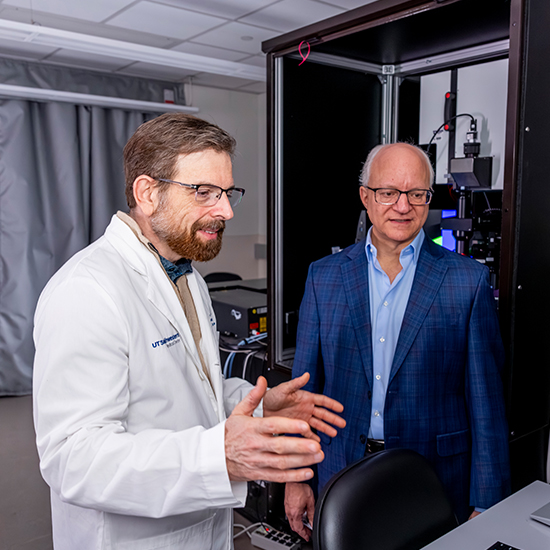
“Dr. Losonczy’s research tackles one of the most fundamental challenges in neuroscience – understanding how the brain encodes, stores, and retrieves memories,” Dr. Dauer said. “By revealing these processes at the level of individual neurons and circuits, his work opens a path to interventions that could preserve or restore memory as we age.”
Throughout his career, Dr. Losonczy has also focused on memory-related disorders, including how hippocampal damage contributes to epilepsy, schizophrenia, and other conditions. At UTSW, he is expanding this work to include memory impairment associated with aging and dementia.
Building a connective hub within the OBI
Beyond gaining a deeper understanding of memory, Dr. Losonczy is focused on strengthening the path from basic science to translational medicine, with the long-term goal of identifying new diagnostic tools and therapeutic strategies.
“I consider myself a basic scientist,” Dr. Losonczy said. “But here, there is a great and exciting opportunity for researchers to work together.”
The PML is being built with an intentional balance of experimental and theoretical neuroscience, integrating molecular, synaptic, circuit, and computational approaches to memory.
“The program’s hiring strategy emphasizes this breadth, bringing together faculty whose work spans biological mechanisms and quantitative theory,” Dr. Dauer said. “At the same time, PML is designed to function as a powerful intellectual node within the O’Donnell Brain Institute – producing distinctive, high-impact neuroscience while naturally connecting investigators across UT Southwestern.”
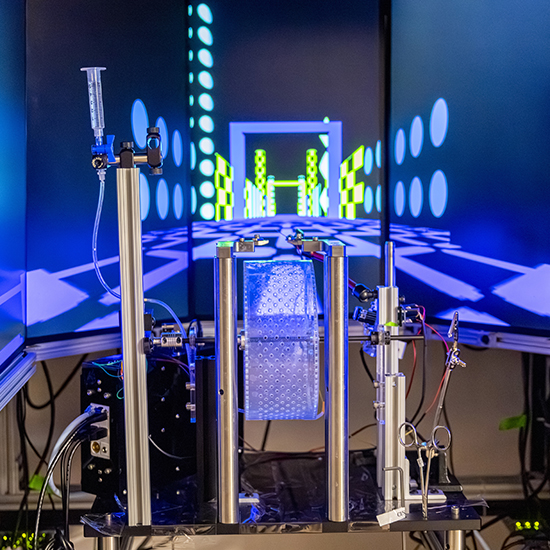
By fostering collaboration, sharing ideas, and linking basic, computational, and clinical research, the program aspires to enrich the broader neuroscience community on campus.
Dr. Losonczy’s goal of partnering with other researchers reflects the broader vision of the O’Donnell Brain Institute. For example, within the PML, he will collaborate with neurosurgeon Bradley Lega, M.D., Professor of Neurological Surgery, Neurology, and Psychiatry, to study fundamental processes of learning and memory in human brain tissue.
Dr. Losonczy said he was drawn to UT Southwestern by the opportunity to build a program working closely with physician-scientists on campus and beyond.
“Here, I can do the kind of work I’ve always dreamed of and paint on a larger canvas,” he said.
That vision extends internationally. Dr. Losonczy’s lab recently received a $12 million Synergy Grant from the European Research Council to decipher the neural code of learning and memory, in partnership with the Nusser Lab in Budapest, Hungary, and the Spiegel Lab at the Weizmann Institute of Science in Rehovot, Israel.
Dr. Losonczy is also a strong proponent of using new technologies to advance basic science. Artificial intelligence and machine learning, he said, will play an increasingly important role as neuroscience grapples with massive datasets.
“Something I am excited about is integrating tools like AI and machine learning with neuroscience,” he said. “Five to 10 years from now, I hope to know much more about how memories are processed – and how to identify therapeutic targets for diseases that disrupt them.”
Endowed Titles:
Dr. Dauer holds the Lois C.A. and Darwin E. Smith Distinguished Chair in Neurological Mobility Research.
Dr. Lega holds the William Kemp Clark Chair of Neurological Surgery.
Dr. Losonczy holds the Distinguished Chair in Brain Injury and Repair.