


Graduate student receives 2026 Ida M. Green Award for suicide risk and prevention research
Savannah Dieste’s work involving trauma and family impacts could help guide improved treatment


Studying how trauma influences clinical outcomes for high-risk suicidal adolescents might seem like a depressing topic, but Savannah Dieste, a graduate student in psychology, sees promise in the research.
“Yes, there are difficult moments,” she said. “But it sheds light and hope on a serious issue, and seeing patients progress in treatment really motivates me to continue working to help those who are most vulnerable achieve the same outcomes.”
The fourth-year doctoral student in UT Southwestern’s Clinical Psychology program hopes her research work will help clinicians improve youth suicide risk assessment and intervention, ultimately saving lives. In recognition of her research efforts, she will receive the 2026 Ida M. Green Award.
Each year, the Green Award is given to a female student in UT Southwestern’s Graduate School of Biomedical Sciences who has demonstrated a commitment to research excellence, the well-being of fellow students, and exceptional community service. The award is presented by Southwestern Medical Foundation and includes a $2,000 prize.
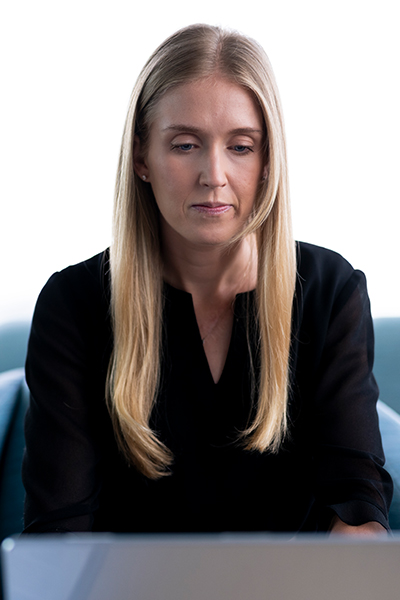
“Savannah Dieste is a wonderful example of the scholastic excellence and outstanding citizenship the Ida M. Green Award was created to recognize,” said Michael McMahan, President and CEO of Southwestern Medical Foundation. “Her research with trauma-exposed adolescents and their families is matched by a deep commitment to mentoring others and serving vulnerable communities, reflecting the spirit of Ida and Cecil Green’s lasting investment in UT Southwestern students.”
Ms. Dieste, who grew up in Dallas, said she always enjoyed studying science. But after earning a bachelor’s degree in psychology from UT Austin, her career path was undetermined.
Before starting graduate school, she volunteered at Dallas CASA (Court Appointed Special Advocates), an organization that helps abused and neglected youth in the child welfare system. The experience sparked her interest in understanding more about psychopathology following trauma.
She joined UT Southwestern as a Research Coordinator, where she worked primarily on a statewide study of mental health outcomes following traumatic events in childhood/adolescence as part of the Texas Childhood Trauma Research Network. The research initiative began in 2021 and is ongoing.
Ms. Dieste is working on completing her doctoral internship. She currently assists at the Suicide Prevention and Resilience at Children’s (SPARC) program at Children’s Medical Center Dallas.
Sunita Stewart, Ph.D., Professor of Psychiatry, said the Green Award recipient has the potential to be a leader and a standout in her profession.
“Students like Savannah are rare gifts who remind those of us lucky enough to work with her what the joy of teaching really means,” Dr. Stewart said. “Her impressive academic achievements are matched by a genuine collaborative spirit of empathy and humility.”
Ms. Dieste said Dr. Stewart’s mentorship has made a profound impact on her.
“She taught me many practical skills, but what she really helped me with was developing a mindset for the dedication and reflection that is required,” she said. “She instilled in me a passion for this research.”
For her dissertation, Ms. Dieste is investigating the effects of trauma exposure and symptoms on treatment outcomes – namely, reductions in the rates of depression and suicidal ideation – and clarifying the role of the family in inhibiting or promoting positive responses to treatment. By gathering subjective, qualitative data from adolescents to explore how trauma impacts at-risk suicidal youth and their families, she believes her findings will lead to more tailored treatment recommendations.
“Though underused, qualitative methods capture meaningful data that traditional quantitative measures miss,” she said. “Hearing personal stories of trauma and resilience brings life to the statistical findings and gives patients and parents a voice in their treatment.”
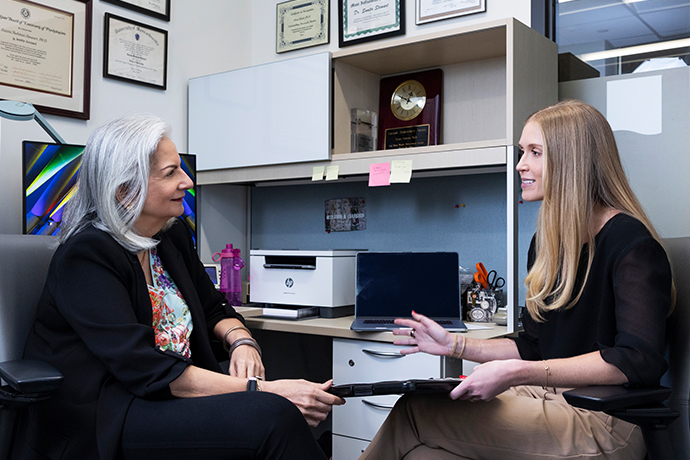
Due to the stigma and silence surrounding traumatic and suicidal experiences, some adolescents are hesitant to tell their stories, Ms. Dieste said. “Patients have said that because they have never felt able to talk about their trauma, they don’t understand it or know how to cope with it, and they feel completely isolated,” she said. “We need to provide education and offer them a safe space to talk about their experiences if or when they choose to, which also means we must be able to tolerate having these difficult conversations and help families do the same at home.”
Beyond her trauma research, Ms. Dieste serves her peers as class representative on the Clinical Psychology Student Leadership Council and as co-Chair of the Student Research Committee. She has partnered with the Dallas International Rescue Committee to conduct research on mental health beliefs while she continues to volunteer with Dallas CASA as an advocate. She also is a student representative for the Association for Behavioral and Cognitive Therapies (ABCT) Child and Adolescent Depression Special Interest Group, a national organization that disseminates evidence-based research on youth depression and facilitates collaboration between researchers and practitioners.
After graduation, Ms. Dieste plans to pursue a postdoctoral fellowship in clinical psychology, where she will continue working primarily with adolescents and honing her psychotherapy skills before deciding on long-term career goals in clinical practice, academic research, or both. She plans to continue her work raising awareness of risk and protective factors for suicidal and trauma-exposed youth, searching for ways to better address and prevent these growing public health threats.