


Insightful discussion and cultural displays highlight First Nations Celebration

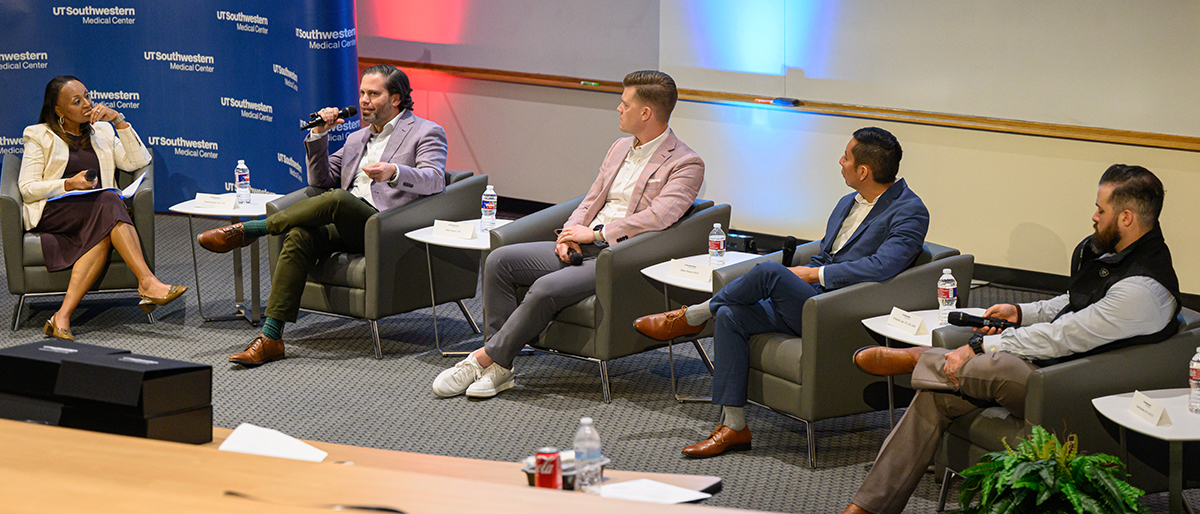
The second annual First Nations Heritage Month Celebration honored the beauty of Native American culture and offered insight into how one’s heritage and traditions can impact communal health.
Hosted by the Office for Institutional Opportunity, the event featured a discussion that explored the intersection of Indigenous and Western medicine with panelists Timothy J. Brown, M.D., M.S.C.E., Assistant Professor of Internal Medicine at UTSW; Heath Clayton, M.S., Adjunct Professor at Southern Methodist University (SMU) Cox School of Business and Executive Director at the National Fund for Excellence in American Indian Education, the foundation for the Bureau of Indian Education (BIE); Christopher Logan, LPC, LCDC, Behavioral Health Manager at Texas Native Health; and Blake Weaver, M.B.A., Associate Director at UnitedHealth Group.
Dr. Brown shared that Western medicine’s scientific methods have made great strides in reaching and helping Native Americans understand the best courses of treatment, but there remain limitations.
“In oncology, Native American enrollment in evidence-based medical studies is less than 1%, so while something may work at a population level, we don’t see if it works for specific populations, such as the Native American community, which creates major gaps,” he said.
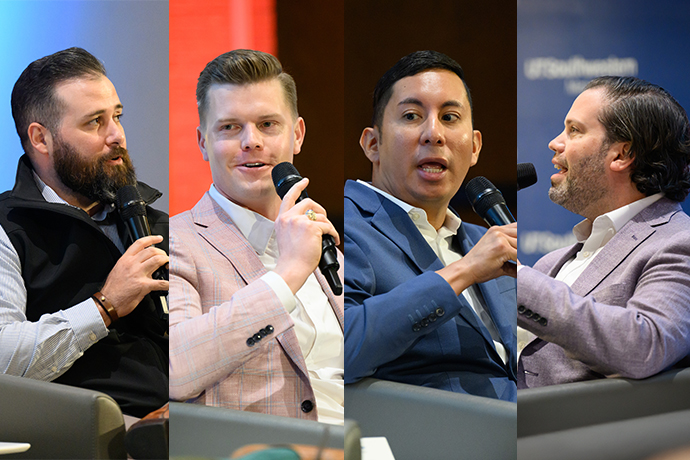
Mr. Weaver spoke about Indigenous medicine, where traditional healing practices, knowledge, and beliefs are rooted in its culture and history.
“A huge part of Indigenous medicine is the connection to our community. So much has happened to the generations who lived before us; our ceremonies and the ways we pray have been significant to how we cope, and our approach to healing versus curing is a key part of what makes it important,” he said.
Mr. Clayton discussed health care accessibility barriers that some Native American communities have faced, including relocation, environmental changes that have affected traditional ecologies, and intergenerational trauma. Despite these challenges, he noted, there are many positive effects of Native culture, such as high COVID-19 vaccination rates in Native American communities based on the prioritization of safety and care for elders.
“When thinking about access to care and how it plays into culture, it’s not a one-size-fits-all solution,” he said, reflecting that each Native American patient and tribe may have different needs and strengths.
Mr. Logan talked about successes he has seen in his behavioral health approaches for Indigenous communities, such as helping patients draw from their own cultural backgrounds in support of their care. This method has yielded positive results in his clients’ mental health journeys and, in turn, also inspires their family members to seek services. He encouraged health care providers to speak with patients about their cultures and traditions as it can help them gain a better understanding of their patients.
“There are hundreds of Native American tribes, and it’s important to keep that in mind as what works for one may not work for all as there may be geographical and cultural differences,” he said.
The panelists also spoke about improving health care for Native American communities through increasing accessibility, outreach, and education.
“By embracing Indigenous communities and practices, it can allow providers to increase empathy and understanding, and enable a foundation to address needs and help patients build trust,” Mr. Weaver said.
Mr. Clayton, who also serves as Board Chair for Texas Native Health, said the organization’s Dallas facility offers health care services, counseling, activities, and resources for Native Americans, enriching the lives of the Indigenous population to ensure that culture, identity, and tradition live on. He emphasized that all have the power to play a role in advancing health care for Indigenous populations.
“We need everyone to be allies and bridges. You don’t need to be experts in culturally competent care or tribal issues if you aren’t Indigenous, but you can be informed, ask questions, and connect to people. Be that bridge for patients in the future,” he said.
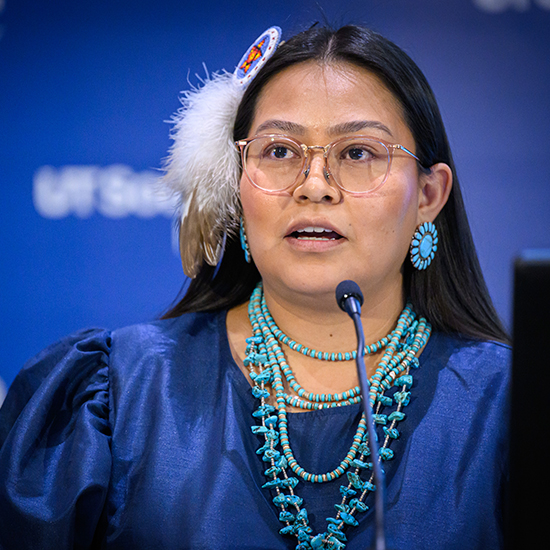
A representative of UT Southwestern’s First Nations Intertribal Alliance Business Resource Group (FNIA BRG) also spoke at the celebration. The BRG promotes and teaches the cultures of tribal affiliations while advancing the needs and professional development of the tribal community at UTSW. Open for all to join, its goal is to create an inclusive environment committed to healing, educating, and discovering.
Chamisa Piechowski-Begay, M.B.A, FNIA BRG Events Lead and Traffic Manager in Advancement Strategy & Operations, discussed the importance of working together with the purpose of improving health for all.
“Today is about connection between people, practices, and communities, looking at how traditional Indigenous healing practices and Western medicine can support and strengthen one another,” she said. “Each brings wisdom and a shared commitment to caring for our people. When we come together with respect and openness, we make space for learning, understanding, and new ways of healing.”
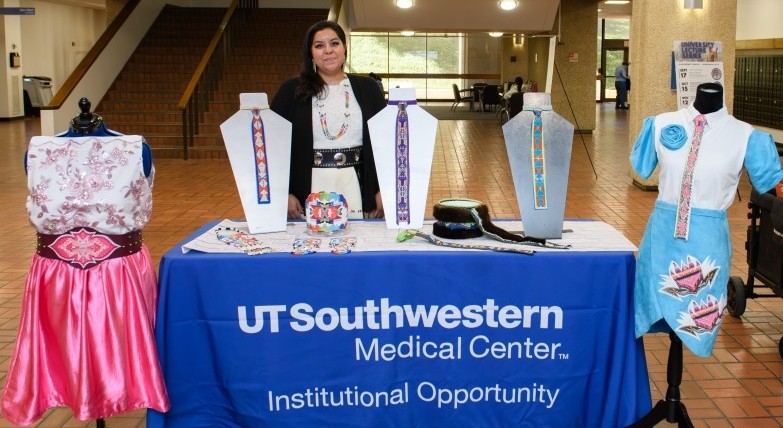
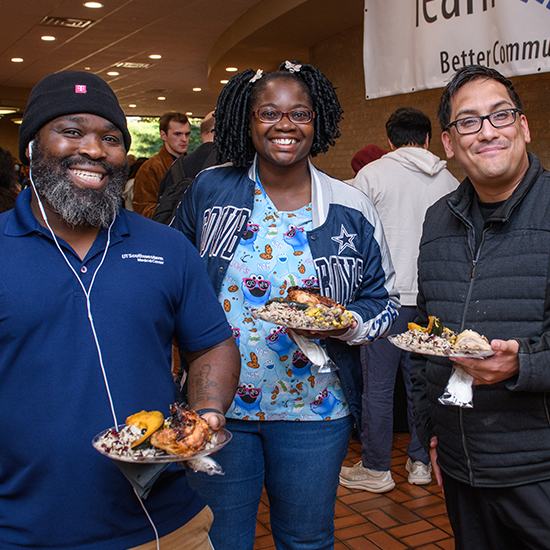
The celebration began with a light lunch reception of Native American-inspired dishes and a cultural craftwork display from visionary artist Amanda Wilson, creator of Weryackwe Tie Co. and a member of the Comanche, Kiowa, and Choctaw Nations, whose work blends unique fashion with Indigenous culture.