


Looking forward: Better ways to take a closer look

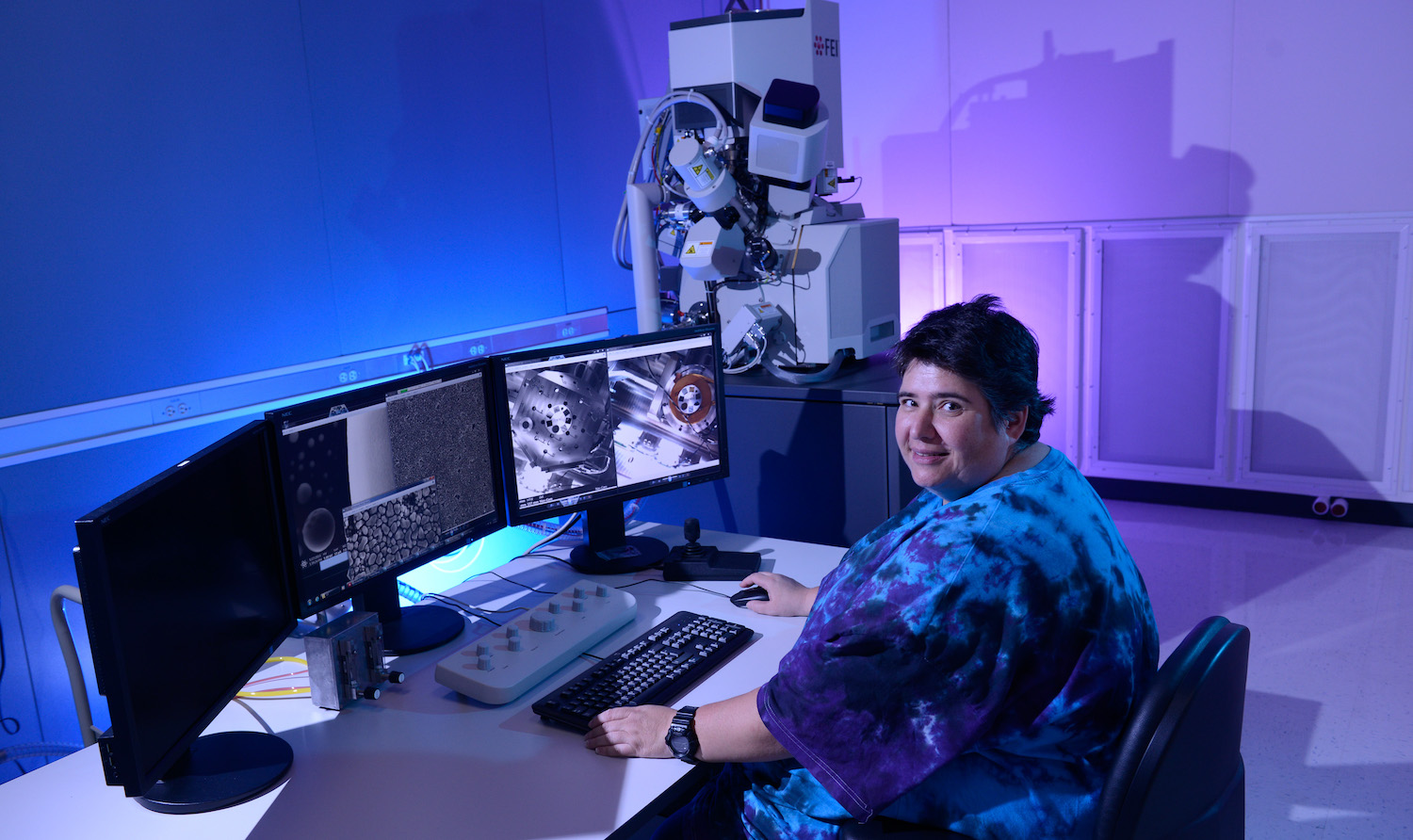
From investing in the most advanced cryo-electron microscopy to building novel 3-D optical microscopes for cancer studies, UT Southwestern is at the forefront of using and creating the technologies needed to take a closer look in our continuing efforts to advance biomedical discovery.
From humble beginnings in repurposed barracks in the 1940s, UT Southwestern Medical Center has grown to encompass over 13 million square feet of building space, with another million or more under construction. Research expenditures for 2016-17 totaled $454.9 million, up from $155.4 million 20 years ago. This support funds more than 4,000 research protocols.
UT Southwestern participates in a constant cycle of evaluating and acquiring technologies to share across the campus in support of ever expanding lines of research in the basic and clinical sciences.
“As our faculty grows, so does the breadth of expertise we have available to develop new technologies.”
“We listen to what our investigators tell us regarding up-and-coming methods and then ask: Who will benefit from a given technology? What is the investment required in terms of equipment, personnel, and space? How long is the technology expected to remain cutting-edge? The ideal investment advances research programs in many laboratories, crosses disciplines, and holds the potential to continue to do so for years on end,” says Dr. David Russell, Vice Provost and Dean of Research.
The institution also considers how adaptable a method is to scaling up. Some technologies are too esoteric and would only benefit the few, while others would require customizing for each experiment.
Timing is an issue as well. Some technologies are still evolving and have yet to reach a level where they can be standardized.
“One approach we are beginning to take is to develop a technology on campus and then teach our investigators how to use the new method. As our faculty grows, so does the breadth of expertise we have available to develop new technologies,” says Dr. Russell, a Professor of Molecular Genetics and holder of the Eugene McDermott Distinguished Chair in Molecular Genetics.
All of this is possible because of a unique culture. At UT Southwestern, early career scientists meet world-renowned researchers when walking down the hall or attending a lecture. These “chance” meetings provide opportunities to ask questions that can lead to productive collaborations, he says, adding: “As often happens, the development of a new technology arises from a meeting of diverse minds and a shared desire to answer a challenging question in biomedical research.”