


Liu named Sloan Research Fellow in Neuroscience
Award will support research using a new model to study the molecular basis of the seasonal clock

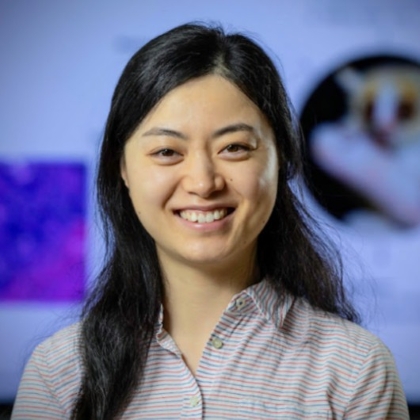
Shixuan Liu, Ph.D., Assistant Professor of Neuroscience and in the Peter O’Donnell Jr. Brain Institute, has been selected as a 2026 Alfred P. Sloan Research Fellow in Neuroscience. Providing $75,000 over two years, the highly competitive fellowships are awarded annually to early-career researchers whose creativity, innovation, and research accomplishments distinguish them as the next generation of leaders. She is the ninth UTSW Sloan Research Fellow.
“Dr. Liu has performed foundational work to establish a new seasonal primate model, the mouse lemur, which provides a perfect model for the study of the circannual clock,” said Joseph Takahashi, Ph.D., Chair and Professor of Neuroscience, who nominated Dr. Liu for the award.
Trained as a systems biologist, Dr. Liu earned a bachelor’s degree in biology from Peking University followed by a Ph.D. in molecular genetics from the University of Toronto. As a Wu Tsai Neuroscience Interdisciplinary Postdoctoral Scholar at Stanford University, she pioneered the development of the mouse lemur as a new primate model organism. Dr. Liu was recruited to UT Southwestern in 2025 as a Cancer Prevention and Research Institute of Texas (CPRIT) Scholar.
The Liu Lab is currently using the mouse lemur model to study major unresolved problems that are inadequately represented in traditional model systems, including seasonal rhythms, neurodegeneration, and cancer immunology.
Among the smallest primates, mouse lemurs share many of the practical advantages of laboratory mice, including rapid reproduction and short generation times, but they are genetically closer to humans. They also exhibit striking annual cycles of body weight, torpor, and gonadal development, and maintain robust seasonal rhythms in lab colonies. These traits make them an ideal model for studying the circannual clock, a biological timekeeping mechanism that regulates seasonal behaviors and physiology, Dr. Liu said.
Seasonal rhythms such as hibernation, migration, and reproduction are widespread in nature. Humans also show seasonal changes in mood, sleep, and the risk of many diseases, ranging from neurological and psychiatric disorders to cardiovascular conditions. However, the biological mechanisms that allow the brain and body to track the seasons remain largely unknown. Dr. Liu and her team hope to uncover the molecular basis of the seasonal clock, an internal timing system that enables organisms to anticipate and adapt to seasonal changes, she said.
“Seasonal rhythms remain a major unresolved area in fundamental biology. Our research aims to lay a mechanistic foundation for understanding how long-term biological rhythms shape brain function, physiology, and behavior, and why many diseases worsen at specific times of year,” she explained.