


Zimmern named inaugural UTSW Medical Student Research Mentor of the Year

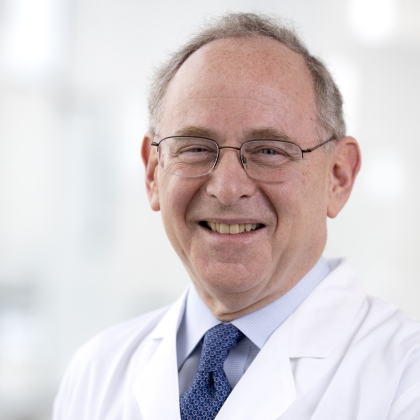
When the Office of Medical Student Research sounded the call for nominations for its first Mentor of the Year award, students readily responded with thoughtful submissions for 17 faculty members – with multiple learners sharing about the enduring impact of Philippe Zimmern, M.D., Professor of Urology.
Among the many appreciative comments: “Dr. Zimmern’s contributions to my growth are concrete, lasting, and deeply meaningful. He has taught me the invaluable lessons of how to think like a scientist.”
Mentees pointed to Dr. Zimmern’s strong support of both their clinical learning and research development. Offering line-by-line feedback on drafts, he encouraged them to think beyond the numbers and shared his insight on how to anticipate criticism, turn raw data into a compelling narrative, defend the logic of their methods, and communicate complex ideas concisely.
“His investment in my growth has shaped my confidence, my curiosity, and my commitment to evidence-based care,” a student nominator wrote.
The words are a fitting description for UT Southwestern’s inaugural Medical Student Research Mentor of the Year.
“Dr. Zimmern consistently demonstrated to his students how to conduct high-quality research projects at every step, from inception to completion. His intentional mentoring style, meticulous attention to detail, and commitment to scientific integrity and excellence were among the outstanding attributes his students noted,” said Benjamin Chong, M.D., M.S.C.S., Associate Dean for Medical Student Research.
“Reading the supportive comments has inspired me to become a better mentor for my students,” added Dr. Chong, also Professor of Dermatology. “They reinforce how special of a place UT Southwestern is and emphasize the positive impact UT Southwestern faculty have on the next generation of physicians.”
Dr. Zimmern said he is grateful to Dr. Chong and his team for highlighting the importance of mentoring.
“They thought of recognizing those of us dedicating time to mentoring, one of our three academic pillars, but one often pushed aside due to the major daily demands of the other two – patient care and clinical research,” he said.
Dr. Zimmern describes his mentoring style as “very hands-on.” In his first meeting with a student, he explains what he does in his urological specialty.
“Then I try to find a few projects linked to their past training or experience, present the project to the student, and let the student think it over,” he said.
Dr. Zimmern helps the student with the required paperwork for the project and sets a timeline for data acquisition, manuscript preparation, and abstract submission. Mentor and mentee meet at regular intervals until the project is complete.
“I enjoy seeing the progress made from beginning to end and the confidence it gives the student,” Dr. Zimmern said. “This is a demanding process that leads to a lot of time together, fun interaction, and getting to know them on a personal level.”
Several of his mentees have chosen to go into urology, while others forged paths in internal medicine, anesthesia, and various surgical specialties.
“They will undoubtedly become the next generation of mentors,” he said. “That is a great reward – passing the baton to the next generation.”
Dr. Zimmern received his medical training at the Necker-Enfants Malades Hospital in France. After completing a urology residency in Paris, he spent a fellowship year at UCLA, followed by a second residency in urology at UCLA. He practiced in Los Angeles for eight years before joining the UTSW faculty in 1995.
Dr. Zimmern has served as a visiting professor across the world. His clinical specialties include urinary incontinence, pelvic organ prolapse, voiding dysfunction, urodynamics, fistula and urethral diverticulum repairs, mesh implant complications, and urinary tract infections. He also specializes in vaginal surgery with native tissue repair and in minimally invasive robotic surgery for prolapse.
In 2018, he received an inaugural Leaders in Clinical Excellence Patient and Family Recognition Award, and in 2023 he was named Director of the newly endowed John and Felecia Cain Center for Bladder Health.
His advice to would-be mentors is simple: Do to others as it was done to you.
“We all received mentorship in our medical education,” he explained. “Share your talents with those in the next generation around you and surely you will find young and energetic minds, as you were in your beginning, to follow that same path and take on these new challenges.”