


Ho named Texas Physician Assistant of the Year
Development of stroke education program, mentorship, and volunteer work cited as examples of excellence

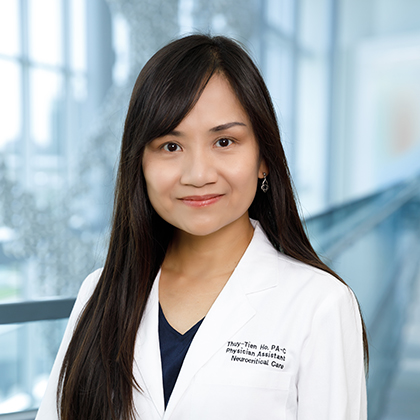
The Texas Academy of Physician Assistants (TAPA) has selected Thuy-Tien Ho, M.P.A.S., PA-C, a Physician Assistant in the Department of Neurology’s Division of Neurocritical Care, as its 2025 Physician Assistant of the Year. The statewide honor recognizes her exemplary service to the physician assistant (PA) profession, to her community, and to advancing the role of PAs.
“I am profoundly grateful for this recognition – it reminds me to stay grounded and appreciative of all those who have guided, supported, and inspired me throughout my journey,” she said.
After spending the first five years of her career as a neurology PA at a private practice, Ms. Ho sought a deeper experience within an academic environment. In 2013 she found the perfect opportunity at UTSW’s Neuroscience ICU, which she describes as the ideal blend of neurology, neurosurgery, critical care, and emergency medicine.
“At UT Southwestern, I am proud to say that I work at the cutting edge of medicine, with exceptional opportunities to practice the most advanced and innovative care as new research and best-practice guidelines continue to emerge,” she said. “I love the collaboration and compassion among our multidisciplinary teams. What inspires me the most is the brain’s involvement in consciousness and personality: Each patient is unique, and regardless of the specific neurological injury, we must integrate the patient’s values, culture, spiritual beliefs, and goals of care.”
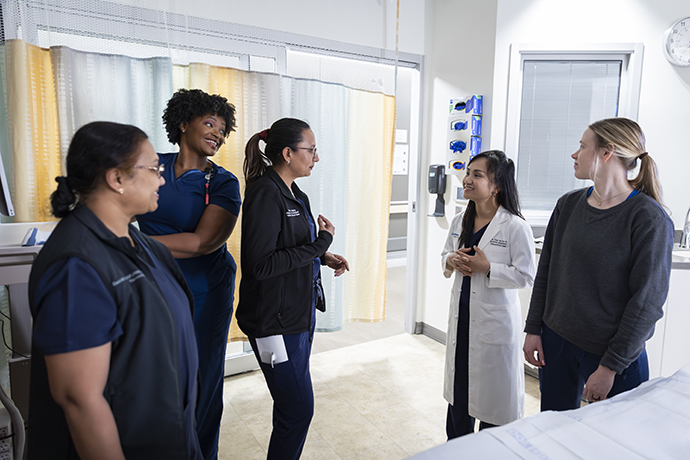
Since 2016, Ms. Ho has served as course director for UTSW’s monthly Neurocritical Care Lecture Series (NCCLS), which grants stroke and continuing education credits. In this role, she collaborates with stakeholders to identify practice gaps, develop content aligned with institutional needs, and ensure Nursing Continuing Professional Development (NCPD) and continuing medical education (CME) credit eligibility for nurses, pharmacists, therapists, advanced practice providers, physicians, medical students, residents, and trainees. Under her leadership, the small educational lunch meeting has expanded into an academic lecture series that draws 40-90 attendees monthly, with recordings of some lectures reaching over 1,200 online views. The NCCLS has engaged professionals from 41 distinct entities, including medical universities, private practices, device and pharmaceutical research companies, and other professional organizations in Texas and beyond.
In the words of Ms. Ho’s award nominator: “Her leadership in stroke education has transformed care quality across our Health System and partner institutions.”
“The continued growth in attendance underscores the program’s value,” Ms. Ho explained. “What I love most about this role is bridging our speakers’ expertise with diverse learning needs – creating a meaningful knowledge exchange that enhances practice, supports professional growth, and promotes high-quality, comprehensive stroke care.”
Ms. Ho also shares her knowledge and experience through precepting APP students, participating in UTSW’s Advanced Practice Provider Mentorship Program, and engaging in broader community outreach to promote neurocardiovascular health awareness and encourage lifestyle changes. Several years ago, she began volunteering with the Dallas nonprofit Brother Bill’s Helping Hand, sharing information on healthy lifestyles in group sessions for women. As a graduate student – she is working on a Ph.D. in Health Studies with a focus on population health at Texas Woman’s University – she received a 2023-24 Albert Schweitzer Fellowship. During this leadership development program, she created “1:1 Health Promotion” sessions, through which she provided individually tailored chronic disease prevention guidance to women involved in Brother Bill’s programs.
“My ultimate goal is to complete my Ph.D. and become more involved in research while developing and implementing community outreach initiatives focused on health promotion and disease prevention, especially in underserved communities, while continuing to practice clinically as a neurocritical care PA,” she said.