


Pool receives McKnight Award for research seeking opioid alternatives for pain management

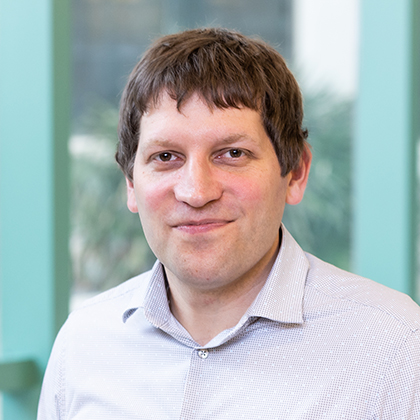
Allan-Hermann Pool, Ph.D., Assistant Professor of Neuroscience and Anesthesiology & Pain Management and in the Peter O’Donnell Jr. Brain Institute, has been selected to receive a 2025 McKnight Neurobiology of Brain Disorders (NBD) Award to support his research to identify new cellular and molecular targets for spinal cord-based pain interventions.
Presented by the McKnight Endowment Fund for Neuroscience, the NBD Award provides a total of $300,000 over three years to scientists applying basic research to human brain disorders. It includes an invitation to participate in the annual McKnight Conference on Neuroscience in Aspen, Colorado, for the next three years and then every third year thereafter.
“The McKnight Neurobiology of Brain Disorders Award gives us the exciting opportunity to bridge our efforts to understand cellular mechanisms underlying pain processing to new translational efforts that control the experience of pain,” Dr. Pool said. “In broad strokes, we seek to understand how the spinal cord translates tissue injuries into perception of distinct types of pain and aim to develop a new therapeutic strategy to intervene in pain processing.”
More than 8% of the U.S. adult population suffers from high-impact chronic pain that sometimes requires lifelong management with strong side-effect prone analgesics such as opioids, he explained.
“We hope to relieve at least some of this public health burden by shedding light on the cellular players generating the experience of pain and directly targeting these cell classes for pain intervention,” he said.
In particular, Dr. Pool and his team are studying spinal cord projection neurons. These cells relay pain information from the spinal cord to the brain and are required for all pain perception below the neck. In prior work, the Pool Lab found and characterized the molecular properties of a dozen types of spinal projection neurons. The McKnight Award will enable the researchers to explore the roles of these cells in acute and chronic pain processing as well as develop and test precision targeting agents.
“We hope to establish a clear cell-type level understanding of how different pain qualities are relayed to the central brain and how these parallel pain communicating pathways orchestrate adaptive and sometimes maladaptive pain behaviors such as chronic pain states,” Dr. Pool said. “A second goal is to develop a set of spinal projection neuron targeting molecular agents that would enable us to intervene in this system and eliminate pain in an anatomically confined and cell-type restricted manner. Ultimately, we hope to demonstrate the feasibility of a single-administration pain management solution that could serve as an alternative to opioids and their accompanying problems.”
A native of Estonia, Dr. Pool earned his bachelor’s degree from Tallinn University of Technology and his Ph.D. in neuroscience from the University of California, Berkeley. Following postdoctoral work at the California Institute of Technology, he joined the UTSW faculty in 2021.
In June, Dr. Pool was named to the 2025 class of Rita Allen Foundation Scholars, which includes seven early-career biomedical sciences leaders whose research holds exceptional promise for revealing new pathways to advance human health. As a Rita Allen Scholar, Dr. Pool will receive grants of up to $50,000 annually for up to three years to study how pain information is processed in the spinal cord.