


Chen receives New Investigator Award for infertility research

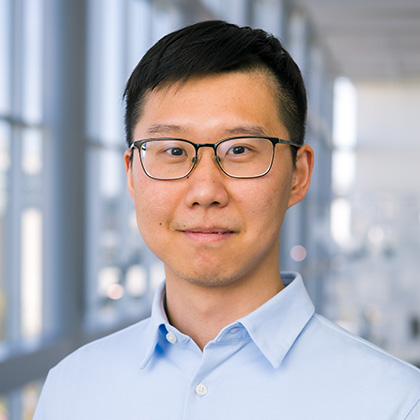
Male factors contribute to about half of all infertility cases among couples worldwide, and defects in spermatogenesis – the biological process of sperm production – are a primary cause of male infertility. Haiqi Chen, Ph.D., an Assistant Professor in the Cecil H. and Ida Green Center for Reproductive Biology Sciences and of Obstetrics and Gynecology, and his team are trying to unravel how human spermatogenesis works, knowledge that could lead to new treatment options for infertile patients.
“We have leveraged cutting-edge genomics approaches to identify critical secretion factors produced within the testicular microenvironment that may facilitate human spermatogenesis,” Dr. Chen said. “These secretion factors may be the ‘missing ingredients’ needed to support the generation of functional sperm in a dish – a technology that would tremendously benefit patients who can’t produce any sperm, including young boys who undergo chemotherapy or radiation for cancer treatment before puberty.”
For his work, Dr. Chen will receive the Virendra B. Mahesh New Investigator Award from the Society for the Study of Reproduction (SSR), a global association of more than 1,200 scientists, veterinarians, students, and physicians representing over 50 countries. The Mahesh Award recognizes outstanding research – based on originality, significance, and impact – published within 12 years of the author receiving a Ph.D. and will be presented at the SSR Annual Meeting in Indianapolis in July.
“This award is a recognition of our team’s hard work from the repro community and is also an encouragement to continue doing what we do,” Dr. Chen said.
Currently, the Chen Lab is applying the newest available tools to old, unresolved questions, with the hope of finding answers that will help improve human reproductive health.
For example, among all human organs, reproductive organs such as the testes and placenta express the largest number of transcripts – genetic instructions – derived from human endogenous retroviruses (HERVs), a phenomenon that has puzzled many reproductive biologists, Dr. Chen said.
“HERVs are genomic remnants of ancient retroviruses that infected our ancestors millions of years ago and have since become an integral part of the human genome,” he explained. “We and others have evidence to suggest that our cells in the reproductive systems have learned to adopt HERVs to ensure successful reproduction. We are now employing a variety of high-throughput sequencing and high-resolution imaging-based approaches to study how our cells do it.”
Dr. Chen is a recipient of the Lalor Foundation Fellowship in Reproductive Health and SSR’s 2024 Rising Star Award. He completed his Ph.D. in molecular endocrinology through a joint program between the University of Hong Kong and the Population Council at Rockefeller University, followed by postdoctoral training at the Broad Institute of MIT and Harvard. He joined the UTSW faculty in 2021.