Skip to main content About News Giving All Departments Contact Us Site Map
 University of Texas Southwestern Medical School
 
Search       
Print Friendly  
spacer Home Education Research Patient Care Faculty & Administration Resource Careers
Medical School Graduate School of Biomedical Sciences Allied Health Sciences School Residencies & Fellowships Program Directory Students & Alumni Continuing Education
spacer | Home > Education > Graduate School >
UT Southwestern
Graduate School Home

Neuroscience Graduate Program

APPLY NOW spacer
spacer
spacer
Search for Faculty
by Research Interests
 
 
Search for Faculty
by Name
 

bestGradSchool
 
 rss RSS        rss Podcast
spacer


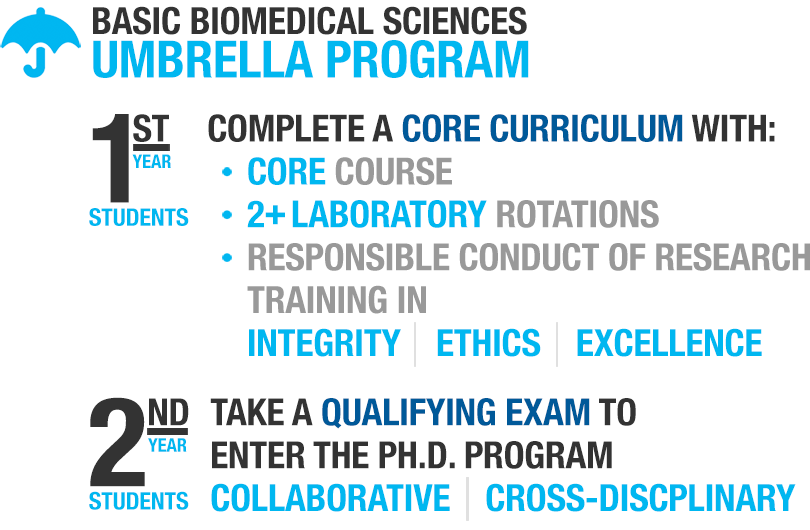
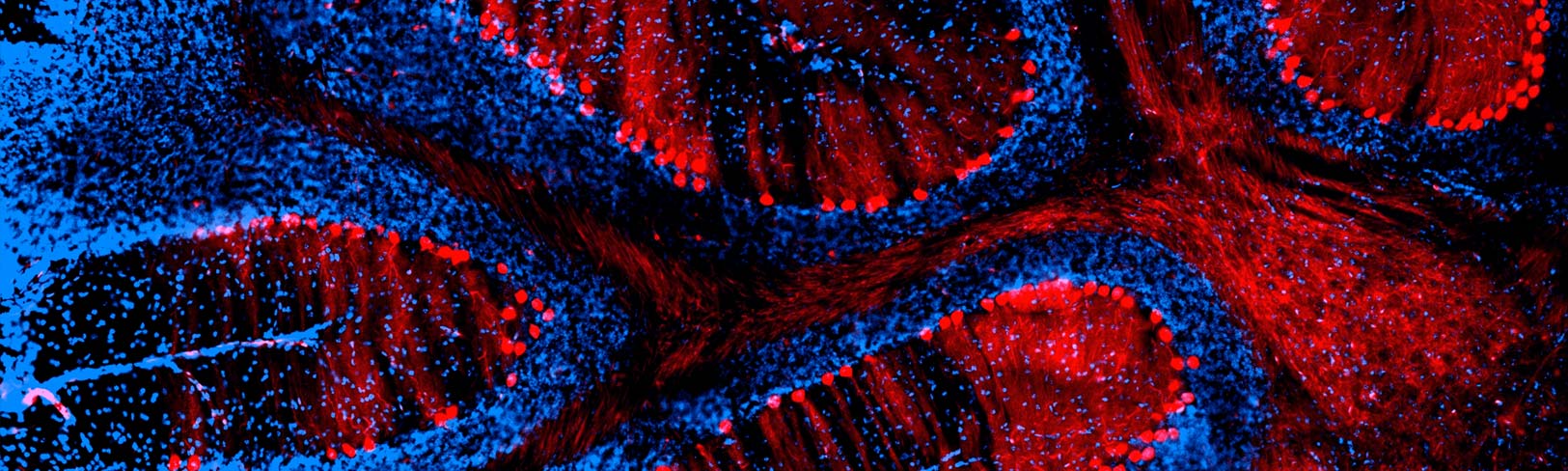
A cultured neuron (green) decorated with a post-synaptic marker (red) OverviewNeurobiology is a field defined, not by a specific intellectual approach or experimental technique, but by its subject matter: the cells of the nervous, sensory, and muscular systems. Because of the variety of methods that must be brought to bear in the studies of these systems, the optimal training for a career in neurobiological research includes an in-depth exposure to the principles of biochemistry, biophysics, cell and molecular biology, developmental biology, genetics, immunology, pharmacology, and physiology.  By providing a background in these areas, the First Year Curriculum offers appropriate training for students who elect to join the Neuroscience Program.

The research of the faculty of the Neuroscience Program focuses on cellular and molecular neurobiology, and behavioral neuroscience. Topics of particular interest include: membrane biophysics, especially the operation and modulation of ion channels; neuronal organelle traffic, particularly the synthesis, axonal transport, and release of synaptic and secretory vesicles; developmental neurobiology; neurogenetics of invertebrates and vertebrates; and the molecular and cellular basis of complex behavior.

After successfully completing the DBS Core Course , a student selects a mentor and commences dissertation research. Students are expected to participate in the Neuroscience Journal Club, which provides the opportunity to keep abreast of recent research results, sharpen critical acumen, and develop speaking skills.  The Neuroscience Program offers a series of advanced graduate seminar courses, designed not only to provide knowledge about a given topic, but also to confer a detailed understanding of experimental procedures and to promote clear presentation of ideas and arguments. Course topics include developmental neurogenetics, neurotransmission, molecular motors, ion-channel modulation, sensory maps, genetic neurological diseases, memory and long-term potentiation, neuronal circuits and behavior, and the neuronal cytoskeleton.

 For more information on the Neuroscience Graduate Program, please contact Kasey Thompson, Program Assistant, at (214) 648-1802, or refer to the Southwestern Graduate School of Biomedical Sciences Catalog


18 Quick Facts - Required Characteristics of Texas Public Doctoral Programs

Degree Plan

Course Descriptions


Faculty

Program Chair:  Ege T. Kavalali

Leon Avery -- Neurogeneics of Caenorhabditis elegans.

Ilya B. Bezprozvanny -- Calcium channels and calcium signaling in the nervous system; deranged calcium signaling and neurodegeneration in Huntington's and Alzheimer's disease.

James A. Bibb -- Signal transduction in the nervous system, with emphasis on the biochemistry and neuropharmacology of protein phosphorylation/dephosphorylation.

Stephen Cannon -- How ion channels regulate electrical excitability of cells and of how defects in these channels lead to human disease.

Roberto Coppari -- Cellular mechanisms and neuronal pathways controlling glucose and energy homeostasis.

Christopher Cowan -- Molecular mechanisms of axon guidance and synapse formation/remodeling.

Amelia Eisch -- Function of adult neurogenesis in the brain.

Jeffrey Elliott -- Molecular and cellular basis for function of the ALS  disease gene SOD1

Joel Elmquist -- Functional neuroanatomy of the mammalian hypothalamus.

Jay Gibson -- The electrophysiology of rodent sensory neocortex: cellular, synaptic and systems properties.

Matthew S. Goldberg -- Molecular mechanisms of inherited forms of Parkinson’s disease.

Carla Green -- Molecular mechanisms of circadian rhythms and how they control metabolism

Robert W. Greene -- Control and function of sleep/wake states; system mechanisms of NMDA hypofunction-related cognitive defects.

Mark Henkemeyer -- Molecular biology of axon guidance.

Robin Hiesinger -- Neurogenetics; brain wiring/synaptic specification; synapse function/neurotransmitter release membrane fusion; computational approaches to 4D visualization and simulation.

Donald W. Hilgemann -- Function and regulation of membrane transporters; electrophysiology; biophysics of ion pumps and channels.

Jenny Hsieh  -- Stem cell biology; neurogenesis and gliogenesis in CNS; chromatin remodeling; neurological diseases.

Kimberly M. Huber -- Physiology and cellular mechanisms of synaptic plasticity.

Qiu-Zing Jiang -- Structural studies of ion channels and other large macromolecules using both single molecule cryo-electron microscopy and crystallography and functional analysis of these proteins in both in vitro and in vivo systems.

Jane E. Johnson -- Molecular biology of mammalian neural development.

Rolf H. Joho -- Molecular and cellular neurobiology; structure/function studies of ion channel proteins.

Ege T. Kavalali -- Mechanisms underlying synaptic transmission and plasticity in the brain. 

Helmut J. Krämer -- Genetic dissection of endocytic trafficking in Drosophila.

Shuxin Li -- Axonal regeneration in the central nervous system; cell death and neuronal survival; spinal cord injury.

Weichun Lin -- Developmental neurobiology.

Qing Richard Lu -- Differentiation mechanisms in the mammalian central nervous system: gliogenesis as a model.

Colleen McClung -- Molecular mechanisms of mood disorders and drug addiction.

Lisa Monteggia - Elucidating Antidepressant Efficacy; A Functional Molecular and Behavioral Approach to Autism Spectrum Disorders; Cellular Basis of Psychiatric Disorders

Luis F. Parada -- The role of proto-oncogenes in vertebrate development; trk receptors and neurotropins.

Juan Pascual -- Animal and cellular models of neurogenetic disorders. Synaptic transmission in experimental epilepsies. Disorders of brain energy metabolism. Developmental neurobiology. Genotype:phenotype correlations in novel childhood encephalopathies. Clinical pediatric neurology.

Andrew Pieper -- Molecular mechanisms of neuropsychiatric disease.

Craig Powell -- Molecular and cellular mechanisms of cognition with an emphasis on learning and memory.

Janine Prange-Kiel -- Regulation of hippocampal aromatase expression and its impact on synaptic plasticity, the role of aromatase in Alzheimer's Disease.

José Rizo-Rey (Josep Rizo) -- Structural analysis by nuclear magnetic resonance of proteins involved in calcium-triggered synaptic vesicle exocytosis.

Adrian Rothenfluh - Genetics and neurobiology of behavioral responses to drugs of abuse in the fruit fly.

David W. Self -- Neurobiology of motivational systems and drug addiction.

Dean P. Smith -- Molecular biology of sensory transduction in Drosophila.

Joe Takahashi -- Molecular and Genetic Analysis of the Mammalian Circadian Clock System

Carol Tamminga -- Schizophrenia; postmortem brain; human brain imaging; human translational neuroscience.

Jonathan Terman -- Axonal growth and guidance; neuronal connectivity; axonal regeneration.

Jiang Wu -- Chromatin regulation of neural development; neural stem cell differentiation; activity-dependent gene expression.

Masashi Yanagisawa -- Identification and characterization of new neuropeptides that regulate vital functions such as sleep, appetite and blood pressure.

Gang G. Yu -- Molecular mechanisms of Alzheimer’s disease and neuronal signaling.